


AMERICA THE BEAUTIFUL
O beautiful for heroes proved
In liberating strife,
Who more than their country loved,
And mercy more than life!
America! America!
May God thy gold refine,
Till all success be nobleness,
And every gain divine!
—Katherine Lee Bates & Samuel A. Ward, America the Beautiful
Where has America the Beautiful gone! Daily, we are witness to absolute, chaotic disaster! And more will unfold as campaigns unfold and as each self-serving TWEET is offered. “Nobody likes me!” It is embarrassing and disgusting!! Some words that capture the unrest: pay-offs, shootings, demonstrations, not objective, untrusted, self-serving, party sorted, low functioning, sociopaths, racism, white supremacy, deconstruction, and protection by political party sorted, power worldview associates of the Federal government institution and country. We must do better and begin the long trek to re-evolve America the Beautiful.
O beautiful for spacious skies,
For amber waves of grain,
For purple mountain majesties
Above the fruited plain!
America! America!
God shed his grace on thee,
And crown thy good with brotherhood,
From sea to shining sea!
—Katherine Lee Bates & Samuel A. Ward, America the Beautiful
Some food for thought to help re-route the ship: Rachel Kleinfield and Aaron Sobel (USA Today, Friday, July 24, 2020, page7A) offer, “7 ways to reduce political polarization: Destroying the other side cannot be our goal.”
- Call out your own party: speak truth to power and challenge your own tribe.
- Avoid bad jokes: words matter, and they can perpetuate existing violence and cultivate preexisting grievances.
- Make social media kinder: remove hateful messages, reduce the spread of hateful memes, and avoid prejudiced or polarizing speech.
- Downplay the fringes and highlight the median: provide information that overturns party sorted beliefs and that reduces polarization. There may be less disagreement on policy issues than thought.
- Emphasize disagreement within parties: most policy issues have a range of opinions within a party.
- Help others imagine empathy: stories that encourage others to take the perspective of the other party can reduce prejudice.
- Avoid repeating misinformation, even to debunk it: repetition leads the brain to think things are true; and there is a tendency to seek information that agrees with how one believes.
Partisanship is shaking the mighty pillars of our democracy; and destroying the other party is not a reasonable objective. The chaos, confusion, and disaster we see unfolding daily is about destroying the other group of human beings, the other tribe. As The Honorable John Lewis offered, get in “Good Trouble” and become a master of uniting. Whether Democrat or Republican America The Beautiful is the goal!!! Let us evolve together, not apart. Some folks wonder what happened; some folks watch what is happening; and some folks make things happen. Make things happen!!
O beautiful for patriot dream
That sees beyond the years; Thine alabaster cities gleam,
Undimmed by human tears!
America! America!
God shed his grace on thee,
And crown thy good with brotherhood,
From sea to shining sea!
—Katherine Lee Bates & Samuel A. Ward, America the Beautiful
It is difficult to accept and quite frustrating to put arms around the idea that Donald J. Trump is Commander-in-Chief of disinformation, denial, disaster, distraction, and lies. Jessica Guynn, USA Today, Wednesday, October 7, 2020, page 5B, quotes Graham Brookie, Director of the Atlantic Council’s Digital Forensic Research Lab, “There is no doubt that Donald Trump is the largest spreader of specific and important types of misinformation today.” Guynn continues, “In the critical last weeks of the election, social media companies are facing a tsunami of conspiracy theories, hoaxes and fake claims on everything from COVID-19 to voting.” With 210,000 plus COVID-19 deaths, 7 million cases of COVID-19 and one in five businesses closed at the forefront of election decisions, Bob Woodward’s Rage (September 2020, Simon & Schuster) shines bright light on the dereliction of leadership and management duty by Donald Trump and Mike Pence, leader, White House Coronavirus Task Force.
Yes! Bob Woodward is correct: COVID-19 is a global enemy; and we need to be partners in a global war. The strategic objective: To defeat the virus to save human lives. Donald Trump and Mike Pence (two peas in a pod) are symbols of failure, incompetence, and dereliction of duty. In Rage (298-308) Woodward chats with Trump about full mobilization, strategies, and tactics to facilitate defeating the virus:
Strategies
- Early discovery.
- Early response plan and response: leadership and management of virus task forces.
- Early testing.
- Early quarantine.
- Early treatment.
Tactics
- Wear a mask.
- Social distance.
- Testing and contact tracing.
- Personal protective equipment: purchasing, inventory management and distribution.
- Identify essential workers.
- Unemployment benefits and cash payments.
- Small business loans.
- Shelter-in-place.
- Food supply processes.
- International coordination and networking.
- Air travel control.
- Vaccines
- Intelligence: CIA, FBI, NSA, State Department, Senate, House of Representatives.
- Sustainable income streams for Americans.
Did the job get done? Will the job get done in the future? Do your own assessment! Two principles of war are objective, direct all efforts toward a decisive, obtainable goal; and simplicity, prepare uncomplicated plans and concise orders to insure thorough understanding and execution. A well-trained combat leader never sends soldiers into combat absent reliable information about the friendly forces, the enemy forces, proper training and orientation, decent combat gear, weapons and ammunition, the mission, mode of operations, communications network and command and control processes. The task is no different for Americans in a global pandemic: Americans need reliable information about the virus; knowledge of health care facilities and developments; training and education for individuals, families, schools, nursing homes, and businesses; personal protective equipment and testing processes; mission statement to defeat the virus; communications processes; and who is making the decisions, Federal, State, and local, critical to life and safety of all Americans. Quite simply, it is necessary to understand the issues; have determined, quality leadership; comprehensive strategy; and close cooperation across public and private sectors to defend against threats and enemies. Folks, we can do much, much better. Vote for leaders! The need is for a President and Vice President who are honest, have integrity and morality; lead through earned power; are compassionate and genuinely help others; who can unify global partners and defeat enemies; and who can bring sanity to the Office of the President and Office of the Vice President. VOTE!
During Corporate America years at Coors a lasting experience was the opportunity to work with Hyler Bracey, President, the Atlanta Consulting Group. The Coors family had hired Hyler and his associates to facilitate transition of Adolph Coors Company from several dependent, vertically organized companies into two independent companies, Coors Brewing Company and Graphic Packaging Company.
At the age of 28, Hyler was in a stock car racing accident and burned over 60% of his body. His face was severely disfigured, and his fingers were like burned twigs in a bonfire. However, his character, personality and mentality, manifested through his blue eyes and subconscious mind, were magnetizing and drew you to his heart. Hyler modeled that scars offer a story of the past and do not dictate where one intends to go. He walked the talk of one of the key concepts he and his associates shared with the Coors leadership team: life happens because of me and not to me, or the concept of 100% responsibility.
Daily we are witnesses to scurrying about to avoid being identified as the culprit—pandemic deaths, deepened racism and absolute, chaotic, government disaster. In our culture there is intense desire to be off the hook; and clever and devious actions taken to get off the hook are known as cover your posterior. Quite simply, desired results do not equal excuses coupled with no desired results; and blaming, justifying, spinning, lying and choosing not to accept responsibility when something goes wrong is a negative life and leadership strategy. Being right is a booby prize! The real prize is the desired result which has not been realized. Blaming and justifying put us at the mercy of other people and events and do not make things happen. A better strategy is not to give away power and influence by blaming and justifying. Take charge: 100% responsibility, I am 100% responsible and others are 0% responsible.
Imagine the power in this country where everyone is assuming 100% responsibility for its success. Imagine how refreshing it would be for the President, Senators and Representatives to be examining what they did and what they could do rather than expending energy and plotting how to get off the hook. Perhaps the greatest value of the 100%-0% concept is that it focuses energy on creating desired results rather than finding ways of avoiding responsibility. Because it encourages folks to develop new options to produce desired results, it is a deeply empowering concept.
Thank you Hyler for pointing the way to 100% responsibility, a leader’s tool to make things happen and generate positive differences in every area of American lives. The negative option is wasting time and money blaming, defending, justifying, spinning, meeting, lying, cheating, making excuses and not getting the job done for Americans.
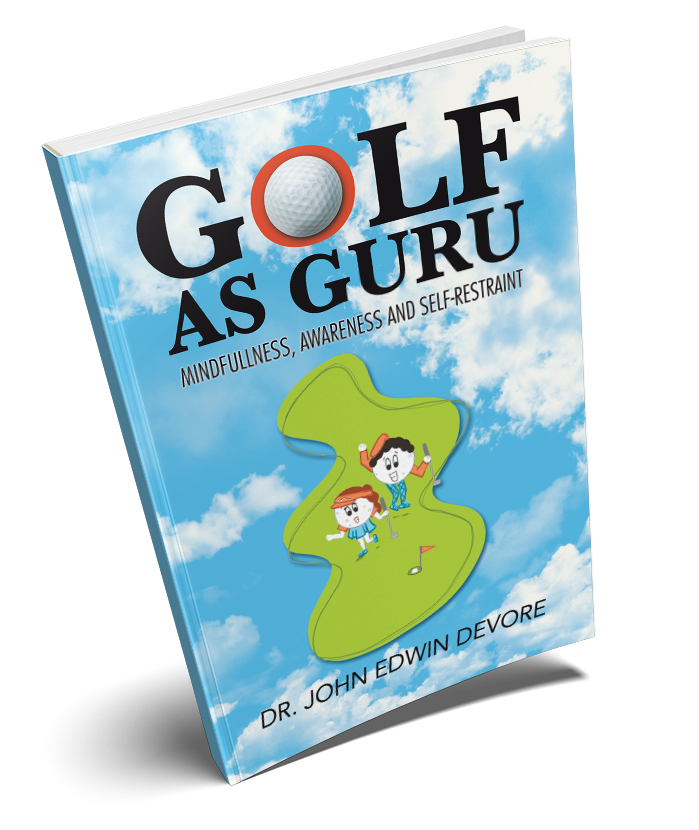
After a round of golf Sunday, Woody and Birdy Ball, golfer’s partners during the learning-reading journey through Golf as Guru: Mind”full”ness, Awareness and Self-Restraint, were enjoying 19th hole eats and drinks on the patio of the community golf club. The conversation evolved to a discussion of a vision for the club’s brand, strategies, and integral brand attributes. Interesting outcome…
BRAND
A “crown jewel” with magnetic and addictive brand attributes, i.e. the experience of every golfer, every time, is attractive, alluring, and inspires a “must have again” occasion.
STRATEGIES
- Grounds, facilities, and equipment are immaculate.
- Leadership, management, and staff are courteous, efficient, and effective.
- Marketing and sales are targeted and enable optimum rounds of golf and golf cart rental.
- Net income sustains the club and maintains the club asset base.
INTEGRAL BRAND ATTRIBUTES (See Integral Life Practice, Wilber et al, 2008, Boston, MA: Integral, page 301)
Individual Interior
- Comfortable with complexity
- Flexible and adaptive thinking
- Strong desire to learn and grow
- Open to change
- No need for status or displays of power
- Long term vision
- Recognizes complex patterns and interconnections
- Sense if integrity, self-responsibility, and accountability
- Values multiple intelligences
Individual Exterior
- Efficient behaviors
- Acts spontaneously and appropriately
- Adaptive to life conditions
- Balanced decision making
- Follows through on promises
- Pragmatic—does what works
- Obtains information needed for success
- Quickly learns necessary
- Takes advantages of biggest opportunities
- Leverages strengths, manages around weaknesses
Collective Interior
- High trust, low fear culture
- Strategic collaboration
- Clear channels of communication
- Coaching and mentoring practiced
- Open questioning
- Ability to relate to multiple constituencies
- Adapts communication to audience
- Learning organization
- Leaders develop others
Collective Exterior
- Values process efficiency
- Small, flexible work teams
- Adaptive systems
- Appropriate technology
- Sustainable resource consumption
- Recognition of multiple social contexts—legal, political, ecological, economic, etc.
- Success defined by the triple bottom line—profit, people, planet
Birdy remarks, “Wow! That vision is a big bite to swallow. All we need now is a realistic assessment of current reality; and then we can put together yearly goals, objectives, and action plans to move us closer to the vision.” Woody comments, “Well said! I am tired. Let’s go home!”
As the run-up to the November 2020 election unfolds; and as we witness the dark divide becoming wider, deeper, and darker, contrasting the two candidates for President is interesting. It appears the critical decision is to vote for the candidate who can best move us closer to a created VISION-ALTERNATE REALITY for America: See 9-15-2020 BLOG.
How one chooses to “show-up” in the world can be critiqued by researching, examining, and witnessing talents, skills, and experiences; making observations; and scrutinizing character, personality, mentality, and interests. Let us take-a-look at President Donald J. Trump. (Resources list available with email to JohnDeVore@aol.com)
Talents, Skills, and Experiences
- A track record of business and government failures and absolute chaotic disasters: most consequential president in history; puppet of Vladimir Putin; foreign policy bullying, badgering, and destroying; has abandoned allies; personal business endeavors with several bankruptcies; North Korean nuclear weapons stockpile has doubled; pandemic management and leadership is non-existent-dereliction of duty, passed buck off to governors who became blame targets; enlisted foreign interference in elections (Russia and China); several obstruction of justice charges; numerous lawsuits; impeachment proceedings; accepts payoffs for positions; and has numerous Trump party cronies—Lindsay Graham, Mitch McConnell, Steve Bannon, Roger Stone, Michael Flynn, Michael Cohen, Carter Page, George Papadopoulos, et al—who are lost souls in search of a tribe and chief. No decisions made based on strategy, makes decisions on how he feels at the time; can handle small projects and sign executive orders; not able to lead projects large in scope; selection of judges and environmental deregulations may be legacy; immigration policy is inhumane. As Bernie Sanders has eloquently noted, “Nero fiddled while Rome burned. Trump golfs.”
Observations
Donald J. Trump is a genius at networking and using the media to recruit, retain, and fire, at will, addicted surrogates, circles of friends, admirers, celebrity hangers-on, and wannabes who savor and long for safety and security sought by bonding together and identifying with a tribe in order to persevere and protect against outsiders. Allegiance and admiration are given to the chief and clan. Mystical signs, conspiracy, and desires of powerful spirit beings must be followed for the continued safety and well-being of the tribe. Three years of behaviors reveal the following:
- Does not understand duty, honor, and country.
- A cheat, a liar, a fraud, a bully, a predator, a con man.
- Racist, incendiary, toxic, casts hate, disruptive, name caller, and divisive; unfit for political office.
- Repeatedly has disparaged the intelligence of service members: Americans who die in war are “losers” and “suckers.”
- Tax cuts were a corporate “boondoggle.”
- Vision for country is merely to fix what his administration has undermined, agitated, deconstructed, or destroyed during the last four years. Examples: intelligence, FBI, CIA, U.S. Postal Service, voting integrity, CDC, etc.
- Stokes fear, celebrity, and brand building; and show-photo opportunity is the foundation for his rhetoric.
- Staff selection of addicted surrogates has been a disaster and revolving door; and demands loyalty even if unethical.
- Surrounded by fixers and “yes men;” encourages rivalries and thrives on personal attacks.
- Protected by political party sorted, partisan, power worldview associates of the Federal government institution he and his cronies have chosen to deconstruct and destroy.
- Conspiracist (example QAnon) and guilty of political cowardice, blaming, passing the buck, and dereliction of duty; shirks constitutionally mandated duty and rewards misconduct.
- Sexist, multiple lawsuits, and misconduct.
- Racist: a person who shows or feels discrimination or prejudice against people of other races, or who believes that a particular race is superior to another.
- Dishonest, arrogant, and narcissist; uses position and financial power for personal gain.
- Creates martyr, irrelevance, and distractions; misleads, boasts, is egotistical, blamelessness of self, never wrong, and anxious to criticize.
- People mistakes and poor interpersonal relations skills.
- Lies, denies, blames, and spins; egotistical and self-serving; unqualified for the position and has not grown into the job because he cannot.
Character, Personality, Mentality, and Interests.
- Low-functioning: includes persons who “… do not exhibit polished and polite behaviors as a mask for their manipulations…may lack the education or interpersonal skills to control and deceive. Instead they might use threats, coercion, or intimidation to achieve their desired outcome.” (Source: Dr. Timothy J. Legg, “What Is a High-Functioning Sociopath?”, 5-28-2019, https://www.healthline.com, 1-3.)
- Narcissistic sociopath: one form of antisocial personality disorder and is the result of environmental factors such as a child or teen’s upbringing in a negative household that resulted in physical abuse, emotional abuse, or childhood trauma. (Sources: Mary L. Trump, Too Much and Never Enough, 2020, Simon & Schuster; https://psychcentral.com, Dr. John M. Grohol, “Differences Between a Psychopath vs Sociopath,” 5-20-2020, 1-5; Dr. Tarra Bates-Duford, “Psychopath vs Sociopath: 16 Key Differences,” 9-7-2018, 1-3; https://www.health.com, Rosie McCall, “9 Ways to Spot a Sociopath,” 10-4-2019, 1-7.
- Gangster, corrupt, and behaves as if above the law.
- A stale breath of death, hate, narcissism, chaos, fear, conspiracy, norm erosion, “dark,” institutional deconstruction, and neo-facism.
Partisan politics is a dangerous duel of limited and partial truths; and binds party sorted folks to fixed, literal or otherwise limiting beliefs and frames of minds. Political party sorted, addicted, cultic surrogates make obvious excuses for candidates and excuse the inexcusable with respect to morality, judgment, intent, behavior, actions, ethics and laws. W. Edwards Deming remarked, “If a person is not performing as expected, it is probably because they are miscast for the job.” Michael Cohen offers, “No one ever tells Trump the truth about his behavior and beliefs, or the consequences of his conduct and ignorance and arrogance, in business or in his personal life and now in politics. Trump is the boy in the bubble, impervious to the thoughts and feelings or others, entirely and utterly focused on his own desires and ambitions.” Next BLOG: a peek at Joe Biden.
As the run-up to the November 2020 election unfolds; and as we witness the dark divide becoming wider, deeper, and darker, a merging of the Democratic and Republican convention planks into a common vision—an alternate reality—and contrasting the two candidates for President bears fruit. It appears the critical decision is to select the candidate who can best move us closer to the vision. Let us start with the merged vision; and in subsequent BLOGs, candidate profiles will be offered peeking at talents, skills, and experiences; observations; and character, personality, mentality, and interests.
VISION
Strategies
- Limited government for citizens.
- Fiscal responsibility; economic stability and equity; and long-term financial security.
- Public safety for all Americans, respect for law and order, and no one is above the law.
- Top ten healthcare system, including mental healthcare and long-term care.
- Programs, processes, and coalitions to dismantle systemic racism.
- Business ethical and moral issues: Federal intervention after two written Federal warnings.
- Avoid war with strong military and space forces and dialogue.
- Professional State Department and alliances; and stand up to dictators.
- Helping others: churches, individuals, groups, institutions, and the government.
- Judges: uphold the Constitution and guiding principles; and satisfy evolving cultural needs.
- Marriage or children: citizen’s choices, current need, and level of culture’s evolution.
- Respect for science.
Core Values and Guiding Principles
The Constitution is sacredly obligatory upon all. Our core values are truth to power, honesty, integrity, hope, love, and morality; and we put quality in all we are and all we do. We do not lie, cheat, or steal, nor tolerate those amongst us who do; and we respect law and order. We are committed to “walk the talk,” to action, and to the concept of 100% responsibility. We are objective, not self-serving, and make decisions in the best interests of The United States of America.
Leaders: have a track record of success and are trusted; have a history of compassion, loving-kindness, and building coalitions; understand that great leaders have been good followers and that leadership is an influence relationship that energizes earned power and willingness to achieve mutually defined goals; are master of the self, mind”full”ness, awareness, and integral life practice and model the way as persons, in relationships, socially, institutionally, and by helping others; have high standards with respect to morals, ethics, guiding principles, and core values that are plainly manifested in candidate’s personality, character, mentality, and magnetism; have learned self-restraint and 100% responsibility; are visibly committed to health, wellness, and well-being personally and for all Americans; are well-qualified, listen, inspire hope, have faith, are empathetic, and who know where the country is and what it needs; will be surrounded by exceptionally well-qualified associates; will diligently work to create and maintain a compelling worldview vision and action strategies and plans for the country; and will lead the development of policies and programs to evolve this country for all Americans.
Policies and Programs
- Leadership, management, and control of pandemics through the Centers for Disease Control coupled with state public health entities and active support and interface with the World Health Organization.
- Voting integrity with a viable and well led United States Postal Service.
- An economy for working, middle-class families that is teeming with jobs, union solidarity, small businesses, agriculture programs and processes, essential childcare, corporate sanity, sound trade relationships, and social security system.
- A globally envied education system: facilities, teachers, curriculum, and schools of choice.
- Racial and social justice, diversity, and anti-racism policies and programs that evolve dismantling the conscious and unconscious pillars of racism in the country: prison reform; human dignity and respect, all colors, all genders, all religions-integral spirituality. Civil rights are a must.
- Communities are safe and teeming with peaceful activities, including protests; citizens and police are mutually respected, masters of the Self, and model the way as persons, in relationships, socially, institutionally, and by helping others. Violence on streets is not tolerated and is dealt with sanely.
- Global climate change and environment
- Affordable healthcare and viable public health outreach (integral physical, mental, emotional, and spiritual health, wellness, and well-being) coupled with honored per-existing conditions, decreasing drug prices, and necessary integral psychological health processes, including resolution of opioid addiction. Top ten measureable dimensions: history, coverage, financing, payment, delivery of care, prescription drug regulation, human resources, and future challenges. Considerations: consumer friendliness, choices for providers, innovation, generosity of coverage, and equality of care.
- Leading-edge military and space force, visits to military deployment areas, exceptional veteran and veteran spouse-family-children benefits, outreach, integral psychological health, and combat veteran re-entry-transition program.
- Intelligence and technology
- National security and foreign policy with inspired State Department and allies: underwater, space, and military; and coalition building facilitated by trust, respect, and mutual goals.
- An infrastructure re-building program: maintenance, re-building, and evolution.
- Sensible gun laws.
- Immigration reform and sanity.
- Programs for the empowerment, advancement, and placement of women.
- Abortion legislation recognizes women’s rights to choose.
- Tax equity and sanity; and long-term care and financial security programs for seniors.
- Freedom of religion and spiritual path.
- Media are objective, tell the truth, and are respected.
Wow! That is a bunch of stuff to get done. Future BLOGs will begin to explore the candidates for President with a view toward facilitating the selection of the candidate most qualified to get the job done for all Americans.
As the run-up to the November 2020 election unfolds; and as we witness the dark divide becoming wider, deeper, and darker, a merging of the Democratic and Republican convention planks into a common vision—an alternate reality—and contrasting the two candidates for President bears fruit. It appears the critical decision is to select the candidate who can best move us closer to the vision. Let us start with the merged vision; and in subsequent BLOGs, candidate profiles will be offered peeking at talents, skills, and experiences; observations; and character, personality, mentality, and interests.
VISION
Strategies
- Limited government for citizens.
- Fiscal responsibility; economic stability and equity; and long-term financial security.
- Public safety for all Americans, respect for law and order, and no one is above the law.
- Top ten healthcare system, including mental healthcare and long-term care.
- Programs, processes, and coalitions to dismantle systemic racism.
- Business ethical and moral issues: Federal intervention after two written Federal warnings.
- Avoid war with strong military and space forces and dialogue.
- Professional State Department and alliances; and stand up to dictators.
- Helping others: churches, individuals, groups, institutions, and the government.
- Judges: uphold the Constitution and guiding principles; and satisfy evolving cultural needs.
- Marriage or children: citizen’s choices, current need, and level of culture’s evolution.
Core Values and Guiding Principles
The Constitution is sacredly obligatory upon all. Our core values are truth to power, honesty, integrity, hope, love, and morality; and we put quality in all we are and all we do. We do not lie, cheat, or steal, nor tolerate those amongst us who do; and we respect law and order. We are committed to “walk the talk,” to action, and to the concept of 100% responsibility. We are objective, not self-serving, and make decisions in the best interests of The United States of America.
Leaders: have a track record of success and are trusted; have a history of compassion, loving-kindness, and building coalitions; understand that great leaders have been good followers and that leadership is an influence relationship that energizes earned power and willingness to achieve mutually defined goals; are master of the self, mind”full”ness, awareness, and integral life practice and model the way as persons, in relationships, socially, institutionally, and by helping others; have high standards with respect to morals, ethics, guiding principles, and core values that are plainly manifested in candidate’s personality, character, mentality, and magnetism; have learned self-restraint and 100% responsibility; are visibly committed to health, wellness, and well-being personally and for all Americans; are well-qualified, listen, inspire hope, have faith, are empathetic, and who know where the country is and what it needs; will be surrounded by exceptionally well-qualified associates; will diligently work to create and maintain a compelling worldview vision and action strategies and plans for the country; and will lead the development of policies and programs to evolve this country for all Americans.
Policies and Programs
- Leadership, management, and control of pandemics through the Centers for Disease Control coupled with state public health entities and active support and interface with the World Health Organization.
- Voting integrity with a viable and well led United States Postal Service.
- An economy for working, middle-class families that is teeming with jobs, union solidarity, small businesses, agriculture programs and processes, essential childcare, corporate sanity, sound trade relationships, and social security system.
- A globally envied education system: facilities, teachers, curriculum, and schools of choice.
- Racial and social justice, diversity, and anti-racism policies and programs that evolve dismantling the conscious and unconscious pillars of racism in the country: prison reform; human dignity and respect, all colors, all genders, all religions-integral spirituality. Civil rights are a must.
- Communities are safe and teeming with peaceful activities, including protests; citizens and police are mutually respected, masters of the Self, and model the way as persons, in relationships, socially, institutionally, and by helping others. Violence on streets is not tolerated and is dealt with sanely.
- Global climate change and environment
- Affordable healthcare and viable public health outreach (integral physical, mental, emotional, and spiritual health, wellness, and well-being) coupled with honored per-existing conditions, decreasing drug prices, and necessary integral psychological health processes, including resolution of opioid addiction. Top ten measureable dimensions: history, coverage, financing, payment, delivery of care, prescription drug regulation, human resources, and future challenges. Considerations: consumer friendliness, choices for providers, innovation, generosity of coverage, and equality of care.
- Leading-edge military and space force, visits to military deployment areas, exceptional veteran and veteran spouse-family-children benefits, outreach, integral psychological health, and combat veteran re-entry-transition program.
- Intelligence and technology
- National security and foreign policy with inspired State Department and allies: underwater, space, and military; and coalition building facilitated by trust, respect, and mutual goals.
- An infrastructure re-building program: maintenance, re-building, and evolution.
- Sensible gun laws.
- Immigration reform and sanity.
- Programs for the empowerment, advancement, and placement of women.
- Abortion legislation recognizes women’s rights to choose.
- Tax equity and sanity; and long-term care and financial security programs for seniors.
- Freedom of religion and spiritual path.
- Media are objective, tell the truth, and are respected.
Wow! That is a bunch of stuff to get done. Future BLOGs will begin to explore the candidates for President with a view toward facilitating the selection of the candidate most qualified to get the job done for all Americans.
A discovery has been that simplicity in golf can be uncovered on the other side of its human created complexity. Could it be as simple as one through eight? Let us take a look.
- Integral life practice: exercise the physical body, the subtle body (felt energies), and the causal body (resting). [Wilber, et al, 2008, Boston, MA: Integral]
- Mind”full”ness: learn to work with all three minds (conscious, subconscious, and super-conscious-spiritual-peak performance).
- Mindfulness-concentration and awareness meditation: paying attention, in the present moment, nonjudgementally. Offers one-pointed grounding and inspiration for ritual; and visibility of how one chooses to show-up via the personality, character, and mentality.
- Nurture self-restraint, a learned skill: the alternative response to two shots in a nearby pond and insanity.
- Pre-shot routines.
- Immaculate set-up: grip, aim, stance, posture, ball position, sense weight balance desired (irons, scoring wedges, pitching wedges: front leg; driver balanced), and turn neck-chin to trailing shoulder. Maintain width of arc.
- Rituals to create personal teepee where, on every shot, the programmed subconscious is trusted: go to the breath; ground-center, elevate: two-three quick, deep breaths; and pull the trigger. Maintain width of arc.
- Takeaway: stable swing center, forward press to target synchronous with connected-whole body (arms, torso, and hips as one unit) and shoulder tilt, coiling against a stable right side with no hip sway away from target; and no hurry to transition point. Goal: optimum length of arc and maintain width of arc through entire swing.
- Forward swing: stable swing center, shoulder tilt straightening right arm and flattening left wrist to square the clubface. Goal: maintain width of arc.
- Solid impact of club with ball:
- Head behind ball.
- Knees and elbows toward each other.
- Right heel off ground.
- Right shoulder below left-shoulder tilt 36D, water draining from right ear.
- Left leg is resistance.
- Left foot on outside edge.
- Right knee is bending toward the left knee.
- Have a good coach.
Gosh! Woody Ball, Golf as Guru: Mind”full”ness, Awareness and Self-Restraint, would offer, “Golf is not very simple!!! However, golf can be “bestest” and “funest” ever.” And the patient’s patient search for simple continues. And then, Birdy Ball exclaims, “John, you forgot all the technical junk, the logistical factors, ball flight laws, swing principles, and green reading. And most important of all, the 19th tee.”
As the run-up to the November 2020 election unfolds; and as we witness the dark divide becoming wider, deeper, and darker, a merging of the Democratic and Republican convention planks into a common vision—an alternate reality—and contrasting the two candidates for President bears fruit. It appears the critical decision is to select the candidate who can best move us closer to the vision. Let us start with the merged vision; and in subsequent BLOGs, candidate profiles will be offered peeking at talents, skills, and experiences; observations; and character, personality, mentality, and interests.
VISION
Strategies
- Limited government for citizens.
- Fiscal responsibility; economic stability and equity; and long-term financial security.
- Public safety for all Americans, respect for law and order, and no one is above the law.
- Top ten healthcare system, including mental healthcare and long-term care.
- Programs to dismantle systemic racism.
- Business ethical issues: Federal intervention after two written Federal warnings.
- Avoid war with strong military and space forces.
- Professional State Department and alliances; and stand up to dictators.
- Helping others: Churches, individuals, groups, and the government.
- Judges: uphold the Constitution and guiding principles; and satisfy evolving cultural needs.
- Marriage or children: Citizen’s choices, current need, and level of culture’s evolution.
Core Values and Guiding Principles
The Constitution is sacredly obligatory upon all. Our core values are truth to power, honesty, integrity, hope, love, and morality; and we put quality in all we are and all we do. We do not lie, cheat, or steal, nor tolerate those amongst us who do; and we respect law and order. We are committed to “walk the talk,” to action, and to the concept of 100% responsibility. We are objective, not self-serving, and make decisions in the best interests of The United States of America.
Leaders
Have a track record of success and are trusted; have a history of compassion, loving-kindness, and building coalitions; understand that great leaders have been good followers and that leadership is an influence relationship that energizes earned power and willingness to achieve mutually defined goals; are master of the self, mind”full”ness, awareness, and integral life practice and model the way as persons, in relationships, socially, institutionally, and by helping others; have high standards with respect to morals, ethics, guiding principles, and core values that are plainly manifested in candidate’s personality, character, mentality, and magnetism; have learned self-restraint and 100% responsibility; are visibly committed to health, wellness, and well-being personally and for all Americans; are well-qualified, listen, inspire hope, have faith, are empathetic, and who know where the country is and what it needs; will be surrounded by exceptionally well-qualified associates; will diligently work to create and maintain a compelling worldview vision and action strategies and plans for the country; and will lead the development of policies and programs to evolve this country for all Americans.
Policies and Programs
- Leadership, management, and control of pandemics through the Centers for Disease Control coupled with state public health entities and active support and interface with the World Health Organization.
- Voting integrity with a viable and well led United States Postal Service.
- An economy for working, middle-class families that is teeming with jobs, union solidarity, small businesses, agriculture programs and processes, essential childcare, corporate sanity, sound trade relationships, and social security system.
- A globally envied education system: facilities, teachers, curriculum, and schools of choice.
- Racial and social justice, diversity, and anti-racism policies and programs that evolve dismantling the conscious and unconscious pillars of racism in the country: prison reform; human dignity and respect, all colors, all genders, all religions-integral spirituality. Civil rights are a must.
- Communities are safe and teeming with peaceful activities, including protests; citizens and police are mutually respected, masters of the Self, and model the way as persons, in relationships, socially, institutionally, and by helping others. Violence on streets is not tolerated and is dealt with sanely.
- Global climate change and environment
- Affordable healthcare and viable public health outreach (integral physical, mental, emotional, and spiritual health, wellness, and well-being) coupled with honored per-existing conditions, decreasing drug prices, and necessary integral psychological health processes, including resolution of opioid addiction. Top ten measureable dimensions: history, coverage, financing, payment, delivery of care, prescription drug regulation, human resources, and future challenges. Considerations: consumer friendliness, choices for providers, innovation, generosity of coverage, and equality of care.
- Leading-edge military and space force, visits to military deployment areas, exceptional veteran and veteran spouse-family-children benefits, outreach, integral psychological health, and combat veteran re-entry-transition program.
- Intelligence and technology
- National security and foreign policy with inspired State Department and allies: underwater, space, and military; and coalition building facilitated by trust, respect, and mutual goals.
- An infrastructure re-building program: maintenance, re-building, and evolution.
- Sensible gun laws.
- Immigration reform and sanity.
- Programs for the empowerment, advancement, and placement of women.
- Abortion legislation recognizes women’s rights to choose.
- Tax equity and sanity; and long-term care and financial security programs for seniors.
- Freedom of religion and spiritual path.
- Media are objective, tell the truth, and are respected.
Wow! That is a bunch of stuff to get done. Next week we will begin to explore the candidates for President with a view toward facilitating the selection of the candidate most qualified to get the job done for all Americans.
As the run-up to the November 2020 election unfolds; and as we witness the dark divide becoming wider, deeper, and darker, a merging of the Democratic and Republican convention planks into a common vision—an alternate reality—and contrasting the two candidates for President bears fruit. It appears the critical decision is to select the candidate who can best move us closer to the vision.
VISION
Strategies
- Limited government.
- Fiscal responsibility.
- Public safety for all Americans.
- No one is above the laws.
- Business ethical issues: Federal intervention after two written Federal warnings.
- Avoid war with strong military and space forces and alliances; and stand up to dictators.
- Helping others: Churches, individuals, groups, and the government.
- Judges: uphold the Constitution and guiding principles; and satisfy evolving cultural needs.
- Marriage or children: Citizen’s choices, current need, and level of culture’s evolution.
Core Values and Guiding Principles: The Constitution is sacredly obligatory upon all. Our core values are truth to power, honesty, integrity, hope, love, and morality; and we put quality in all we are and all we do. We do not lie, cheat, or steal, nor tolerate those amongst us who do; and we respect law and order. We are committed to “walk the talk,” to action, and to the concept of 100% responsibility. We are objective, not self-serving, and make decisions in the best interests of The United States of America.
Leaders: are trusted, have a track record of compassion, loving-kindness, and building coalitions; understand that great leaders have been good followers and that leadership is an influence relationship that energizes earned power and willingness to achieve mutually defined goals; are master of the self, mind”full”ness, awareness, and integral life practice and model the way as persons, in relationships, socially, institutionally, and by helping others; have high standards with respect to morals, ethics, guiding principles, and core values that are plainly manifested in candidate’s personality, character, mentality, and magnetism; have learned self-restraint and 100% responsibility; are visibly committed to health, wellness, and well-being personally and for all Americans; are well-qualified, listen, inspire hope, have faith, are empathetic, and who know where the country is and what it needs; will be surrounded by exceptionally well-qualified associates; will diligently work to create and maintain a compelling worldview vision and action strategies and plans for the country; and will lead the development of policies and programs to evolve this country for all Americans. Essential policy, program, and process ingredients are:
- Leadership, management, and control of pandemics through the Centers for Disease Control coupled with state public health entities and active support and interface with the World Health Organization.
- Voting integrity with a viable and well led United States Postal Service.
- An economy for working, middle-class families that is teeming with jobs, union solidarity, small businesses, agriculture programs and processes, essential childcare, and sound trade relationships.
- A globally envied education system: facilities, teachers, curriculum, and schools of choice.
- Racial and social justice, diversity, and anti-racism policies and programs that dismantle the pillars of racism in the country: prison reform; human dignity and respect, all colors, all genders, all religions-integral spirituality. Civil rights are a must.
- Communities are safe and teeming with peaceful activities, including protests; citizens and police are mutually respected, masters of the Self, and model the way as persons, in relationships, socially, institutionally, and by helping others. Violence on streets is not tolerated is dealt with sanely.
- Global climate change and environment
- Affordable healthcare and viable public health outreach (integral physical, mental, emotional, and spiritual health, wellness, and well-being) coupled with honored per-existing conditions, decreasing drug prices, and necessary integral psychological health processes, including resolution of opioid addiction. Medicare and Medicaid are sacred norms.
- Leading-edge military and space force, visits to military deployment areas, exceptional veteran and veteran spouse-family-children benefits, outreach, integral psychological health and combat veteran re-entry-transition program.
- Intelligence and technology
- National security and foreign policy with inspired allies: underwater, space, and military; and coalition building facilitated by trust, respect, and mutual goals.
- An infrastructure re-building program: maintenance, re-building, and evolution.
- Sensible gun laws.
- Immigration reform and sanity.
- Programs for the empowerment, advancement and placement of women.
- Abortion legislation recognizes women’s rights to choose.
- Tax equity and sanity; and Social Security and programs for seniors are sacred norms.
- Freedom of religion.
- Media tell the truth and are respected.
How one chooses to “show-up” in the world can be critiqued by examining and witnessing talents, skills, and experiences; making observations; and scrutinizing character, personality, mentality, and interests. (Webster offers that character is the mental and moral qualities distinctive to an individual; personality is the characteristic sets of behaviors, cognitions, and emotional patterns that evolve from biological and environmental factors; and mentality is the ability to think and learn.)
DONALD TRUMP
Talents, Skills, and Experiences (Resource list is available with email request to JohnDeVore@aol.com)
- A track record of failures, and chaotic disasters: personal business endeavors including several bankruptcies; foreign policy has been destroyed; pandemic management and leadership is non-existent; enlisted foreign interference in elections (Russia and China); several obstruction of justice charges; numerous lawsuits; impeachment proceedings; accepts payoffs for positions; and has numerous Trump party cronies—Lindsay Graham, Mitch McConnell, Steve Bannon, Roger Stone, Michael Flynn, Michael Cohen, Carter Page, George Papadopoulos, et al—who are lost souls in search of a tribe and chief. As Bernie Sanders has eloquently noted, “Nero fiddled while Rome burned. Trump golfs.”
Observations
- Fear and show are the foundation for his rhetoric.
- Protected by political party sorted, partisan, power worldview associates of the Federal government institution he and his cronies have chosen to deconstruct and destroy.
- Conspiracist: example QAnon.
- Racist: a person who shows or feels discrimination or prejudice against people of other races, or who believes that a particular race is superior to another.
- Dishonest, arrogant, and narcissist; uses position and financial power for personal gain.
- Creates martyr, irrelevance, and distractions; misleads, boasts, is egotistical, blamelessness of self, never wrong, and anxious to criticize.
- People mistakes.
- Lies, denies, blames, and spins; egotistical and self-serving; unqualified for the position and has not grown into the job because he cannot.
Character, Personality, Mentality, Interests.
- Low-functioning: includes persons who “… do not exhibit polished and polite behaviors as a mask for their manipulations…may lack the education or interpersonal skills to control and deceive. Instead they might use threats, coercion, or intimidation to achieve their desired outcome.” (Source: Dr. Timothy J. Legg, “What Is a High-Functioning Sociopath?”, 5-28-2019, https://www.healthline.com, 1-3.)
- Sociopath: one form of antisocial personality disorder and is the result of environmental factors such as a child or teen’s upbringing in a negative household that resulted in physical abuse, emotional abuse, or childhood trauma. (Sources: Mary L. Trump, Too Much and Never Enough, 2020, Simon & Schuster; https://psychcentral.com, Dr. John M. Grohol, “Differences Between a Psychopath vs Sociopath,” 5-20-2020, 1-5; Dr. Tarra Bates-Duford, “Psychopath vs Sociopath: 16 Key Differences,” 9-7-2018, 1-3; https://www.health.com, Rosie McCall, “9 Ways to Spot a Sociopath,” 10-4-2019, 1-7.
- Gangster, corrupt, and behaves as if above the law
JOE BIDEN
Talents, Skills, and Experiences
- Eight years as Vice President of the United States.
- Thirty-six years as a United States Senator.
- Track record of leadership, leadership successes, and building winning teams—coalitions; understands that great leaders have been good followers and that leadership is an influence relationship that energizes earned power and willingness to achieve mutually defined goals.
Observations
- Master of the self, mind”full”ness, awareness and integral life practice; and models the way as a person, in relationships, socially, institutionally, and by helping others.
- High standards with respect to morals, ethics, guiding principles and core values that are plainly manifested in candidate’s personality, character, mentality, and magnetism.
- Has learned self-restraint and 100% responsibility; and is visibly committed to health, wellness and well-being personally and for all Americans.
Character, Personality, Mentality, Interests.
- Core values: dignity, compassion, non-partisan, passionate, insight, empathy, love and loving kindness, respect, honesty, integrity, and morality.
- Guiding principles: objective, not self-serving, and makes decisions in the best interest of the country.
- Purpose: give people light.
- Anti-racist.
- Spiritual, sane, and competent.
- Family values.
- Presidential Medal of Freedom.
- Husband and wife are a good team.
Partisan politics is a dangerous duel of limited and partial truths; and binds party sorted folks to fixed, literal or otherwise limiting beliefs and frames of minds. The trans-rational contrast is quite clear: a fresh breath of hope, empathy, core values and guiding principles, trustworthiness, leadership, “light,” inspiration, and democracy; or a stale breath of death, hate, narcissism, chaos, fear, conspiracy, norm erosion, “dark,” institutional deconstruction, and neo-facism. It is not possible to create a silk purse from a pig’s ear. W. Edwards Deming remarked, “If a person is not performing as expected, it is probably because they are miscast for the job.” In Destiny, Maggie Shayne writes, “…we must each face the darkness within us. But Inanna emerged from the darkness-proving that we can do the same. Meet, embrace, accept, understand, and in the end gain mastery over our own shadow side.”
The mission is quite clear: We the people need to save America’s democracy by voting for Joe Biden and Kamala Harris, launching the strategic “battle for the soul of the nation.” This battle will begin to heal the deconstruction of the current administration and will inspire the dance of discovering, unfolding, and manifesting America’s uniqueness through a profound journey into the unknown. This trek demands trust, hope, faith, and awakening to radical freedom and to deep dimensions of embodied individuality, the unmanifest soul qualities of America’s natural world, heart, mind, and spirit. And this waltz into the unknown will be demanding, will not be easy, and will have challenges and opportunities. We may choose to resist it and miss a few steps; however, we will do the hard work. Imperative for this undertaking are strong leaders with exemplary leadership qualities who possess an impervious foundation of character, personality, and mentality that display peace-of-mind coupled with purpose and connections built on a foundation of compassion; published and walked core values, a code of ethics, guiding principles, and a track record of successes; a profound perspective and vision; an innate talent to accurately assess current reality; and an ability to build bipartisan coalitions who plan and strategize to evolve America’s soul qualities.
Let us do the homework and select political leaders who listen, inspire hope, have faith, are compassionate and empathetic, and who will know where the country is and what it needs; who will be surrounded by exceptionally well-qualified associates; who will diligently work to create a compelling worldview vision for the country; and who will lead the development of policies and programs to evolve this country for all Americans. Essential ingredients are leadership and management of the pandemic, voting integrity with a viable and well led United States Postal Service; an economy for working, middle-class families that is teeming with jobs, union solidarity, small businesses, and essential childcare; a globally envied education system; racial and social justice, diversity and anti-racism policy and programs; and global climate change leadership. Strategies will include affordable healthcare and viable public health outreach coupled with decreased drug prices, a leading-edge military and space force, visits to military deployment areas, veteran and veteran family benefits and outreach, national security and foreign policy with inspired allies, an infrastructure re-building program, and a masterful Joe and Jill Biden team, the mother and father of the Nation. Sensible gun laws, immigration reform and sanity, and programs for the advancement and placement of women will prevail.
Let us end the “dark.” America has had enough of a low functioning sociopath who is racist and who is protected by political party sorted, partisan, power worldview associates of the Federal government institution he and his cronies have chosen to deconstruct and destroy. The list of negatives far outweighs the positives: lies, denies, blames, and spins; egotistical and self-serving; unqualified for the position and has not grown into the job because he cannot; enlisted foreign interference in elections; several obstruction of justice charges; numerous lawsuits; behaves as a gangster and as if above the law; impeachment proceedings; accepts payoffs for positions; and numerous Trump party cronies—Lindsay Graham, Mitch McConnell, Steve Bannon, Roger Stone, Michael Flynn, Michael Cohen, Carter Page, George Papadopoulos, et al—who are lost souls in search of a tribe. As Bernie Sanders has eloquently noted, “Nero fiddled while Rome burned. Trump golfs.”
We the people will see the “light,” vote, and select leaders, beginning with Joe and Kamala and Democratic Senators, who will right the ship, turn it around, and get America steaming into a future which sparkles and evolves the country to the leading edge of civilization. The “battle for the soul of the nation” inspires today and will inspire for generations to come, all folks interacting in an immense, unified community singing with unique voices as one choir. This is simply removing obstacles, growing up, waking up, showing up, digging deep, and uncovering talents and skills that were always there and just being discovered. It will be hard work! Just like learning to play the piano at 80 years old and playing “America the Beautiful” from memory for the first time.
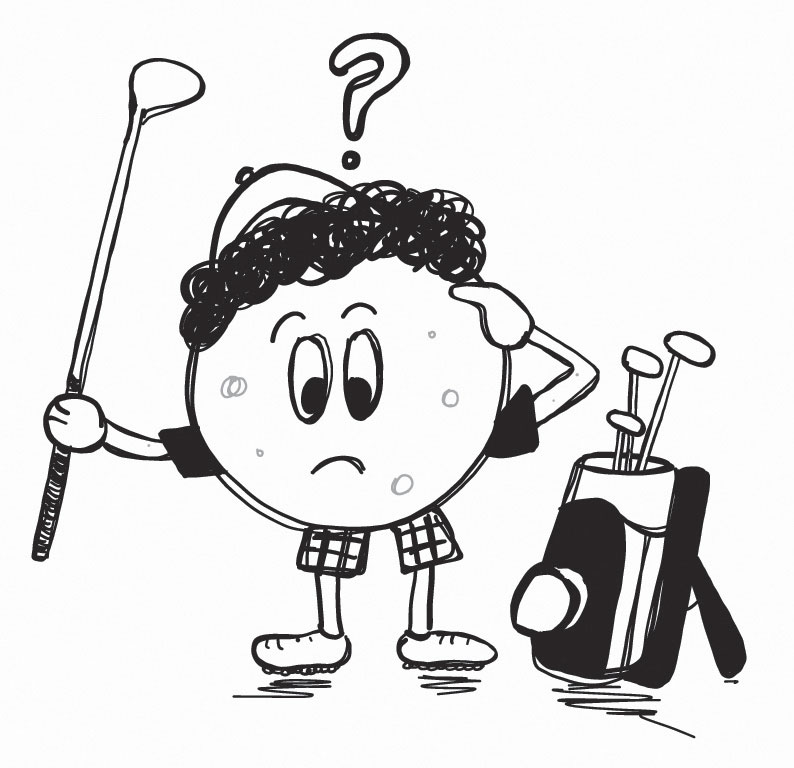
A discovery has been that simplicity in golf can be uncovered on the other side of its human created complexity. Could it be simple? Let us take a look.
- Integral life practice: exercise the physical body, the subtle body (felt energies), and the causal body (resting). [Wilber, et al, 2008, Boston, MA: Integral]
- Mind”full”ness: learn to work with all three minds (conscious, subconscious, and super-conscious-spiritual-peak performance).
- Mindfulness-concentration and awareness meditation: paying attention, in the present moment, nonjudgementally. Offers one-pointed grounding and inspiration for ritual; and visibility of how one chooses to show-up via the personality, character, and mentality.
- Nurture self-restraint, a learned skill: the alternative response to two shots in a nearby pond and insanity.
- Pre-shot routines.
- Immaculate set-up: grip, aim, stance, posture, ball position, sense weight balance desired (irons, scoring wedges, pitching wedges: front leg; driver balanced), and turn neck-chin to trailing shoulder. Maintain width of arc.
- Rituals to create personal teepee where, on every shot, the programmed subconscious is trusted: go to the breath; ground-center, elevate: two-three quick, deep breaths; and pull the trigger. Maintain width of arc.
- Takeaway: stable swing center, forward press to target synchronous with connected-whole body (arms, torso, and hips as one unit) and shoulder tilt, coiling against a stable right side with no hip sway away from target; and no hurry to transition point. Goal: optimum length of arc and maintain width of arc through entire swing.
- Forward swing: stable swing center, shoulder tilt straightening right arm and flattening left wrist to square the clubface. Goal: maintain width of arc.
- Solid impact of club with ball:
- Head behind ball.
- Knees and elbows toward each other.
- Right heel off ground.
- Right shoulder below left-shoulder tilt 36D, water draining from right ear.
- Left leg is resistance.
- Left foot on outside edge.
- Right knee is bending toward the left knee.
- Have a good coach.
Gosh! Woody Ball, Golf as Guru: Mind”full”ness, Awareness and Self-Restraint, would offer, “Golf is not very simple!!! However, golf can be “bestest” and “funest” ever.” And the patient’s patient search for simple continues. And then, Birdy Ball exclaims, “John, you forgot all the technical junk, the logistical factors, ball flight laws, swing principles, and green reading. And most important of all, the 19th tee.”
This is a story about a forty-seven-year, self-awareness journey to uncover the what’s, how’s, and why’s of life’s behaviors: simply awareness of how one chooses to “show-up” in life via the personality, character, and mentality. “Once upon a time” of the trek started during a pre-meeting walk with a new boss in a state-of-the-art, two-piece aluminum can manufacturing plant in Golden, Colorado.
Grateful for four years at West Point; eight years in the Army, including promotions to Major, military decorations, and two years of combat during the Vietnam War; three civilian jobs; and a wife with a child on-the-way, it was good fortune to land a Purchasing Manager position (1973) with Coors Container Company. During a walk in the pounding can plant, the new boss commented that unless the author began to manage his stress, evolving life would be hectic. This comment unleashed a life-long challenge and opportunity to look under the rug and uncover the “stuff” that makes this human being tick. The first tee and green were to read I’m OK, You’re OK: Practical Guide to Self-Analysis (Thomas A. Harris, 1967, NY, NY: Harper Collins) and to attend (1974) an “I’m OK, You’re OK” seminar at the Mountain States Employers Council, Denver, Colorado. The unfolded curriculum vitae (plus approximately $80,000 for the awareness search) includes five educational degrees and 27 years of assorted corporate leadership positions; targeted academic courses and seminars; study abroad and retreats; club, committee, and panel participation; group memberships, workshops, and associations; teaching and public speaking endeavors; published books and unpublished papers; and the student journey of living, family, reading, piano, writing, golf, experiencing, seeing, and learning continues. Here are some discoveries:
- Life is an accumulation of our stories.
- Golf is a guru and can be fun and simple.
- Be grateful and say “thank-you” every day: life is a gift and priceless treasure.
- Simple is on the other side of complexity: keep looking for it.
- Commit to integral health, wellness, and well-being: program the subconscious to be perfectly healthy; and exercise the physical body, subtle body (felt energies), and causal body (resting). Integral Life Practice inspires uncovering the existing treasure of insights, methods, and practices for cultivating a more enlightened life. (Wilber, et al, 2008, Boston, MA: Integral)
- Meditation (concentration and awareness) offers visibility of how one chooses to show-up via the personality, character, and mentality. Meditation fixes nothing: it helps uncover the watcher and offers insight into how one behaves.
- The subconscious is 90% of who we are: learn how to program it, re-program it, and trust it.
- Create solid core values of honesty, integrity, and morality. Other guiding values: generosity, discipline, patience, effort, knowledge, and wisdom.
- A great code of conduct: I will not lie, cheat, or steal nor tolerate those amongst us who do.
- 100% responsibility: life happens because of me, not to me. Accept responsibility and determine what needs to be done to move forward: no blaming, lying, defying, or denying.
- Be objective, not self-serving, and make decisions in the best interests of the organization or folks served.
- Look for “what” and not “who.”
- Manage by agreement: agree on “what” will be accomplished by “when.” If the “what” and/or “when” cannot be accomplished, re-negotiate prior to “when” arrives.
- Walk the talk.
- Be a “lifter” of others: inspire, encourage, support, be bubbly, and help.
- The spouse, kids, and grandkids are the best gurus: be open and listen to the messages.
- I am silent self alone.
- Become master of Self, integral life practice, mind”full”ness (conscious, subconscious, and superconscious), awareness, and self-restraint.
- A nice goal: master of Self and model the way as a person, in relationships, and by helping others.
- Self-restraint is a learned skill.
- Leadership is an earned, influence relationship skill.
- There are two types of power: earned and position.
- Communication skill is fourfold: intrapersonal, interpersonal, person-to-persons, and mass media.
- Awareness differentiates folks in golf and life: mentally and emotionally; physically; in relationships; and institutionally-socially.
- Anti-racism is a must have quality of character, personality, and mentally.
- Racism has very deep pillars that have evolved for 600 plus years.
- Be open to learn and grow.
- Political party sorting creates division.
- Fool-proof business plan: create a vison; accurately assess current reality; and prepare gap closers that move reality closer to the vision.
- Five master skills for leaders: delegation that avoids monkeys and gorillas; project management; team building; selection of quality folks; and completed staff work.
- Let the boss know about “screw-ups” before he-she learns about them from others.
- Customers are king.
- Emotions and projections: own them; sit in the flames of them; and just be with the anger, pride, attachment, ignorance, jealousy, or envy.
- Transcend and include to create unity.
- Just go to the breath; and breathe deep.
- The root of happiness is peace-of-mind; and the root of suffering is desire, thirst.
- The foundation of genuine purpose and connection is compassion.
- Love is an assortment of causal energies with an essence beyond words.
And the self-awareness journey continues, just a student of life, living, and golf!
O beautiful for heroes proved
In liberating strife,
Who more than their country loved,
And mercy more than life!
America! America!
May God thy gold refine,
Till all success be nobleness,
And every gain divine!
—Katherine Lee Bates & Samuel A. Ward, America the Beautiful
Where has America The Beautiful gone! Daily, we are witness to absolute, chaotic disaster! And more will unfold as each self-serving TWEET is offered. “Nobody likes me!” It is disgusting and maddening!! At the helm of the ship is the President, an untrusted, self-serving, party sorted, low functioning, sociopath who is racist and who is protected by political party sorted, power worldview associates of the Federal government institution and country he has been chosen to deconstruct and destroy. We must do better and begin the long trek back to America The Beautiful.
O beautiful for spacious skies,
For amber waves of grain,
For purple mountain majesties
Above the fruited plain!
America! America!
God shed his grace on thee,
And crown thy good with brotherhood,
From sea to shining sea!
—Katherine Lee Bates & Samuel A. Ward, America the Beautiful
Some food for thought to help re-route the ship: Rachel Kleinfield and Aaron Sobel (USA Today, Friday, July 24, 2020, page 7A) offer, “7 ways to reduce political polarization: Destroying the other side cannot be our goal.”
- Call out your own party: speak truth to power and challenge your own tribe.
- Avoid bad jokes: words matter, and they can perpetuate existing violence and cultivate preexisting grievances.
- Make social media kinder: remove hateful messages, reduce the spread of hateful memes and avoid prejudiced or polarizing speech.
- Downplay the fringes and highlight the median: provide information that overturns party sorted beliefs and that reduces polarization. There may be less disagreement on policy issues than thought.
- Emphasize disagreement within parties: most policy issues have a range of opinions within a party.
- Help others imagine empathy: stories that encourage others to take the perspective of the other party can reduce prejudice.
- Avoid repeating misinformation, even to debunk it: repetition leads the brain to think things are true; and there is a tendency to seek information that agrees with how one believes.
Partisanship is shaking the mighty pillars of our democracy; and destroying the other party is not a reasonable objective. The chaos, confusion, and disaster we see unfolding daily is about destroying the other group of human beings, the other tribe. As The Honorable John Lewis offered, get in “Good Trouble” and become a master of uniting. Whether Democrat or Republican America The Beautiful is the goal!!! Let us move together, not apart.
O beautiful for patriot dream
That sees beyond the years; Thine alabaster cities gleam,
Undimmed by human tears!
America! America!
God shed his grace on thee,
And crown thy good with brotherhood,
From sea to shining sea!
—Katherine Lee Bates & Samuel A. Ward, America the Beautiful
Let us do the homework and select political leaders who will know where the country is and what it needs; who will be surrounded by exceptionally well-qualified associates; who will diligently work to create a worldview vision for the country; and who will lead the development of the policies and plans to evolve this country toward the vision for Americans. To wet your reflection juices, the Jeopardy question is who most likely fits this profile: …………………. is a low functioning, sociopath who is racist and who is protected by political party sorted, power worldview associates of the Federal government institution he has been chosen to deconstruct and destroy.
Low functioning
A low-functioning includes persons who “… do not exhibit polished and polite behaviors as a mask for their manipulations…may lack the education or interpersonal skills to control and deceive. Instead they might use threats, coercion, or intimidation to achieve their desired outcome.” (Source: Dr. Timothy J. Legg, “What Is a High-Functioning Sociopath?”, 5-28-2019, https://www.healthline.com, 1-3.)
Sociopath
This is one form of antisocial personality disorder and is the result of environmental factors such as a child or teen’s upbringing in a negative household that resulted in physical abuse, emotional abuse, or childhood trauma. Some of the manifestations are as follows:
- Weak conscience and pattern of lifelong misbehavior.
- Self-serving: noticeably clear they are not interested in anyone but themselves.
- Aggression to people and animals; destruction of property; deceitfulness or theft; and serious violations and disregard of rules, laws, and societal norms.
- Weak ability to feel empathy, remorse, and guilt: lack of regard for the needs and feelings of others.
- Pattern where they violate the basic rights or safety of others.
- Makes it clear they do not care how others feel.
- Impulsive and erratic in behavior; and can be prone to fighting and aggressiveness.
- Agitated and angered easily, sometimes resulting in violent outbursts.
- Cannot maintain a regular work or family life.
- Difficult time establishing and maintaining relationships.
- In criminal behavior may be impulsive and largely in an unplanned manner with little regard for the risks or consequences of actions.
- Constantly lies and deceives others; and tendency to blame others and make excuses for their own behavior.
- Tendency to participate in illegal activities.
- Is impulsive, does not plan, and engages in deceptive behavior.
- Irresponsible, cannot meet financial obligations.
- May be able to form an attachment to a like-minded group or person.
- Most do not hold long-term jobs or present much of a normal family life to the outside world.
(Sources: Mary L. Trump, Too Much and Never Enough, 2020, Simon & Schuster; https://psychcentral.com, Dr. John M. Grohol, “Differences Between a Psychopath vs Sociopath,” 5-20-2020, 1-5; Dr. Tarra Bates-Duford, “Psychopath vs Sociopath: 16 Key Differences,” 9-7-2018, 1-3; https://www.health.com, Rosie McCall, “9 Ways to Spot a Sociopath,” 10-4-2019, 1-7.
Racist
A person who shows or feels discrimination or prejudice against people of other races, or who believes that a particular race is superior to another.
Protected
The concept of politically protected connotes a politician who is aggressively and passionately defended, at all cost, against damage caused by opposing political forces.
Political party sorted associates
Lilliana Mason offers, “The social sorting of American partisans has changed the electorate into a group of voters who are relatively unresponsive to changing information or the national problems. The voting booths are increasingly occupied by those who fiercely want their side to win and consider the other party to be disastrous. This effect exceeds that of bias based on partisanship alone. As long as a social divide is maintained between the parties, the electorate will behave more like a pair of warring tribes than like the people of a single nation, caring for their shared future.” Rachel Kleinfield and Aaron Sobel, USA Today, write, “Democrats and Republicans used to disagree on policy issues. That is the normal, useful tension that drives democracy. Today, each side fears the other will destroy the nation if they achieve power. Partisanship is equated with patriotism, and destroying the other side becomes the ultimate goal. This is how democracies fall apart.” (Sources: Lilliana Mason, Uncivil Agreement: How Politics Became Our Identity, 2018, University Press, 141; USA Today, Friday, July 24, 2020, “7 ways to reduce political polarization,” page 7A.)
Power Worldview
This worldview is conservative, traditional, religious, and ethnocentric (tribe, clan, nation, group) and sees itself as the center of its own hero’s quest that includes powerful gods, goddesses, people, and forces with whom to be reckoned. Life is a wild jungle with predators and prey. To avoid threats and survive, this worldview exerts its own power or seeks to align with a powerful leader. This worldview lives and dies by the “survival if the fittest” maxim of the jungle. Intimidating and dominating others is how this worldview gets things done. But if you are a weaker individual or group, it often serves you better to submit to the warlord or chief, accepting your place in the dominating power structure in exchange for protection and a share of the spoils. There may be threads of: 1) “Order and goodness depend on laws, strong police, and soldiers.” And 2) “Safety and security are sought by bonding together and identifying (fusing) with a tribe in order to persevere and protect against outsiders.” (Wilber, Patten, Leonard & Morelli, Integral Life Practice, 2008, Boston, MA: Integral Books, 92-93.)
Federal government Institution
A Federal government institution is a political institution that is one of a multitude of the world’s countless intertwining systems that enmesh to form society’s infrastructure that profoundly affect our lives and development in countless ways. These systems include extensive networks of communication—distribution mechanisms, mass media, book publishers, cell phone networks, television systems and the internet—political systems, legal systems, economic systems, businesses, and non-profit organizations. These systems expand from the family system to the neighborhood to the city to the country to the planetary hemisphere to the earth to the solar system to the Milky Way galaxy to the entire universe. (Source: Wilber, Patten, Leonard & Morelli, Integral Life Practice, 2008, Boston, MA: Integral Books, 35-36.)
Let us do our homework and select leaders who will right the ship and get us steaming into a future which sparkles and puts America at the leading edge of civilization.
As Americans, we each will have important “leader” decisions to make this November: Who are the best qualified persons is to lead this great Nation? As we reflect, muster and share thoughts and ideas, some of the significant challenges for political leaders: global pandemic, racism, inequality, unemployment, health, partisanship, and state of the economy. Unfortunately, amidst the absolute chaotic disaster— confusion, hatred, party-sorting, institutional destruction, and deliberate, planned division that arouses emotions, passions, and prejudices—it may be difficult to relax, focus, and develop a personal perspective concerning the conscious evolution of this great Nation. I believe it is time to take a time out and re-think what we want the country to be.
Great ideas emerge from Democrats; great ideas emerge from Republicans; great ideas emerge from Independents; and a reasoned, first step, ethical decision will be to identify leaders who are physically healthy, emotionally balanced, mentally clear, and spiritually awake; who are morally solid persons; and who have the background, experience, interests, talents and skills to consciously evolve and create a lasting vision of this Nation for generations to come. Essential competencies for the challenging assignments are as follows:
LEADERSHIP: Leadership is an earned, trust based, influence relationship between the respective leader, other leaders and followers who intend ethical changes that mirror common purpose.
ETHICS: The art of being a good person and practicing goodness in everyday life. Ethical persons are masters of the Self and model the way as persons; in relationships; and when skillfully helping others.
STRATEGIC VISION: Create and inspire a vision and direction for the Nation and the globe.
MISSION DRIVEN: Peace-of-mind with purpose and connections built on a foundation of compassion. Has a bias for action, for trying new things and for getting things done.
FINANCIAL SAVY: Plans, communicates, monitors, and controls; establishes risks, solves problems and makes sound decisions concerning economic and financial performance.
STAFFING and STAFF DEVELOPMENT: Attracts and selects talented, well-qualified people. Assesses the short and long-term needs of the institution and develops plans to improve the overall structure and talent and skills strength of the institution.
QUALITY RELATIONSHIPS: Develops, uses and sustains strong, cooperative relationships with persons. Uses effective listening and interpersonal skills to achieve mutual trust and respect.
COMMUNICATIONS: Keeps persons informed and creates communication forums to give and receive information.
BUSINESS and POLITICAL SAVY: Has a worldview perspective, is aware and understands the implications of changes in the globe. Has “street smarts,” sizes-up situations quickly, is practical, knows the right things to do and when to do them.
TEAM LEADERSHIP: Achieves results by motivating and inspiring a winning team. Builds commitment to common goals by communicating a sense of mission and by energizing the team. Creates an environment where differences are valued, where systems work equally well for all and wherein persons can retain their uniqueness and contribute at their full potential.
EXECUTIVE MATURITY: Acts appropriately in business, social and political situations. Displays control in complex, ambiguous or stressful situations. Identifies with persons, shares their values and beliefs and is comfortable with them.
HUMAN NEEDS SATISFACTION: Is “in-tune” with mental and emotional needs of others, cares about people and puts action plans in-place to create an environment to improve the quality of life and personal productivity that is beneficial for persons. Links recognition to accomplishment and shows appreciation and expresses pride in the team’s accomplishments.
HANDLING COMPLEXITY: Analyzes and solves complex problems. Deals effectively with large amounts of data, changing conditions, incomplete data or uncertainty. Understands how seemingly unrelated issues interact and affect one another. Gets to the essence of complex issues quickly, generates a variety of alternative courses of action and makes effective decisions.
IDEA LEADERSHIP: Implements breakthrough and innovative ideas, programs and processes that make a genuine difference.
VALUES and PRINCIPLES:
Values: trust and trusted; high integrity; direct; open; honest; caring; compassionate; morality; joy; hope.
Principles:
-Does not lie, cheat or steal, nor tolerate those who do.
-Objective, not self-serving and acts in the best interests of the people being served.
-Committed to the concept of 100% responsibility: life happens because of me and not to me. Does not blame others.
-Learns from one’s own experiences in an intentional and self-directed manner and applies that learning to new challenges.
-Sets a good example for physical health, emotional balance, mental clarity, spiritual awakening, ethical behavior and integration of hidden reflections.
There is “more than enough of the American Dream to go around.” Leaders who are aware of, understand and are committed to conscious evolution of this remarkable country for generations to follow will model the way, be visible and emerge to inspire and influence ethical action. Through teamwork, exemplary leadership, goodness, and caring attention to detail, “we” will unleash all that we are and all that we can be. Let us do the homework and select political leaders who will know where the country is and what it needs; who will be surrounded by exceptionally well-qualified associates; who will diligently work to create a worldview vision for the country; and who will lead the development of the policies and plans to evolve this country toward the vision for Americans. To wet your “re-think the vision” juices, here are some preliminary reflections: 1) Openness and self-awareness extend beyond the personal; 2) Worldview lets go of ego-self as the center and anchoring reference point from which the complex dance of persons, relationships and experiences is viewed; 3) the Kosmos is continually evolving through us; 4) Each of us are conscious agents of evolution; and 5) We are highly intuitive, flexible, transcending and including, and leading edge.
A round of golf is a simple “slice of life” where seeds are planted to bear life and golf fruits at future times and places. To grow these fruits of consciousness the only assignment is openness. And, for this student of golf and life, the experience has been that simple is good! And simpler is even better!! Today, the game is about 1) set-up—grip, aim, stance, posture [shoulders high and back, bend forward from the hips, keeping the back straight] and ball position; 2) takeaway—when the club shaft is parallel to the ground the clubhead is in line with the hands; and 3) impact. Let us take a quick journey to impact.
In 2015 it was a pleasure to work with Mike Kahn, a golf course consultant from Florida. Mike had been hired by the community’s golf course feasibility committee to offer input to the challenge of deciding whether to purchase the community’s 27-hole golf course. Having maintained a friendship with Mike, recent email exchanges about golf lessons led him to request a video of the golf swing. His feedback about the swing video came with 1) a seven point impact checklist; 2) descriptive, yellow lines on front and down the line pictures detailing the checkpoints of the swing at impact; and 3) a picture of Tiger Woods at impact. These checkpoints have become quite useful during practice and play that program the trusted subconscious mind to deliver a clubface to the golf ball at impact. Checkpoints at IMPACT are as follows:
- Head behind the ball.
- Knees and elbows toward each other.
- Right heel off the ground: show the cleats on the heel and sole pushing hard off the ground and turning aggressively into the lead hip while keeping the upper body down through the shot.
- Right shoulder tilted below left shoulder 49 degrees, like water draining from the right ear.
- Left leg resistance.
- Left foot on outside edge: show the cleats.
- Right knee is bending—driving—forward through the shot toward the left knee.
For this golfer, the toughest checkpoint has been the 49 degree, right shoulder tilt at impact. A practice routine that has really helped feel the tilt and extension at impact is working in the garage with a Momentus Swing Trainer. Using the Trainer, playing golf and working with GOLFTEC assigned drills the number of weekly swings approaches 1000. Hello subconscious mind! Hope you are feeling and learning!! And the golf is the “bestest” and “funest” ever! Perhaps the impact checkpoints will work for you! Trust the subconscious to swing the club and have fun!! As Jordan Spieth advises, “The most valuable advice of all is to ‘play like a kid.’ Just freewheel it and have fun. I tell myself to just keep my head down and focus on why I love the game.”
During Corporate America years at Coors a lasting experience was the opportunity to work with Hyler Bracey, President, the Atlanta Consulting Group. The Coors family had hired Hyler and his associates to facilitate transition of Adolph Coors Company from several dependent, vertically organized companies into two independent companies, Coors Brewing Company and Graphic Packaging Company.
At the age of 28, Hyler was in a stock car racing accident and burned over 60% of his body. His face was severely disfigured, and his fingers were like burned twigs in a bonfire. However, his character, personality and mentality, manifested through his blue eyes and subconscious mind, were magnetizing and drew you to his heart. Hyler modeled that scars offer a story of the past and do not dictate where one intends to go. He walked the talk of one of the key concepts he and his associates shared with the Coors leadership team: life happens because of me and not to me, or the concept of 100% responsibility.
Daily we are witnesses to scurrying about to avoid being identified as the culprit—pandemic deaths, deepened racism and absolute, chaotic, government disaster. In our culture there is intense desire to be off the hook; and clever and devious actions taken to get off the hook are known as cover your posterior. Quite simply, desired results do not equal excuses coupled with no desired results; and blaming, justifying, spinning, lying and choosing not to accept responsibility when something goes wrong is a negative life and leadership strategy. Being right is a booby prize! The real prize is the desired result which has not been realized. Blaming and justifying put us at the mercy of other people and events and do not make things happen. A better strategy is not to give away power and influence by blaming and justifying. Take charge: 100% responsibility, I am 100% responsible and others are 0% responsible.
Imagine the power in this country where everyone is assuming 100% responsibility for its success. Imagine how refreshing it would be for the President, Senators and Representatives to be examining what they did and what they could do rather than expending energy and plotting how to get off the hook. Perhaps the greatest value of the 100%-0% concept is that it focuses energy on creating desired results rather than finding ways of avoiding responsibility. Because it encourages folks to develop new options to produce desired results, it is a deeply empowering concept.
Thank you Hyler for pointing the way to 100% responsibility, a leader’s tool to make things happen and generate positive differences in every area of American lives. The negative option is wasting time and money blaming, defending, justifying, spinning, meeting, lying, cheating, making excuses and not getting the job done for Americans.
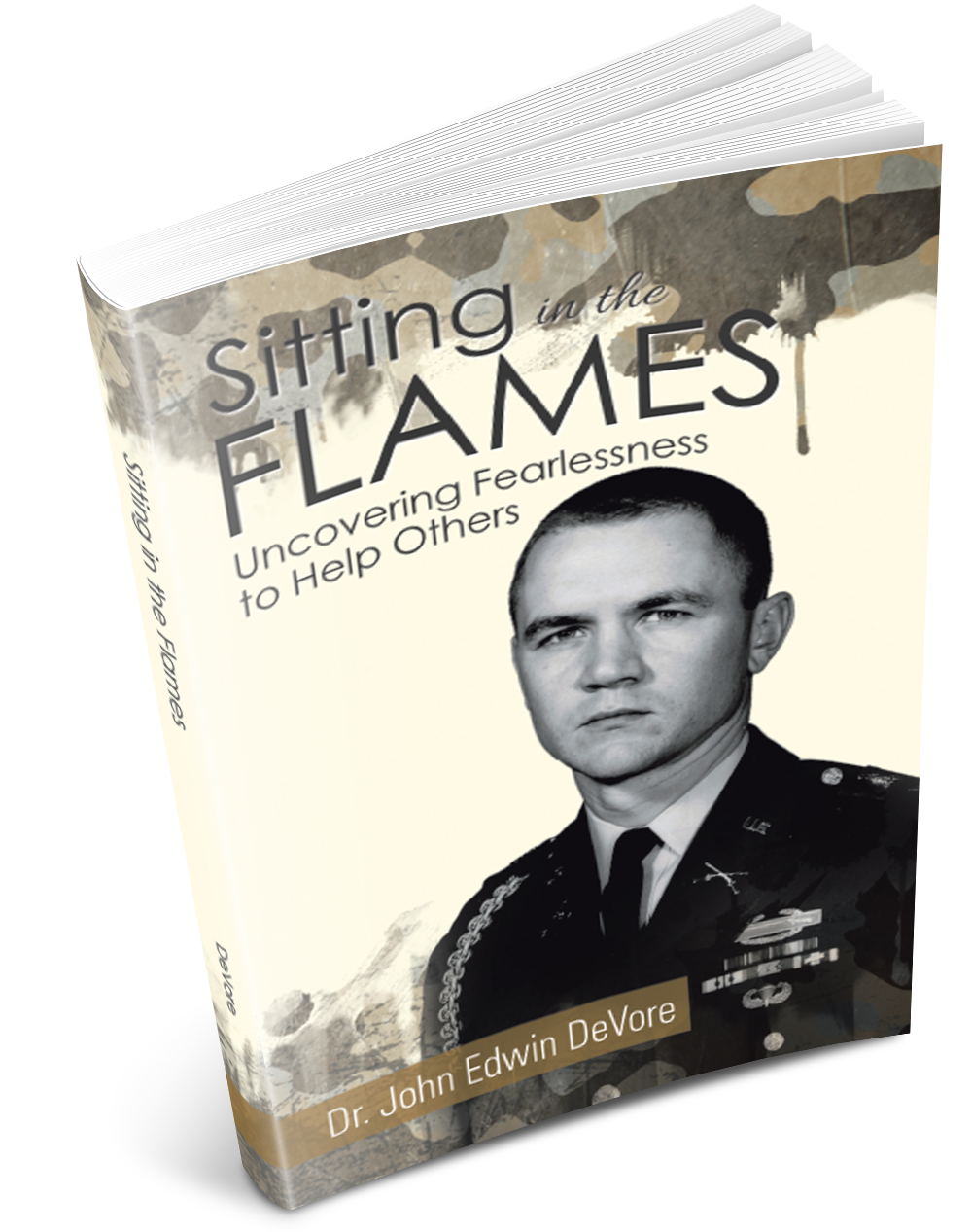
Webster offers that insanity is defined as mental illness of such a severe nature that a person cannot distinguish fantasy from reality, cannot conduct her/his affairs due to psychosis, or is subject to uncontrollable impulsive behavior. Some causes: severe psychological trauma suffered as a child, such as emotional, physical, or sexual abuse; an important early loss, such as loss of a parent; neglect; or poor ability to relate to others.
Gosh, could insanity possibly be behind the curtains of the daily Presidential parade across the stages—”photo opportunities”—for media to capture and display for all to see? Is this the behavior—the character, the personality and mentality—we want to have “show-up” in the kids and grandkids? Is this person qualified to be President of the United States? There is anger, arrogance, attachment, jealousy, envy and delusion; and underneath each is fear. And, in his tribal base, the Donald Trump party, one notes human needs for safety, recognition, security, loyalty, admiration and allegiance to the chief.
A few of the words media has used to describe this chief are angry, mean, liar, racist, insults, exaggerates, provokes, ignorant, attached to Self, psychotic, spins, deceptions, puts out what he receives back, jealous, envious, disparaging, name calling, sexist, misogynist, sarcastic, game player, tantrums, childish, circus ring-leader, deflector, flypaper for attention, egotistic, narcissist, attention wanting, divisive, polarizing, tribal, identity seeker, loud, rude, outrageous, phony, blames, refuses to accept responsibility, confrontational, weak, cantankerous, badgering, threatening, law breaking, like gum on the bottom of a shoe, dictator, deconstructs constitutional, legal, government and political norms, selfish, demagogue, cruel, short-sighted, repulsive, loathed, moral failure, criminal, corrupt, hate flinger, celebrity and right, wrong, should, and ought for you, not me.
Thoughts then wander to the Access Hollywood Tape, 12 women with sexual harassment claims, pay-offs to Stormy Daniels and Karen MacDougal; southern border immigration disasters; Mueller Report (Russian interference in 2016 election; obstruction of justice; Roger Stone, Paul Manafort, Michael Cohen, Carter Page and Michael Flynn in prison); impeachment fiasco, quid pro quo with Ukraine; COVID-19 pandemic leadership and management is an absolute chaotic disaster costing American lives; recent disastrous leadership and management of racism demonstrations in the country, to include use of Federal forces to push peaceful protestors away to permit him to have a personal photo opportunity holding a Bible upside down; indiscriminate, self-serving sales of weapons to Saudis; and ignoring racial injustice opportunities and challenges by refusal to embrace long overdue police reform, removal of Confederate artifacts that remind of slavery and change of Confederate commander names of 10 military bases—these gentlemen were folks who fought against the United States and represent subjugation of an entire people and the failure to protect the rights of all.
Moreover, we are witness to a Commander-in-Chief who chooses not to champion those in uniform and respect the core values of the military: 1) does not set a good example; 2) lies to self-serve; 3) dismissed as headaches the blast exposure soldiers received from a 2020 Iranian missile attack; 4) in three plus years he has made only three visits to soldiers in war zones; 5) has referred to military leaders as “dopes and babies” when being briefed about the value of allies and overseas commitments; 6) reversed punishments or convictions for troops accused or convicted of war crimes; 7) has excoriated soldiers who have irritated him: Senator John McCain, a prisoner of war in North Vietnam for more than five years; Defense Secretary James Mattis: “…the world’s most over-rated general…”; and combat-wounded Lieutenant Colonel Alexander Vindman was “very insubordinate” and fired from the White House for testifying at Donald Trump’s impeachment. Donald Trump is an embarrassment to America.
Greed, sex and the passion for power and control can overwhelm and addict. Consumption can keep us distracted, busy, distant, and numb! Consequently, we take no time to feel. A Buddhist mantra offers, “May all sentient beings be free from the root of suffering.” The root is quite simply thirst, or desire, for more. Amidst the coronavirus pandemic, could this be the strategy behind re-opening American businesses? Distracted, busy, distant, and numb to preclude the necessity for staying at home and facing silent self alone and accepting and feeling that Donald Trump is a victim of the Peter Principle: the job he has is beyond his level of competence. Glennon Doyle, Untamed, offers a nice reflective question: “Who was I before the world told me who to be?” Morris Pearl contends,
So if you must, be selfish. Be selfish in recognizing that your life, your success, your worth is inseparable from those of your neighbors. I want to-need to-live in a country where all of the people are able to feel safe and make a living and pay their bills every month and save for their retirement and send their kids to college. I need to live in a country where all the people feel confident that their votes count and that their leaders reflect their values. If we do not have that, no amount of security is going to make it possible for my children and grandchildren to grow up with the opportunities that I had when I grew up. (Morris Pearl, Chair of the Patriotic Millionaires, USA Today, 6-23-2020, 7A)
Folks, whether Democrat or Republican, we need to evolve our culture, not deconstruct it! America needs to unify and to learn to transcend and include others and move self-awareness beyond the personal. This requires truth, facts and social action that are manifested by leaders who earn power through meaningful, positive influence and inspired leadership to create leading edge cultural and policy needs. We need leaders with crystal clear clarity, integrity and penetrating intelligence, equanimity, a sense of human equality, discriminating awareness, efficiency and effectiveness and relaxed awareness. We can actively support political candidates who offer intelligent management and leadership of the pandemic, demilitarizing the police and redistributing funds to community programs and alternatives to policing. We can actively withhold support for incumbents who continue to approve budgets that have bloated policing budgets. We can invest in Black owned businesses and we can support any number of causes now and in the future, including Black Lives Matter, Equal Justice Initiative, Southern Poverty Law Center, NAACP, White People 4 Black Lives, Color of Change, Equal Justice Initiative, entities that support minority entrepreneurs and many, many more that address systemic racism and unjust issues that we have helped propagate. Donald Trump is in denial, wants to rule us and keep us political party sorted. He does not need four more years! He needs an integral therapist. Do not vote for Donald Trump and members of the Donald Trump Republican party. If you are Republican and respect the core values of the Republican party, either vote for Joe Biden, write in a candidate, or simply do not vote. We need sanity, not insanity!
Ever since teeing up that first golf ball with Mom and Dad at the age of seven, golf has been a patient life coach; and as the years have sped by, the sport continues to coach and counsel. Recent experiences have offered that if open and psychologically ready for the infinite messages, “simple” in golf and life can be discovered beyond sport and life’s complexities.
As humans, Christian Larson’s (The Great Within) message is clear: we are reflections—thinking, personality and character—of the language we live-in. As Abel Leighton Allen contends, “Our todays are the result of our past thinking, our tomorrows the result of our present thinking. We have been our mental parents, and we shall be our own mental children.” How would Woody and Birdy Ball, Golf as Guru, use this taste of philosophy on every shot or putting stroke on the golf course? “Too complicated for us: Just learn to program and trust the subconscious to hit the #$@% golf ball to an intended target.”
Step One: Create a clear, conscious vision of the ball at the desired target; and feel what is required to place the ball at the target: body mechanics, club mechanics, swing motion and ball position.
-Club required.
-Immaculate set-up.
-One piece take-away.
-No hurry to transition for full torque turn.
-Smooth transition
-Accelerating forward swing and release.
-Club face square to ball-target line at impact: 49 degrees of tilt.
-Extension of club to target.
-Complete finish.
Step Two: Go to the breath and program the subconscious with the vision of the what and the how—breathe it, think it, deeply feel it, see it, taste it, smell it and touch it.
Step three: Proceed with the pre-shot routine and ritual for the desired shot or stroke.
Step four: Celebrate!
As Birdy offers, “Yes! We are thinking, personality and character reflections of the language we live in. Let’s live in the language we desire! Not the swing thoughts and whims of the monkey mind that keep us mired two shots from insanity.”
The book is Integral Life Practice (Wilber et al, 2008, Integral Books), Chapter 4: The Shadow Module, page 51-52, Gold Star Practice, The 3-2-1 Shadow Process. The assignment is to pick a “difficult person” by whom you are repelled or disturbed: makes you easily triggered, reactive, irritated, angry or upset; or may keep coming up as an emotional tone or mood that pervades your life. Then follow three steps: 3-Face It; 2-Talk to It; and 3-Be It. The person chosen is Donald J. Trump and he has occupied the Office of the President of the United States since January 21, 2017.
3-Face It: Describe the person, situation, image in vivid detail using 3rd person pronouns. What is it that disturbs you?
A few of the words that describe this person, who is unqualified to serve as President, are angry, mean, liar, racist, insults, exaggerates, provokes, ignorant, attached to Self, psychotic, spins, deceptions, puts out what he receives back, jealous, envious, disparaging, name calling, sexist, misogynist, sarcastic, game player, tantrums, childish, circus ring-leader, deflector, flypaper for attention, egotistic, narcissist, attention wanting, divisive, polarizing, tribal, identity seeker, loud, rude, outrageous, phony, blames, refuses to accept responsibility, confrontational, weak, cantankerous, badgering, threatening, law breaking, like gum on the bottom of a shoe, dictator, deconstructs constitutional, legal, government and political norms, selfish, demagogue, cruel, short-sighted, repulsive, loathed, moral failure, criminal, corrupt, celebrity and right, wrong, should, and ought for you, not me. Thoughts then wander to the Access Hollywood Tape, 12 women with sexual harassment claims, pay-offs to Stormy Daniels and Karen MacDougal; southern border immigration disasters; Mueller Report (Russian interference in 2016 election; obstruction of justice; Roger Stone, Paul Manafort, Michael Cohen, Carter Page and Michael Flynn in prison); impeachment fiasco, quid pro quo with Ukraine; COVID-19 pandemic leadership and management is an absolute chaotic disaster costing American lives; recent disastrous leadership and management of racism demonstrations in the country, to include use of Federal forces to push peaceful protestors away to permit him to have a personal photo opportunity holding a Bible upside down; indiscriminate, self-serving sales of weapons to Saudis; and refusal to change the Confederate commander names of 10 military bases and remove Confederate artifacts that remind of slavery. Moreover, we are witness to a Commander-in-Chief who chooses not to champion those in uniform and respect the core values of the military: 1) does not set a good example; 2) lies to self-serve; 3) dismissed as headaches the blast exposure soldiers received from a 2020 Iranian missile attack; 4) in three plus years he has made only three visits to soldiers in war zones; 5) has referred to military leaders as “dopes and babies” when being briefed about the value of allies and overseas commitments; 6) reversed punishments or convictions for troops accused or convicted of war crimes; 7) has excoriated soldiers who have irritated him: Senator John McCain, a prisoner of war in North Vietnam for more than five years; Defense Secretary James Mattis: “…the world’s most over-rated general…”; and combat-wounded Lieutenant Colonel Alexander Vindman was “very insubordinate” and fired from the White House for testifying at Donald Trump’s impeachment. Donald Trump is an embarrassment to America.
2-Talk to It
John: Tell me about your childhood.
Don: It was tough. Never saw or talked to Mom. Dad was always working; and when I saw him, he was always wanting to know what I was doing to pull my share of the load. Folks offer that he left me a lot of money. However, not true.
John: Where did you go to school?
Don: Went to grade school and high school in Queens. Then off to a military prep school and Penn State, Wharton. Grades were always A’s.
John: Who were your friends growing up?
Don: Did not have any. Pretty much did my own thing.
John: Tell me about your family life and kids.
Don: Three wives. Not much to report other than great sex. Have five kids: Don, Jr., Eric, Ivanka, my favorite, Tiffany; and Baron. They are highly successful and work for me in my business.
John: Describe a situation where you helped someone solve a difficult problem.
Don: Filed a lawsuit in Scotland to have windmills removed from the views of my golf course.
John: What do you expect from persons who work for you?
Don: Yes, sir. No, sir. No excuse, sir. Lie, cheat, steal…whatever is necessary to win. Win at all cost. Absolute loyalty. Defend me at all cost. I am a genius and know more than all the folks in the world. I am rich. I rule this kingdom. I am tough and have no emotional attachment to anything. Yes, I do relish the position power.
John: What makes you angry?
Don: Any thing that does not go my way or is contrary to my beliefs.
John: What do you do in your spare time?
Don: Watch television, play golf, eat, go to Mar-a-Lago and be with friends, and I just love to be with groups of followers and rally to them.
John: Tell me about your greatest accomplishment.
Don: Being President and rich.
John: What do you like most about being President?
Don: The power of the position.
John: What do you dislike most about being President?
Don: Pretending to hear what others have to offer to solve problems. I can solve all problems in less time and with less effort.
John: Tell me about your greatest disappointment.
Don: Not able to have my own kingdom.
John: What is your greatest strength?
Don: Winning!
John: What is your greatest weakness?
Don: I do not have any. Just ask my kids, wives or those who work for me.
John: Describe a situation in which you failed.
Don: I have never failed.
John: Tell me about your favorite courses in school.
Don: I do not like to study and read.
John: Discuss a person who you admire.
Don: I want all folks to be like me.
John Discuss your biggest mistake in dealing with people.
Don: I do the right thing with all folks.
1-Be It.
I am too self-serving, over my head and not qualified for the job of President, simply lost and in need of integral therapy. My base folks need help, too. Please help them. I am too self-centered and just not emotionally connected to learning, sitting in pain, being honest, horror, the absurdity of America’s history and to the humanity of those who dared stand against the system. Ain’t no friends here. Four-hundred years is too long; and the opportunity to begin to unite the country is staring at us. Political party sorted Democrats and Republicans need to remove the ego disguises and provide a welcoming, inclusive environment. Quickly change the symbolic reminders of slavery by changing the names of the 10 military bases and removing Confederate flags, statuary, and artifacts. Let us put together game plans to transcend and include others: heal others, build up others; strengthen trust within coalitions; extend forgiveness; become an active listener; and inspire greatness in others. I am proud to serve alongside each person as we pursue excellence while at the same time respecting the dignity of teammates. Together, we can confront and solve problems with efficient, effective, and compassionate dialogue that seeks solutions rather than sowing seeds of division and disunity.
In The Blood Lust of Identity Ian Buruma offers, “Identity is what gets the blood boiling, what makes people do unspeakable things to their neighbors. It is the fuel used by agitators to set whole countries on fire.” Yes! We need to get back to the work of governing instead of focusing so much of our energy on partisan victory, conflict, and pride. Folks, we collectively must wake up, begin to think sanely, and elect political leaders with new trajectories and course setting strategies that manifest from deep within the cockpit of compassionate souls. We are de-railed and can begin to re-rail with votes this November.
Having been born in Defiance, Ohio and raised in the small town of Sherwood, Ohio in Northwest Ohio farm country, the evolving America of today is a far cry from what was modeled during those early years. Dad owned a hardware store and Dad, Mom, brother Dan, and I helped make the store customer friendly for all customers. We went to church on Sunday, had pleasant time together as a family and with cousins from Fort Wayne, Indiana. Dan and I played with the neighborhood kids and went to the local school. The teachers, coaches, spiritual leaders, and neighborhood parents were great, and many of the names re-surface daily. Life was simple! Perhaps Glennon Doyle nails it when she comments that when we reach the age of ten, we lose who we are and become who others think we should be. Confusion and chaos set in and we grow up curious and puzzled about who we really are. Wow! There has been a lot of losing going on! Have we really become who others think we should be?
To get the Self right it was off to obtain degrees; 12 years as a trained killer and decorated combat veteran who did not care whether fellow soldiers were Democrat or Republican; 23 years in corporate America that included creation of minority and women supplier development programs and seven minority, women, gay and deaf employees’ advisory councils; two marriages, three wonderful kids and six grandchildren; and retired and still trying to get the golf game and life right. Quite simply, experience offers that the strategy of anger and divide hurts folks; any idiot can make up stories to fit a narrative; schoolyard viciousness comes from 8-year old bullies; disrespect invites disrespect; violence incites violence; and when the powerful use position power to bully others we all lose.
As one of many combat veterans, we are witness to a President who chooses not to champion those in uniform and respect the core values of the military: 1) does not set a good example; 2) lies to self-serve; 3) dismissed as headaches the blast exposure soldiers received from a 2020 Iranian missile attack; 4) in three plus years he has made only three visits to soldiers in war zones; 5) has referred to military leaders as “dopes and babies” when being briefed about the value of allies and overseas commitments; 6) reversed punishments or convictions for troops accused or convicted of war crimes; 7) has excoriated soldiers who have irritated him: Senator John McCain, a prisoner of war in North Vietnam for more than five years; Defense Secretary James Mattis: “…the world’s most over-rated general…”; and combat-wounded Lieutenant Colonel Alexander Vindman was “very insubordinate” and fired from the White House for testifying at Donald Trump’s impeachment.
Political party sorting has divided the country, is dividing the country, and will continue to divide and deconstruct this country unless “we the people” make a definitive course correction. We need to elect and re-elect sane political leaders who are aware and understand the perils of partisanship and who have a track record of leading, healing, transcending and including, and uniting diverse groups of folks…coalitions unify. We are all humans and have needs and wants and together we can make those needs and wants become reality. Each of us needs to stand in the face of power and tell the truth. Let us elect political leaders who are masters of the Self and who model the way as persons, in relationships, and by helping others. Let us not re-elect or elect deranged idiots.
Except for a few, cross-cut individuals, Americans have evolved to be a political party sorted country; and daily, we are becoming more sorted. It reminds of a Broncos-Raiders football game: a must win at all cost. Wilber et al contend, “…partisan politics is a dangerous duel of limited and partial truths… glaring inadequacies of both parties, due largely to their lack of view big enough to address the complex issues facing us today.” (Integral Life Practice, 2008, Integral Books, 114) Lilliana Mason, Uncivil Agreement, offers,
Well-sorted citizens are broadly emotionally responsive. They get angry at any message of threat, and they get happy at any message of victory. Whether party-based or issue-based, highly sorted individuals react to political messages with emotional reactions that match those driven by the strongest partisans or the most issue-intense individuals. However, while the emotional reactions of highly sorted individuals match the maximum emotional reactions already found in the electorate, the reactions of cross-cut individuals are significantly less intense than the reactions of any other citizens…Cross-cutting identities dampen emotional reactions to political messages, such that the most cross-cutting identities lead to a complete lack of emotional response. This lack of response exists only in the group of cross-cut citizens that are increasingly disappearing from the American electorate.
It appears the wants are clear: freedom; the chance for prosperity; as few people suffering as possible; healthy children; and to have crime-free streets. (StudentNewsDaily.com, “Conservative vs Liberal Beliefs,” 2010) The political party sorting appears to be based on how to achieve the wants. Mason suggests that President Trump’s supporters are simply refusing to see facts that contradict their beliefs. She contends,
As Americans continue to sort into partisan teams, we should expect to see more of this emotional reaction, no matter how much we may truly agree on specific policies…In other words, the anger driven by intergroup conflict and the gradual reduction of cross-cutting identities in the electorate is actively harming our ability to reasonably discuss the important issues at hand. The more people who feel angry, the less capable we are as a nation of finding common ground on policies, or even treating our opponents like human beings. Our emotional relationships with our opponents must be addressed before we can hope to make the important policy compromises that are required for governing.
Aside from age as an older senior, and golfer, too, it feels like I am one of the cross-cutting citizens who are disappearing. Having traditionally made voting decisions based on individuals who were believed to be objective, who were not self-serving and who would make decisions that were in best interests of the country, the decision for November 2020 is clear. Lying awake last evening the mind rambled: embarrassing, obnoxious, public display of incompetence, dereliction of duty, corruption, catalyst for racism, absolute chaotic disaster and absence of compassion during a global pandemic-100,000+ deaths-punctuated by “keep your mouth shut” pay-offs to prostitutes Stormy Daniels and Karen McDougal; 12 women claiming sexual harassment; cheating on two wives; the Mueller Report (nine counts of obstruction of justice, Russian interference in the 2016 election and four persons in jail: Roger Stone, Michael Flynn, Michael Cohen, Carter Page); refusal to disclose personal financial information; conduct above the law; impeachment for obstruction of justice; on-going institutional destruction and deconstruction; and choosing not to model the way for American citizens. And there are politically, well-sorted Americans who blindly defend this behavior by the President of the United States. From the perspective of an older senior, not good, not OK for America.
How can we evolve our emotional relationships with our opponents? We can play golf; we can continue our lifetime work on self-restraint; we can evolve our integral life awareness, understanding and practice; and we can stand in the face of power and tell the truth. The fear; distractions; lies and deception; and if the facts make you look bad, deny the facts, are strategies that do not promote perfectly healthy communities and a perfectly healthy American culture. We can do better in November 2020!! Whether Democrat or Republican, we need positive, high quality leaders who transcend, inspire, and include others and earn the power of elected positions through exemplary character, personality, mentality, compassion, and magnetism. It is time to hire leaders who evolve our awareness and put us on a path to create a country that “… not only sees through but also lets go of the gross related ego-self as the center and anchoring reference point from which the complex dance of relations, processes, and experience is always seen. This relaxes the tension or stress between individuality and interconnected unity.” (Wilber et al, 97)

Except for a few, cross-cut individuals, Americans have evolved to be a political party sorted country; and daily, we are becoming more sorted. It reminds of a Broncos-Raiders football game: a must win at all cost. Wilber et al contend, “…partisan politics is a dangerous duel of limited and partial truths… glaring inadequacies of both parties, due largely to their lack of view big enough to address the complex issues facing us today.” (Integral Life Practice, 2008, Integral Books, 114) Lilliana Mason, Uncivil Agreement, offers,
Well-sorted citizens are broadly emotionally responsive. They get angry at any message of threat, and they get happy at any message of victory. Whether party-based or issue-based, highly sorted individuals react to political messages with emotional reactions that match those driven by the strongest partisans or the most issue-intense individuals. However, while the emotional reactions of highly sorted individuals match the maximum emotional reactions already found in the electorate, the reactions of cross-cut individuals are significantly less intense than the reactions of any other citizens…Cross-cutting identities dampen emotional reactions to political messages, such that the most cross-cutting identities lead to a complete lack of emotional response. This lack of response exists only in the group of cross-cut citizens that are increasingly disappearing from the American electorate.
It appears the wants are clear: freedom; the chance for prosperity; as few people suffering as possible; healthy children; and to have crime-free streets. (StudentNewsDaily.com, “Conservative vs Liberal Beliefs,” 2010) The political party sorting appears to be based on how to achieve the wants. Mason suggests that President Trump’s supporters are simply refusing to see facts that contradict their beliefs. She contends,
As Americans continue to sort into partisan teams, we should expect to see more of this emotional reaction, no matter how much we may truly agree on specific policies…In other words, the anger driven by intergroup conflict and the gradual reduction of cross-cutting identities in the electorate is actively harming our ability to reasonably discuss the important issues at hand. The more people who feel angry, the less capable we are as a nation of finding common ground on policies, or even treating our opponents like human beings. Our emotional relationships with our opponents must be addressed before we can hope to make the important policy compromises that are required for governing.
Aside from age as an older senior, and golfer, too, it feels like I am one of the cross-cutting citizens who are disappearing. Having traditionally made voting decisions based on individuals who were believed to be objective, who were not self-serving, and who would make decisions that were in best interests of the country, the decision for November 2020 is clear. Lying awake last evening the mind rambled: embarrassing, obnoxious, public display of incompetence, dereliction of duty, corruption, catalyst for racism, absolute chaotic disaster and absence of compassion during a global pandemic-100,000+ deaths-punctuated by “keep your mouth shut” pay-offs to prostitutes Stormy Daniels and Karen McDougal; 12 women claiming sexual harassment; cheating on two wives; the Mueller Report (nine counts of obstruction of justice, Russian interference in the 2016 election and four persons in jail: Roger Stone, Michael Flynn, Michael Cohen, Carter Page); refusal to disclose personal financial information; conduct above the law; impeachment for obstruction of justice; on-going institutional destruction and deconstruction; and choosing not to model the way for American citizens. And there are politically, well-sorted Americans who blindly defend this behavior by the President of the United States. From the perspective of an older senior, not good, not OK for America.
How can we evolve our emotional relationships with our opponents? We can play golf; we can continue our lifetime work on self-restraint; we can evolve our integral life awareness, understanding and practice; and we can stand in the face of power and tell the truth. The fear; distractions; lies and deception; and if the facts make you look bad, deny the facts, are strategies that do not promote perfectly healthy communities and a perfectly healthy American culture. We can do better in November 2020!! Whether Democrat or Republican, we need positive, high quality leaders who transcend, inspire, and include others and earn the power of elected positions through exemplary character, personality, mentality, compassion, and magnetism. It is time to use our tax dollars to hire leaders who evolve our awareness and put us on a path to create a country that “… not only sees through but also lets go of the gross related ego-self as the center and anchoring reference point from which the complex dance of relations, processes, and experience is always seen. This relaxes the tension or stress between individuality and interconnected unity.” (Wilber et al, 97)
Reflecting on etiquette reminds of the green on hole number one at Orchard Hills Country Club, Bryan, Ohio. As an eight-year-old, it was the beginning of a great day playing golf with Dad. Dad was putting for a birdie and the author was behind the hole astride Dad’s putting line. Dad bellowed, “G#* John, get out of my putting line!” Yes, Dad was a stickler about course etiquette; and his passion for courtesy on the course is alive in the author today.
Practicing course etiquette respects the legendary core values and guiding principles of the game. Nothing is more frustrating than playing with a golfer who has not taken the time and opportunity to become familiar with course etiquette, the spirit of the game, safety, putting green courtesies and mindful control of disturbance and distraction. Golf coaches, including my dad, always counseled as follows:
- Live the spirit of the game with integrity: be courteous and considerate of others, count all strokes and play by the Rules. Unless stated in local rules or agreed to before teeing off on the first tee, players are not allowed to improve the lie of the ball on fairways or in roughs. You are on your honor to include penalties for grounding your club in sand traps and out-of-bounds, accidently moving the ball and hitting another player’s ball on the putting green.
- Prior to teeing off on the first tee: 1) discuss and agree on any special rules for this particular game—mulligans, strokes given or received and changing to a clean ball on the putting green; and 2) flip a coin or tee for honors on the first tee. Honors on subsequent tees go to the player with the lowest score on the hole just finished. In the event of a tie, honors revert to the winner of the preceding hole.
- Avoid standing close to or directly behind the ball when a player is about to play; and do not disturb play by fidgeting, moving, talking or making unnecessary noise. Noisy electronic devices need to be shut off before arriving at the golf course.
- When a player drives a tee shot out-of-bounds, a nice gesture is to invite the player to take a short break, get composed and not play another ball until other players have played. Play safe: warn greens keeping staff who may be in danger and shout “fore” when there is danger of hitting someone. When other golfers are ahead of you wait until they are one full shot ahead before you shoot.
- Repair divots on tees and in the fairway: a good practice is to use sand-seed mixture to repair divots on tees and fairways.
- Observe golf car movement signs.
- Always enter and leave sand traps on the low side. Rake footprints and sand divots in bunkers. Replace the rake in the bunker on the side away from the pin with the handle to tee.
- The player closest to the pin tends the flagstick for other players as they desire. The player whose ball is furthest from the hole putts or shoots first.
- On the green, when you are closer than other golfers, properly mark your ball with a golf ball marker. Players are on their honor to replace marked balls as precisely as possible. Loose impediments can be removed from your putting line; and fixing ball marks and green damage on the line-of-putt are permissible.
- Do not stand on another player’s line-of-putt or directly behind the hole when he-she is making a stroke. When someone else is putting, other players should stand well out of his-her line-of-putt and field of vision; and these golfers should be aware of where their shadows are falling: shadows should not be allowed to cross the putter’s line-of-sight and, if possible, should be kept out of his-her peripheral view.
- Prevent unnecessary green damage. Do not: drag, twist or scuff your golf shoes; place golf bags on the green; pull golf carts on the green; drive golf cars on the green; stand too close to the hole; use club heads to remove the ball from the hole; or lean on clubs on the green or when removing the ball from the cup. Repair green damage caused by golf shoes or ball marks with either a tee or divot tool. When removing the flag stick, carefully lay the pin on the fringe of the green.
- Wait on the green or green fringe until all players hole out; and move away from the green as a group.
- Record scores on the way to the next hole.
Hit ‘em high and straight, don’t miss three-foot putts and count all of your strokes. As Sir P. G. Wodehouse offers, “To find a man’s character, play golf with him.”
The golf course has been a wonderful place to learn about and practice the art and science of mastering the self; health, wellness and well-being; and mind”full”ness, awareness and self-restraint. The game’s gifts reminds of General Douglas MacArthur’s words, uttered in the context of West Point, Black Knights of the Hudson football: “Upon the fields of friendly strife are sown the seeds that at other times and in other places, bear he fruits of victory.”
A recent journey, inspired by the golf instruction to trust the subconscious mind to swing the golf club, has been into the wonders and world of the subconscious mind. Little did I realize that the subconscious mind touches everything we think and do; that our character, personality, mentally and magnetism are expressions of the subconscious mind; and that we receive back the programming we have consciously or unconsciously offered to the subconscious. A frequent question has been: Why didn’t I learn about the subconscious mind in school? Two answers that have emerged are that folks want to control the evolution of the lives of others; and that awareness and understanding of the subconscious are subjective and not scientific. Consequently, as humans we wake up, grow up and show up through the conscious mind where only 10% of who we are exists. Unfortunately, we miss 90% of who we are.
Recent golf experiences with the power of harmony between the conscious and subconscious mind offers that trusting the subconscious to swing the club has resulted in playing golf that is the “funest” and “bestest” ever. The disposition and attitude about life and living are more positive, there is more patience, swing thoughts have become almost non-existent and health, wellness and well-being have moved to the front of each day with mantras. A nice mantra is “Every day in every respect, I am getting better and better.” (Emile Coue’) If your desire and will are fired up and you are ready to learn more about the subconscious, Christian D. Larson’s The Great Within might work for you. Have fun, trust the subconscious and hit ‘em high and straight…club through the ball to the target. Enjoy the trip to the World Golf Hall of Fame with Woody and Birdy Ball!!
Words have always been a fascination! Perhaps it’s in the genes. Grandmother was a schoolteacher at Mark Center, Ohio High School; and she loved words; and Dad studied the dictionary and was reading the Saturday Evening Post before he was off to the first grade. Grandma worked the Toledo Blade crosswords: had a stack beside her Morris chair; and she read the Reader’s Digest and was religious about keeping every copy of the Digest and completing “It Pays to Increase Your Word Power” pages in the Digest. Before taking the SAT and ACT college entrance tests, Grandma and I studied words at her oak dining room table using her collection of Reader’s Digest “Word Power” articles.
A recent list of words reminded of the time with Grandma: bamboozled, discombobulated, cattywampus, malarkey, brouhaha, skedaddle, doohicky, persnickety, whatnot, gobsmacked, flibbertigibbet, tenterhooks, poppycock, whippersnapper, flabbergasted, shenanigans, lollygag, kerfuffle, nincompoop, pumpernickel, thingamajig, whatsit, whatchamacallit, flummoxed, dingleberry, goggleygook, canoodle and codswallop.
As a reader, a few of the recent words used to describe Donald Trump: angry, mean, liar, racist, insults, exaggerates, provokes, ignorant, attached to Self, spins, deceptions, puts out what he receives back, jealous, envious, disparaging, name calling, sexist, misogynist, sarcastic, game player, tantrums, childish, circus ring-leader, deflector, flypaper for attention, egotistic, narcissist, attention wanting, dividing, divisive, polarizing, tribal, identity seeker, loud, rude, outrageous, phony, blames, refuses to accept responsibility, confrontational, weak, cantankerous, badgering, threatening, law breaking, like gum on the bottom of a shoe, dictator, deconstruction of constitutional, legal, government and political norms, selfish, demagogue, cruel, short-sighted, repulsive, loathed, moral failure, criminal, corrupt, celebrity and…right, wrong, should, and ought for you, not me. Thoughts then wander to the Access Hollywood Tape, 12 women with sexual harassment claims, pay-offs to Stormy Daniels, Karen MacDougal, southern border immigration disasters, Mueller Report (Russian interference in 2016 election; obstruction of justice; Roger Stone, Paul Manafort, Michael Cohen, Carter Page and Michael Flynn in prison), impeachment fiasco and pandemic leadership and management chaotic disaster. Really?
We can do better in the November 2020 election!! Quite simply, we need a strong leader who models the way and manifests American character, personality and mentality; cares about people; knows how to get good things done with good people through credible, earned influence; stands up for United States interests; is honest and trustworthy; and can work with foreign leaders.
“If we want to know who we were meant to be before the world told us who to be…” (Glennon Doyle, Untamed) we will make a difference in our reality. Words do make a difference. Let us make “much better” and “beautiful” a reality in November 2020!! Quite simply: grounded, professional, effective, accountable, 100% responsible, kind, wise, generous, loving, leader, compassionate, patient, disciplined, tolerant, empathetic, stability, outer equality, discriminating awareness, values diversity, inclusive, transcends and includes, humane, harmonious, beautiful, healthy, well-being, models wellness, mindful, self-restrained, aware, globally respected, sane, quality, facts, truth, honesty, integrity, morality, magnetic, visionary…am certain you get the picture. Yes! We will do much, much, much better!!
As a West Point graduate—class of 1962, proud member of the Long Gray Line, and decorated two-year combat veteran, an opinion is that President Trump, Commander-in-Chief, chooses not to champion those in uniform and does not respect the core values of West Point and the military.
*Does not set a good example: during the global pandemic he has chosen not to wear a mask to protect others. “Leadership is the art of influencing and directing people to an assigned goal in such a manner as to command their obedience, confidence, respect, and loyal cooperation.” (Notes for the Course in the History of the Military Art, Department of Military Art and Engineering, United States Military Academy, West Point, New York, 1957, page 3)
*He lies to self-serve: this began with exaggeration of attendance numbers for his Inauguration as President of the United States, January 2017. The Honor Code at West Point: “I will not lie, cheat or steal nor tolerate those amongst us who do.”
*Has created unnecessary risks to 1000 graduating cadets because they must return to West Point, during the pandemic, most likely through New York City, to hear his graduation speech. To hear his “rally” speech the cadets will travel from locations around the world to West Point, quarantine for three weeks, be tested for the coronavirus virus and then assemble on June 13 in one space primarily for one purpose: so Donald Trump can bolster his ego and finally deliver a commencement address to graduating Army seniors.
*Suspiciously avoided the Vietnam War era draft as a privileged and athletic college student and claimed to have bone spurs in his heels.
*Dismissed as headaches the blast exposure soldiers received from a 2020 Iranian missile attack. Seven of these soldiers were recently awarded Purple Hearts.
*In three plus years in Office, Donald Trump has made only three visits to soldiers in war zones.
*President Trump has referred to military leaders as “dopes and babies” when being briefed about the value of allies and overseas commitments. “You’re all losers,” an irritated Trump reportedly said. “I wouldn’t go to war with you people.” (USA Today, Wednesday, May 5, 2020)
*Reversed punishments or convictions for troops accused or convicted of war crimes. Example: former Navy Seal Eddie Gallagher was acquitted of war crimes and hosted by President Trump at Mar-a-Lago.
*He has excoriated soldiers who have irritated him: Senator John McCain, a prisoner of war in North Vietnam for more than five years; Defense Secretary James Mattis: “…the world’s most over-rated general” for resigning because of President Trump’s policy in Syria. The United States withdrew protection of Iraq War, Kurd allies along the Turkey-Syria border; and turned re-drawing and control of the border over to Russia, forcing Kurds living along the border to re-locate. Combat-wounded Lieutenant Colonel Alexander Vindman was “very insubordinate” and fired from the White House for testifying at Donald Trump’s impeachment.
USA Today, Wednesday, May 6, 2020 reports that since Trump’s election, the percentage of service members disapproving of his performance has gone from a third to half the nation’s fighting force. This soldier, West Point graduate, proud member of the Long Gray Line and decorated combat veteran, is disgusted with the performance of President Donald Trump as Commander-in-Chief and as President of the United States. He is an embarrassment to America around the globe. We need leaders not celebrity narcissists who are self-serving pansies. Reflecting on the Access Hollywood Tape, hush payoffs to Stormy Daniels and Karen McDougal, 12 women filing sexual harassment claims, the Mueller Report (Russian interference in a Presidential election, nine counts of obstruction of justice and five persons in jail: Roger Stone, Paul Manafort, Michael Flynn, Michael Cohen and Carter Page), impeachment, and total, egotistical, dereliction of duty during a global pandemic help this combat veteran understand why we can do better in November 2020. When the bullets begin to fly, combat troops do not care whether you are a Democrat or a Republican! We just need good leaders who earn respect with exemplary character, personality, mentality, and leadership!!
Trusting the subconscious mind to swing the golf club has evolved an inspiration to be more positive; and guess what! The game is the “funest” and “bestest” ever!! Placing rampant swing thoughts on a bus to South America, providing clear “desired results” to the subconscious and passionately connecting the conscious mind with the subconscious mind—mind”full”ness—is a new, exciting experience.
Christian D. Larson offers,
The subconscious not only reproduces exactly what has been recorded, but will also form, create, develop and express what mind may desire when the impression is being made; that is, the subconscious not only produces the seed itself, but as many more seeds as the original seed desired to reproduce, and also the exact degree of improvement in quality that was latent in the desire of the original seed or impression.
Essential transitions associated with Coronavirus have triggered inspiring experiences about remaining “golf ready” at home: Momentus Swing Trainer, a stationary bike, Yoga for Golfers (Katherine Roberts, 2004, McGraw-Hill), push-ups, sit-ups, lunges and squats. Last week, while lunging past the living room bookshelves, Cindy Reid’s book, Get Yourself in Golf Shape: Year-Round Drills to Build a Strong Flexible Swing (2005, Rodale), hooked the attention. Her book offers that there are seven positions of the golf swing: set-up, take-away, top of the back swing, initial forward swing, impact, extension and finish; and she offers exercises to train the muscles associated with each position. Could her position exercises be used to link the conscious mind with the subconscious mind?
Working with the subconscious mind is a new experience for this golfer; and I make absolutely no claim to be a subconscious mind expert. A commitment is to keep you informed about progress experiences. As a point of departure, have added Reid’s “impact position” exercises to the home workout routine:
- Wrist club lift
- Wrist roll
- Wrist curl
- Wrist rotation
- Sit-ups and crunches
- Weighted driver
- Cable pull
- Leg curl
Simply trust the programmed subconscious to perform: with passion burning, the captain of the ship squeezes the auto-pilot button and trusts the carefully programmed subconscious to creatively deliver a ball to an intended target. Tiger Woods commented, “I have learned to trust the subconscious, and my instincts have never lied to me.” Joan King offers, “When you are playing at your peak levels, you are trusting your game to your subconscious mind and allowing your swing to happen automatically.” Just train it and let it do its thing!
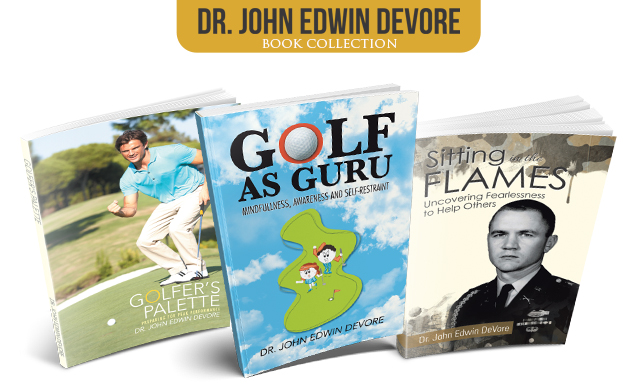
During Corporate America years at Coors a lasting experience was the opportunity to work with Hyler Bracey, President, the Atlanta Consulting Group. The Coors family had hired Hyler and his associates to facilitate transition of Adolph Coors Company from several dependent, vertically organized companies into two independent companies, Coors Brewing Company and Graphic Packaging Company.
At the age of 28, Hyler was in a stock car racing accident and burned over 60% of his body. His face was severely disfigured, and his fingers were like burned twigs in a bonfire. However, his character, personality and mentality, manifested through his blue eyes and subconscious mind, were magnetizing and drew you to his heart. Hyler modeled that scars offer a story of the past and do not dictate where one intends to go. He walked the talk of one of the key concepts he and his associates shared with the Coors leadership team: life happens because of me and not to me, or the concept of 100% responsibility.
Daily we are witness to scurrying about to avoid being identified as the culprit. In our culture there is intense desire to be off the hook; and clever and devious actions taken to get off the hook are known as cover your posterior. Quite simply, desired results do not equal excuses coupled with no desired results; and blaming, justifying, spinning, lying and choosing not to accept responsibility when something goes wrong is a negative life and leadership strategy. Being right is a booby prize! The real prize is the desired result which has not been realized. Blaming and justifying put us at the mercy of other people and events and do not make things happen. A better strategy is not to give away power and influence by blaming and justifying. Take charge: 100% responsibility, I am 100% responsible and others are 0% responsible.
Imagine the power in this country where everyone is assuming 100% responsibility for its success. Imagine how refreshing it would be for the President, Senators and Representatives to be examining what they did and what they could do rather than expending energy and plotting how to get off the hook. Perhaps the greatest value of the 100%-0% concept is that it focuses energy on creating desired results rather than finding ways of avoiding responsibility. Because it encourages folks to develop new options to produce desired results, it is a deeply empowering concept.
Thank you Hyler for pointing the way to 100% responsibility, a leader’s tool to make things happen and generate positive differences in every area of American lives. The negative option is wasting time and money blaming, defending, justifying, spinning, meeting, lying, cheating, making excuses and not getting the job done for Americans.
TRANSITION BLUES
“The certainties of one age are the problems of the next.” (R.H. Tawney)
These are changing and turbulent times that challenge men’s, women’s and children’s hearts and souls. Fear and uncertainty are abundant; and loss of normalcy and identity traumatize. Death, individual and collective health uncertainty, financial insecurity, competitiveness decline, education regression, depressed economy, loss of jobs and freedom, and other pandemic inspired chaos demand proactive and positive responses to its challenges and opportunities.
Unfortunately, many changes have been and will be made with little concern for how they will affect people or for what people will have to do to make them work. It has been assumed that if changes are necessary, people will adjust to them. Experience and literature suggest that the psychological process that change initiates is more like distress and disruption—protests—than adjustment. It is no wonder that most changes will take longer and cost more to implement than anyone anticipates. But that is not the worst problem: many of the changes that are meant to strengthen cultures will weaken them: leave folks resentful, afraid, feeling guilty, self-absorbed, stressed, demotivated, and confused at a time when commitment and creativity are essential. Fortunately, there is an effective way to keep this from happening: good leaders and management of transition. Quite simply, this is helping people minimize the distress and disruption that accompanies change; and facilitating making necessary changes work.
“It is a terrible thing to look over your shoulder when you are trying to lead-and find no one there.” (F.D. Roosevelt)
Transition is psychological adjustment and the process that cultures, institutions, and individuals go through to come to terms with a new situation. It is the process of moving from an ending to a new beginning and it implies a systemic change that incorporates behavioral and cultural changes. Change is a new situation; and transition is a new outlook, new identity, new mind set, new reality. Transition is different from change because it goes on inside the person-psychologically in the conscious and subconscious minds, takes longer, starts with an ending, and finishes with a new beginning. The neutral zone is transition and is mental process between the ending and the new beginning.
Dr. William Bridges (Seminar Outline: “Managing Organizational Transition,” William Bridges & Associates, 38 Miller Avenue, Suite 12, Mill Valley, CA 94941) contends there are six steps in leading and managing a transition: 1) identify the transitions; 2) manage the endings; 3) lead people through the neutral zone; 4) use the neutral zone creatively; 5) orchestrate and support new beginnings; and 6) assess and enhance transition resources.
“Beginnings are always messy.” (John Galsworthy)
A nice place to start with managing transition homework is with questions:
-What are the coronavirus changes being experienced?
-What are the endings that need to be let go?
-What are the new beginnings that need to be embraced?
-With respect to the changes: What is going on inside of you?
-What can you do to facilitate creativity and transition through the neutral zone to the new beginnings?
-What can you do to inspire the new beginnings?
-What are the resources you need to smooth the bumpy neutral zone and make the changes work?
“The best way to be ready for the future is to invent it.” (John Sculley)
While managing a transition process at the Coors Brewing Company in 1993, the author wrote, “The ‘glue’ that will bind Coors Brewing Company together in an uncertain world, and will provide our people the stability necessary to encourage constant experimentation, is TRUST. Our leadership, business, and communication processes will provide a degree of stability, and the resulting trust, for our people. This will encourage the greatly increased day-to-day risk-taking necessary to deal with instability in an industry and a world turned upside down.”

World Handicap System, distance technology impact on golf courses, golf legends snapshots and golf alternatives, these are four fascinating topics in the Spring issue of the re-launched United States Golf Association Journal. An inspiring interview with Don Cheadle is inspiring. Reflection offers that the question and answer format used by his interviewer, Mike Trostel, manifests unique stories for every golfer.
How and why do you mark your golf balls?
This golfer’s preferred ball marking system can be found in Dave Pelz’s Putting Bible, Section 11.7: Learn to Aim, pages 267-68.
How. 1) A “Balance-line”: two red eyes on one end of a blue line around ½ half of the circumference of the ball. 2) A blue “Dot Spot”: the largest area of non-dimpled surface at the end of the Balance-line—offers advantage of striking the spherical surface of the ball rather than the edges of a dimple. 3) A blue putter “Face-line” perpendicular to the Balance-line.
Why: the margin of error in putting is so small that precise alignment is crucial; and blue is a color that is soft and pleases this golfer. The two red eyes** glare at the cup!!
What is the most important thing about golf that you learned from your father?
Etiquette and respect for playing partners! I hear him today on hole number one at Orchard Hills Country Club demanding that I not stand on his line-of-putt or in his peripheral vision when he was putting. At times his reprimand was rather coarse!! Today I am grateful for his etiquette and respect lessons: they are fundamental to the game and make the game the priceless treasure that it is!
What’s a scouting report on your strengths and weaknesses?
A weakness is “swing thoughts” that persist after an errant shot: simply a life of being a perfectionist. During these times, it is difficult to quiet the mind and trust a well-programmed subconscious mind to swing the club or putt the ball because of the “get it right” interference from the conscious mind. Two strengths are staying in good physical condition and remaining a student of the game: always open to learning more about golf.
What is your greatest accomplishment on the golf course?
Accepting that things are OK just the way they are. This is simply not rejecting the imperfect, growing self-restraint and breathing deep.
During these turbulent, challenging times of change and transition, reflecting and sharing your answers to the questions might be fun. Give it a high and straight shot! Stay tuned for more questions and answers. If you would like to share, send your answers along to JohnDeVore@aol.com. Have fun!!! Stay healthy!!!
World Handicap System, distance technology impact, golf legends and golf alternatives, these are four interesting topics in the Spring issue of the re-launched United States Golf Association Journal. An inspiring interview with Don Cheadle is also grabbing. Awareness revealed that the question and answer format used by his interviewer, Mike Trostel, manifests unique stories for every golfer.
How did you get started in the game?
This writer grew up in Sherwood a small town in Northwest Ohio, fifteen miles from the Indiana state line and 27 miles from the Michigan state line. The town was all of 500 folks where Dad owned a family operated hardware store. Customers were hard-working corn, wheat, oats and soybean farmers.
Other than work or church, Orchard Hills Country Club, Bryan, Ohio, was a frequent “place to be” for Dad, Mom, my brother, Dan, and me while Dan and I we were growing up as kids. We all took golf lessons from Shorty Stockman and played golf as a family. Dad closed the store every Thursday afternoon and played golf with Harry Gardner, the hardware store owner in Bryan. Golf is in the genes.
What’s the best course you have ever played?
Stoney Creek Golf Club, Wheatridge, Colorado immediately comes to mind. This was a nine-hole, par 29 course carved out of 330 leased acres of a Black Angus cattle farm by the Larry Root family. Larry had grown up working at Pinehurst Country Club, Denver, Colorado where his father, Gene Root, was Head Golf Professional and in later years was elected to the Colorado Golf Hall of Fame. Larry had always dreamed of having his own golf course; and after tenure as Head Golf Professional at Applewood Country Club, he and his family launched the Stoney Creek project. Larry and his wife, Margaret, lived upstairs in the Clubhouse and the walk to and from work was a few stairs. A fond memory is when leaving the Clubhouse for the first tee was Larry’s inspiration, “Hit ‘em high and straight and don’t miss any three-foot putts.” The course is beautiful and remains quite testy: Stoney Creek comes into play on holes 3, 5 and 7; lakes are a challenge on holes 1, 2 and 8; pasture beckons on holes 6 and 8; and a country road invites a hook on hole number 9. The course record was 26; and your author could only get to 27.
What’s your go-to club?
A PING, Glide 3.0, 56-degree, 10-degree bounce wedge: 2.25 degrees flat (Orange), 36” long with a KBS Tour 110 Regular shaft and Golf Pride Tour Velvet Golf Grip. It feels great, looks great, sounds great, is forgiving; and chips, pitches, blasts from sand bunkers and makes scoring wedge shots greater than 30 yards.
During these turbulent, challenging times of change and transition, reflecting and sharing your answers to the questions might be fun. Give it a high and straight shot! Stay tuned for more questions and answers. If you would like to share, send your answers along to JohnDeVore@aol.com. Have fun!!!
The golf course has been a wonderful place to learn about and practice the art and science of mastering the self; health, wellness and well-being; and mind”full”ness, awareness and self-restraint. The game’s gifts reminds of General Douglas MacArthur’s words, uttered in the context of West Point, Black Knights of the Hudson football: “Upon the fields of friendly strife are sown the seeds that at other times and in other places, bear he fruits of victory.”
A recent journey, inspired by the golf instruction to trust the subconscious mind to swing the golf club, has been into the wonders and world of the subconscious mind. Little did I realize that the subconscious mind touches everything we think and do; that our character, personality, mentally and magnetism are expressions of the subconscious mind; and that we receive back the programming we have consciously or unconsciously offered to the subconscious. A frequent question has been: Why didn’t I learn about the subconscious mind in school? Two answers that have emerged are that folks want to control the evolution of the lives of others; and that awareness and understanding of the subconscious are subjective and not scientific. Consequently, as humans we wake up, grow up and show up through the conscious mind where only 10% of who we are exists. Unfortunately, we miss 90% of who we are.
Recent golf experiences with the power of harmony between the conscious and subconscious mind offers that trusting the subconscious to swing the club has resulted in playing golf that is the “funest” and “bestest” ever. The disposition and attitude about life and living are more positive, there is more patience, swing thoughts have become almost non-existent and health, wellness and well-being have moved to the front of each day with mantras. A nice mantra is “Every day in every respect, I am getting better and better.” (Emile Coue’) If your desire and will are fired up and you are ready to learn more about the subconscious, Christian D. Larson’s The Great Within might work for you. Have fun, trust the subconscious and hit ‘em high and straight…club through the ball to the target.
During Corporate America years at Coors a lasting experience was the opportunity to work with Hyler Bracey, President, the Atlanta Consulting Group. The Coors family had hired Hyler and his associates to facilitate transition of Adolph Coors Company from several dependent, vertically organized companies into two independent companies, Coors Brewing Company and Graphic Packaging Company.
At the age of 28, Hyler was in a stock car racing accident and burned over 60% of his body. His face was severely disfigured, and his fingers were like burned twigs in a bonfire. However, his character, personality and mentality, manifested through his blue eyes and subconscious mind, were magnetizing and drew you to his heart. Hyler modeled that scars offer a story of the past and do not dictate where one intends to go. He walked the talk of one of the key concepts he and his associates shared with the Coors leadership team: life happens because of me and not to me, or the concept of 100% responsibility.
Daily we are witness to scurrying about to avoid being identified as the culprit. In our culture there is intense desire to be off the hook; and clever and devious actions taken to get off the hook are known as cover your posterior. Quite simply, desired results do not equal excuses coupled with no desired results; and blaming, justifying, spinning, lying and choosing not to accept responsibility when something goes wrong is a negative life and leadership strategy. Being right is a booby prize! The real prize is the desired result which has not been realized. Blaming and justifying put us at the mercy of other people and events and do not make things happen. A better strategy is not to give away power and influence by blaming and justifying. Take charge: 100% responsibility, I am 100% responsible and others are 0% responsible.
Imagine the power in this country where everyone is assuming 100% responsibility for its success. Imagine how refreshing it would be for the President, Senators and Representatives to be examining what they did and what they could do rather than expending energy and plotting how to get off the hook. Perhaps the greatest value of the 100%-0% concept is that it focuses energy on creating desired results rather than finding ways of avoiding responsibility. Because it encourages folks to develop new options to produce desired results, it is a deeply empowering concept.
Thank you Hyler for pointing the way to 100% responsibility, a leader’s tool to make things happen and generate positive differences in every area of American lives. The negative option is wasting time and money blaming, defending, justifying, spinning, meeting, lying, cheating, making excuses and not getting the job done for Americans.

Ever since teeing up that first golf ball with Mom and Dad at the age of seven, golf has been a patient life coach; and as the years have sped by, the sport continues to coach and counsel. Recent experiences have offered that if open and psychologically ready for the infinite messages, “simple” in golf and life can be discovered beyond sport and life’s complexities.
As humans, Christian Larson’s (The Great Within) message is clear: we are reflections—thinking, personality and character—of the language we live-in. As Abel Leighton Allen contends, “Our todays are the result of our past thinking, our tomorrows the result of our present thinking. We have been our mental parents, and we shall be our own mental children.” How would Woody and Birdy Ball, Golf as Guru, use this taste of philosophy on every shot or putting stroke on the golf course? “Too complicated for us: Just learn to program and trust the subconscious to hit the #$@% golf ball to an intended target.”
Step One: Create a clear, conscious vision of the ball at the desired target; and feel what is required to place the ball at the target: body mechanics, club mechanics, swing motion and ball position.
-Club required.
-Immaculate set-up.
-One piece take-away.
-No hurry to transition for full torque turn.
-Smooth transition.
-Accelerating forward swing and release.
-Club face square to ball-target line at impact.
-Extension of club to target.
-Complete finish.
Step Two: Go to the breath and program the subconscious with the vision of the what and the how—breathe it, think it, deeply feel it, see it, taste it, smell it and touch it.
Step three: Proceed with the pre-shot routine and ritual for the desired shot or stroke.
Step four: Celebrate!
As Birdy offers, “Yes! We are thinking, personality and character reflections of the language we live in. Let’s live in the language we desire! Not the swing thoughts and whims of the monkey mind that keep us mired two shots from insanity.”

As the 2020 election unfolds and candidates are entertaining, spending, parading, politicking; and displaying character, personality, mentality and magnetism, it occurred that to prevent personal distraction and interference, as continued shenanigans, poppycock, gobbledygook, whatchamacallits and whatnot are unfurled, it would be a good idea to put together a working list of position requirements for candidates for President, Senators and Representatives. This list can serve as a nice time out for re-focus and serve as a hitching post for centered decision making. Would love to compare lists: send an email to JohnDeVore@aol.com.
Position Qualifications
- Leader who has a track record of building teams of rivals—coalitions; who understands that great leaders have been good followers; that leadership is an influence relationship that energizes earned power and willingness to achieve mutually defined goals.
- Master of the self, mind”full”ness, awareness and integral life practice; and models the way as a person, in relationships and by helping others.
- High standards with respect to morals, ethics, guiding principles and core values that are plainly manifested in candidate’s personality, character, mentality and magnetism.
- Has learned self-restraint and 100% responsibility; and is visibly committed to health, wellness and well-being personally and for all Americans.
Affordable policies that respect humanity and nurture, grow and awaken American evolution.
- Economy that works for all Americans.
- Healthcare: physical, mental, emotional and spiritual health, wellness and well-being.
- Education-facilities, teachers and curriculum-and childcare.
- Security: underwater, space and military.
- Value in diversity, human dignity and respect.
- Foreign policy coalition building facilitated by trust, respect and mutual goals.
- Intelligence and technology leadership.
- Infrastructure maintenance and evolution.
As the coronavirus outbreak and recent stock market declines have vividly reminded us, today’s global world demands leaders who can build and lead diverse teams of rivals, domestically and globally, to strategically and tactically facilitate resolution of issues for America and the world. As General Jim Mattis contends,
In this age, I don’t care how tactically or operationally brilliant you are, if you cannot create harmony-even vicious harmony-on the battlefield based on trust across service lines, across coalition and national lines, and across civilian/military lines, you need to go home, because your leadership is obsolete. We have got to have officers who can create harmony across all those lines.
We need to select good team-coalition leaders this November: all Americans and global partners will appreciate the harmony, collective improvements and sane evolution of the globe.
During Corporate America years at Coors a lasting experience was the opportunity to work with Hyler Bracey, President, the Atlanta Consulting Group. The Coors family had hired Hyler and his associates to facilitate transition of Adolph Coors Company from several dependent, vertically organized companies to two independent companies, Coors Brewing Company and Graphic Packaging Company.
At the age of 28, Hyler was in a stock car racing accident and burned over 60% of his body. His face was severely disfigured, and his fingers were like burned twigs in a bonfire. However, his character, personality and mentality, manifested through his blue eyes and subconscious mind, were magnetizing and drew you to his heart. Hyler modeled that scars offer a story of the past and do not dictate where one intends to go. He walked the talk of one of the key concepts he and his associates shared with the Coors leadership team: life happens because of me and not to me, or the concept of 100% responsibility.
Daily we are witness to scurrying about to avoid being identified as the culprit. In our culture there is intense desire to be off the hook; and clever and devious actions taken to get off the hook are known as cover your posterior. Quite simply, desired results do not equal excuses coupled with no desired results; and blaming, justifying, spinning, lying and choosing not to accept responsibility when something goes wrong is a negative life and leadership strategy. Being right is a booby prize! The real prize is the desired result which has not been realized. Blaming and justifying put us at the mercy of other people and events and do not make things happen. A better strategy is not to give away power and influence by blaming and justifying. Take charge: 100% responsibility, I am 100% responsible and others are 0% responsible.
Imagine the power in this country where everyone is assuming 100% responsibility for its success. Imagine how refreshing it would be for the President, Senators and Representatives to be examining what they did and what they could do rather than expending energy and plotting how to get off the hook. Perhaps the greatest value of the 100%-0% concept is that it focuses energy on creating desired results rather than finding ways of avoiding responsibility. Because it encourages folks to develop new options to produce desired results, it is a deeply empowering concept.
Thank you Hyler for pointing the way to 100% responsibility, a leader’s tool to make things happen and generate positive differences in every area of American lives. The negative option is wasting time and money blaming, defending, justifying, spinning, meeting, lying, cheating, making excuses and not getting the job done for Americans.
The golf course has been a wonderful place to learn about and practice the art and science of mastering the self; health, wellness and well-being; and mind”full”ness, awareness and self-restraint. The game’s gifts reminds of General Douglas MacArthur’s words, uttered in the context of West Point, Black Knights of the Hudson football: “Upon the fields of friendly strife are sown the seeds that at other times and in other places, bear he fruits of victory.”
A recent journey, inspired by the golf instruction to trust the subconscious mind to swing the golf club, has been into the wonders and world of the subconscious mind. Little did I realize that the subconscious mind touches everything we think and do; that our character, personality, mentally and magnetism are expressions of the subconscious mind; and that we receive back the programming we have consciously or unconsciously offered to the subconscious. A frequent question has been: Why didn’t I learn about the subconscious mind in school? Two answers that have emerged are that folks want to control the evolution of the lives of others; and that awareness and understanding of the subconscious are subjective and not scientific. Consequently, as humans we wake up, grow up and show up through the conscious mind where only 10% of who we are exists. Unfortunately, we miss 90% of who we are.
Recent golf experiences with the power of harmony between the conscious and subconscious mind offers that trusting the subconscious to swing the club has resulted in playing golf that is the “funest” and “bestest” ever. The disposition and attitude about life and living are more positive, there is more patience, swing thoughts have become almost non-existent and health, wellness and well-being have moved to the front of each day with mantras. A nice mantra is “Every day in every respect, I am getting better and better.” (Emile Coue’) If your desire and will are fired up and you are ready to learn more about the subconscious, Christian D. Larson’s The Great Within might work for you. Have fun, trust the subconscious and hit ‘em high and straight…club through the ball to the target.
Golf, entertainment, fun and creative, these are just a few of the words that capture the spirit and story of Woody and Birdy Ball, the caretakers of readers who take the opportunity to experience the journey of Golf as Guru: Mind”full”ness, Awareness and Self-Restraint.
Our culture today has become driven by entertainment through media frenzies, predominantly inspired by television and social media. As the manuscript for Golf as Guru was being completed and a publisher being selected, the inspiration arose to have the book be entertaining for a reader. Thus, were born the spirits of Woody and Birdy Ball, the two golf ball characters to be discovered on the cover and at the beginning of each chapter as one enjoys the journey through the book.
Woody and Birdy were born around a table at a Mesa, Arizona Starbucks. Project participants were my dear wife, Cindy; Aubree Garrett, Graphic Designer and Illustrator (aubreeshae.com), Starbucks employee and senior at Arizona State University; and the author. After business and creative vision dialogue, Cindy and I turned Aubree loose to create Woody and Birdy. Initially, since she was not a golfer, it was challenging for her to create golf ball characters who were dressed like golfers and in golfing motion; however, once we gave birth to Woody Ball and Birdy Ball, Aubree was off to the races while at the same time maintaining a full class schedule and working. Weekly, as each illustration arrived, Cindy and I would grab the computer and excitedly view each illustration, fist pump, celebrate and be entertained. It was a fun project; and our hope is that you will enjoy the journey of Woody and Birdy Ball as much as we have. You will quickly note that on the cover of Golf as Guru are Woody and Birdy riding their magic carpet to The World Golf Hall of Fame, St. Augustine, Florida. Enjoy!!
Slow play is a challenge and an opportunity in golf. A slow player can ruin the day for players behind him-her; and in the interest of other golfers, players need to make a commitment to play at a reasonable pace. As an added variable in the pace-of-play equation, the number one revenue producer on golf courses is greens fees. Course management has an obligation to their respective boards or management teams to fill as many tee times with foursomes as are available. From this perspective, pace-of-play becomes a total team effort between golfers and course management. Some pace-of-play concepts to learn and practice are as follows:
PLAY “READY GOLF”
- When ready to make a shot, and it is safe, shoot.
COURTESY
- Watch the shots of playing partners to facilitate locating golf balls for next shots.
ON THE TEE
- To facilitate ball identification, let other players know the name of the ball and the ball’s markings you are playing.
- Be ready to play when the fairway or green is clear.
- Choose the set of tees that fits your game.
- Shorter hitters should hit first.
- Carry an extra ball in your pocket.
- If it appears that your original ball may be difficult to find, it is a good idea to play a provisional ball.
IN THE FAIRWAY-ROUGH
- Hit when ready and safe.
- Drop your cart partner off for their shot and drive to yours.
- If another player is walking to their ball and you are ahead of them, make your shot.
- Take multiple clubs to your ball and hit without delay.
- Before reaching the green and having double par, pick up, place ball on the green and putt to hole out.
ON-THE-GREEN
- Before going to the green with your putter, golf cars, pull carts and golf clubs need to be parked or placed between the green on which you are going to putt and the next teeing ground.
- First person on the green is in charge of tending the flag and watching for and retrieving clubs left on the green when leaving the green. When putting is complete, be ready to pick up and replace the flag. To prevent lost golf clubs, a good practice is to place the short game clubs you have used on the green between the flag and your golf car, golf cart or golf bag.
- Study and line up your putt while others are putting.
- When practical, continue putting until holed out.
- If a partner has a sand shot, be prepared to help with raking.
- Leave the green immediately after holing out and proceed to the next tee.
- Bag your clubs and complete your scorecard at the next teeing ground.
ON PAR 3 GREENS
- Upon reaching the green, if the group behind you is waiting on the tee to hit, stand in a safe area and have the group hit.
WATER BALLS
- If your ball goes into a water hazard and is accessible, take the time to retrieve only your ball.
LOST BALL
- Limit search for lost balls to three minutes. If pressed for time and the next hole is open, wave the group behind through.
Be your own best pace-of-play coach by identifying the ways you can pick up the pace-of-play. Rules of Golf, Rule 5.6b, tells us, “When it is the player’s turn to play:
- It is recommended that the player make the stroke in no more than 40 seconds after he or she is (or should be) able to play without interference or distraction, and
- The player should usually be able to play more quickly than that and is encouraged to do so.”
As P.G. Wodehouse offers, “To find a man’s true character (personality, mentality and magnetism), play golf with him.”
Go to www.usga.com to learn about USGA pace-of-play programs, insights and suggestions.
Slow play is a challenge and an opportunity in golf. A slow player can ruin the day for players behind him-her; and in the interest of other golfers, players need to make a commitment to play at a reasonable pace. As an added variable in the pace-of-play equation, the number one revenue producer on golf courses is greens fees. Course management has an obligation to their respective boards or management teams to fill as many tee times with foursomes as are available. From this perspective, pace-of-play becomes a total team effort between golfers and course management. Some pace-of-play concepts to learn and practice are as follows:
PLAY “READY GOLF”
- When ready to make a shot, and it is safe, shoot.
COURTESY
- Watch the shots of playing partners to facilitate locating golf balls for next shots.
ON THE TEE
- To facilitate ball identification, let other players know the name of the ball and the ball’s markings you are playing.
- Be ready to play when the fairway or green is clear.
- Choose the set of tees that fits your game.
- Shorter hitters should hit first.
- Carry an extra ball in your pocket.
- If it appears that your original ball may be difficult to find, it is a good idea to play a provisional ball.
IN THE FAIRWAY-ROUGH
- Hit when ready and safe.
- Drop your cart partner off for their shot and drive to yours.
- If another player is walking to their ball and you are ahead of them, make your shot.
- Take multiple clubs to your ball and hit without delay.
- Before reaching the green and having double par, pick up, place ball on the green and putt to hole out.
ON-THE-GREEN
- Before going to the green with your putter, golf cars, pull carts and golf clubs need to be parked or placed between the green on which you are going to putt and the next teeing ground.
- First person on the green is in charge of tending the flag and watching for and retrieving clubs left on the green when leaving the green. When putting is complete, be ready to pick up and replace the flag. To prevent lost golf clubs, a good practice is to place the short game clubs you have used on the green between the flag and your golf car, golf cart or golf bag.
- Study and line up your putt while others are putting.
- When practical, continue putting until holed out.
- If a partner has a sand shot, be prepared to help with raking.
- Leave the green immediately after holing out and proceed to the next tee.
- Bag your clubs and complete your scorecard at the next teeing ground.
ON PAR 3 GREENS
- Upon reaching the green, if the group behind you is waiting on the tee to hit, stand in a safe area and have the group hit.
WATER BALLS
- If your ball goes into a water hazard and is accessible, take the time to retrieve only your ball.
LOST BALL
- Limit search for lost balls to three minutes. If pressed for time and the next hole is open, wave the group behind through.
Be your own best pace-of-play coach by identifying the ways you can pick up the pace-of-play. Rules of Golf, Rule 5.6b, tells us, “When it is the player’s turn to play:
- It is recommended that the player make the stroke in no more than 40 seconds after he or she is (or should be) able to play without interference or distraction, and
- The player should usually be able to play more quickly than that and is encouraged to do so.”
As P.G. Wodehouse offers, “To find a man’s true character (personality, mentality and magnetism), play golf with him.”
Go to www.usga.com to learn about USGA pace-of-play programs, insights and suggestions.
Slow play is a challenge and an opportunity in golf. A slow player can ruin the day for players behind him-her; and in the interest of other golfers, players need to make a commitment to play at a reasonable pace. As an added variable in the pace-of-play equation, the number one revenue producer on golf courses is greens fees. Course management has an obligation to their respective boards or management teams to fill as many tee times with foursomes as are available. From this perspective, pace-of-play becomes a total team effort between golfers and course management. Some pace-of-play concepts to learn and practice are as follows:
PLAY “READY GOLF”
- When ready to make a shot, and it is safe, shoot.
COURTESY
- Watch the shots of playing partners to facilitate locating golf balls for next shots.
ON THE TEE
- To facilitate ball identification, let other players know the name of the ball and the ball’s markings you are playing.
- Be ready to play when the fairway or green is clear.
- Choose the set of tees that fits your game.
- Shorter hitters should hit first.
- Carry an extra ball in your pocket.
- If it appears that your original ball may be difficult to find, it is a good idea to play a provisional ball.
IN THE FAIRWAY-ROUGH
- Hit when ready and safe.
- Drop your cart partner off for their shot and drive to yours.
- If another player is walking to their ball and you are ahead of them, make your shot.
- Take multiple clubs to your ball and hit without delay.
- Before reaching the green and having double par, pick up, place ball on the green and putt to hole out.
ON-THE-GREEN
- Before going to the green with your putter, golf cars, pull carts and golf clubs need to be parked or placed between the green on which you are going to putt and the next teeing ground.
- First person on the green is in charge of tending the flag and watching for and retrieving clubs left on the green when leaving the green. When putting is complete, be ready to pick up and replace the flag. To prevent lost golf clubs, a good practice is to place the short game clubs you have used on the green between the flag and your golf car, golf cart or golf bag.
- Study and line up your putt while others are putting.
- When practical, continue putting until holed out.
- If a partner has a sand shot, be prepared to help with raking.
- Leave the green immediately after holing out and proceed to the next tee.
- Bag your clubs and complete your scorecard at the next teeing ground.
ON PAR 3 GREENS
- Upon reaching the green, if the group behind you is waiting on the tee to hit, stand in a safe area and have the group hit.
WATER BALLS
- If your ball goes into a water hazard and is accessible, take the time to retrieve only your ball.
LOST BALL
- Limit search for lost balls to three minutes. If pressed for time and the next hole is open, wave the group behind through.
Be your own best pace-of-play coach by identifying the ways you can pick up the pace-of-play. Rules of Golf, Rule 5.6b, tells us, “When it is the player’s turn to play:
- It is recommended that the player make the stroke in no more than 40 seconds after he or she is (or should be) able to play without interference or distraction, and
- The player should usually be able to play more quickly than that and is encouraged to do so.”
As P.G. Wodehouse offers, “To find a man’s true character (personality, mentality and magnetism), play golf with him.”
Go to www.usga.com to learn about USGA pace-of-play programs, insights and suggestions.

Reflecting on etiquette reminds of the green on hole number one at Orchard Hills Country Club, Bryan, Ohio. As an eight-year-old, it was the beginning of a great day playing golf with Dad. Dad was putting for a birdie and the author was behind the hole astride Dad’s putting line. Dad bellowed, “G#* John, get out of my putting line!” Yes, Dad was a stickler about course etiquette; and his passion for courtesy on the course is alive in the author today.
Practicing course etiquette respects the legendary core values and guiding principles of the game. Nothing is more frustrating than playing with a golfer who has not taken the time and opportunity to become familiar with course etiquette, the spirit of the game, safety, putting green courtesies and mindful control of disturbance and distraction. Golf coaches, including my dad, always counseled as follows:
- Live the spirit of the game with integrity: be courteous and considerate of others, count all strokes and play by the Rules. Unless stated in local rules or agreed to before teeing off on the first tee, players are not allowed to improve the lie of the ball on fairways or in roughs. You are on your honor to include penalties for grounding your club in sand traps and out-of-bounds, accidently moving the ball and hitting another player’s ball on the putting green.
- Prior to teeing off on the first tee: 1) discuss and agree on any special rules for this particular game—mulligans, strokes given or received and changing to a clean ball on the putting green; and 2) flip a coin or tee for honors on the first tee. Honors on subsequent tees go to the player with the lowest score on the hole just finished. In the event of a tie, honors revert to the winner of the preceding hole.
- Avoid standing close to or directly behind the ball when a player is about to play; and do not disturb play by fidgeting, moving, talking or making unnecessary noise. Noisy electronic devices need to be shut off before arriving at the golf course.
- When a player drives a tee shot out-of-bounds, a nice gesture is to invite the player to take a short break, get composed and not play another ball until other players have played. Play safe: warn greens keeping staff who may be in danger and shout “fore” when there is danger of hitting someone. When other golfers are ahead of you wait until they are one full shot ahead before you shoot.
- Repair divots on tees and in the fairway: a good practice is to use sand-seed mixture to repair divots on tees and fairways.
- Observe golf car movement signs.
- Always enter and leave sand traps on the low side. Rake footprints and sand divots in bunkers. Replace the rake in the bunker on the side away from the pin with the handle to tee.
- The player closest to the pin tends the flagstick for other players as they desire. The player whose ball is furthest from the hole putts or shoots first.
- On the green, when you are closer than other golfers, properly mark your ball with a golf ball marker. Players are on their honor to replace marked balls as precisely as possible. Loose impediments can be removed from your putting line; and fixing ball marks and green damage on the line-of-putt are permissible.
- Do not stand on another player’s line-of-putt or directly behind the hole when he-she is making a stroke. When someone else is putting, other players should stand well out of his-her line-of-putt and field of vision; and these golfers should be aware of where their shadows are falling: shadows should not be allowed to cross the putter’s line-of-sight and, if possible, should be kept out of his-her peripheral view.
- Prevent unnecessary green damage. Do not: drag, twist or scuff your golf shoes; place golf bags on the green; pull golf carts on the green; drive golf cars on the green; stand too close to the hole; use club heads to remove the ball from the hole; or lean on clubs on the green or when removing the ball from the cup. Repair green damage caused by golf shoes or ball marks with either a tee or divot tool. When removing the flag stick, carefully lay the pin on the fringe of the green.
- Wait on the green or green fringe until all players hole out; and move away from the green as a group.
- Record scores on the way to the next hole.
Hit ‘em high and straight, don’t miss three-foot putts and count all of your strokes. As Sir P. G. Wodehouse offers, “To find a man’s character, play golf with him.”

For every shot the golfer needs to evolve a Ritual for creating a personal teepee where the mind becomes clear and quiet [Shoemaker, F. (1996). Extraordinary Golf. NY, NY: Pedigree] and the programmed subconscious is given absolute trust to deliver a shot. In 1929 legendary Bobby Jones remarked,
The golf swing is a most complicated combination of muscular actions, too complex to be controlled by objective conscious mental effort. Consequently, we must rely a good deal upon the instinctive reactions acquired by long practice. It has been my experience that the more completely we can depend upon this instinct—the more thoroughly we can divest the subjective mind of conscious control, the more exclusion of all thoughts as to method—is the secret of a good shot…After taking the stance, it is too late to worry. The only thing to do is to hit the ball. [Gallwey, W. (1998). The Inner Game of Golf. NY, NY: Random, 19-20]
It could be argued that pulling the trigger to make the shot is the most critical of all elements of the shot cycle; and it may be the simplest, and yet, possibly the most difficult because it must be done without thinking and with absolute trust of the subconscious to perform to expectations. As we settle to create the space bubble—the state of quiet presence—we are deliberately breathing. The Ritual is automatic and is the one distinct stimulus that will trigger and coordinate all the elements that facilitate potential emergence of the peak performance state. We are empty and the trigger is absently pulled.
This evolving master skill is individually unique and is the state of being present, tension-free, with that which is intended, for as long as intended. [Shoemaker, F. (2007). Extraordinary Putting, NY, NY: Penguin, 8-10] Summon the inner artist for a remarkable and often indescribable zone experience of spiritual oneness; and be witness to freedom and an intuitive unleashing of a unique, creative, synchronous flow of human physical activity. Simply relax and put your awareness where your deepest natural breathing originates—sensed image approximately 1½ inches below your navel. Let breathing be deep and full, shake loose any tension in the muscles, and trust that as center is experienced— seamless unity of body, mind and spirit setting the stage for “sweet impact” and zone performance—well-practiced actions will result naturally without effort. A “quick and dirty,” Ritual checklist might include:
- Take a couple of deep breaths and visualize energy circulating between your feet and the earth below you. Feel static and dynamic balance and sense a balanced and solid foundation; and the environment surrounding you.
- Take three-five short, explosive breaths into the upper chest to activate the sympathetic nervous system, increase oxygen and intensify subtle energy currents. Charge the whole body, physically and emotionally, preparing for the exertion to come: make a final visual touch of the target.
- On an out-breath, one-pointed concentration on the point of impact of club with ball—mindfulness—channeling all body energies into a laser beam of relaxed, focused concentration, letting go of everything—self-restraint—and sensing the synchronous, flowing swing to impact with a ball creatively floating to the target—awareness.
Squeeze Trigger: With passion burning, the captain of the ship squeezes the auto-pilot button and trusts the programmed subconscious to creatively deliver a ball to an intended target.
A good athlete can enter a state of body-awareness in which the right stroke or the right movement happens by itself, effortlessly, without any interference of the conscious will. This is the paradigm for non-action: the purest and most effective form of action. The game plays the game; the poem writes the poem; we can’t tell the dancer from the dance. [Mitchell, S. (2006). tao te ching. NY, NY: Harper, viii.]
Don’t forget to check-in with Woody and Birdy Ball, Golf as Guru, www.johnedwindevore.com.
As a student of golf, trusting the subconscious mind to swing the golf club has evolved a growing passion to be more positive, to learn and to improve because the game is the “funest” and “bestest” ever. Placing swing thoughts on a bus to Tucson, giving clear “desired results” to the subconscious and passionately connecting the conscious mind with the subconscious mind is a completely new, exciting experience.
An innate desire to have the complicated golf swing “perfect” and growing awareness of the powers of the subconscious has energized interest in learning more about how the subconscious mind can be programmed—mentally, emotionally, physically and spiritually—to facilitate improved performance. Christian D. Larson offers,
When we proceed to train the subconscious along any line, or for special results, we must always comply with the following law: The subconscious responds to the impressions, the suggestions, the desires, the expectations and the directions of the conscious mind, provided that the conscious touches the subconscious at the time. The secret therefore is found in the two phases of the mind touching each other as directions are being made; and to cause the conscious to touch the subconscious, it is necessary to feel conscious action penetrating your entire interior system; that is, you should feel at the time that you are living not simply on the surface, but through and through. At such times, the mind should be calm and in perfect poise, and should be conscious of that finer, greater something within you that has greater depth than mere surface existence. (Christian D. Larson, Your Forces and How to Use Them, page 41)
Some recent reflections concerning facilitation of subconscious programming are as follows:
[NOTE: This golfer stakes no claim on being a subconscious mind programming expert!!]
- Positive and improvement language is a must. This is the law of attraction at work: as Golf as Guru partners Woody and Birdy Ball coach, one gets back what one puts out through personality, character and mind.
- Relaxed concentration—all forces of mind, character and personality are focused on the desired result—and a clear and quiet conscious mind are a must.
- Visualization: picture in the conscious mind a clear idea of the desired result.
- Energize deep, “must have,” “must do,” serene, strong and passionate connection of the conscious mind with the inner human systems: see it, feel it, taste it, smell it, think it, touch it in the eleven human systems: circulatory, respiratory, digestive, excretory, nervous, endocrine, immune, lymphatic, integumentary/exocrine, skeletal, muscle, reproductive, renal and urinary. Simply feel the meaning of the desired result with consciousness; and see and feel in every atom of the human system the ball at the target. Eliminate doubt; and be calm, “…well balanced, persistent, deeply poised and harmonious in all thoughts and actions.” (Christian D. Larson, Your Forces and How to Use Them, page 46)
- Think of all the facilities being used in golf when giving full expression to a desired result: body mechanics, club mechanics, ball position and target. This golfer likes mantras: I am…
- Begin days with positive, desired result ways and means. Bring everything alive in the conscious and subconscious minds several times per day.
- Go to sleep relaxed: review the day’s pleasantries; and chat with the subconscious about desired results and ways and means.
- If there are skills that need work and development, direct the subconscious with necessary improvements every day as frequently as possible and before going to sleep.
- Practice makes perfect: mentally, physically, emotionally and spiritually. The more one trains the subconscious to work with the conscious direction, the easier it becomes to get the subconscious to respond to directions.
- “Whenever the subconscious mind is aroused, mental power and working capacity are invariably increased, sometimes to such an extent that the individual seems to be possessed with a superhuman power.” (Christian D. Larson, Your Forces and How to Use Them, page 43)
As mentioned, working with the subconscious mind is a new experience for this golfer; and I make absolutely no claim to be a subconscious mind expert. A commitment is to keep you informed about progress experiences. “Know what you want, and then want it with all the life and power that is in you.” (Christian D. Larson, Your Forces and How to Use Them, page 81)
In a 2016 email Marshall Gavre, coach and associate of Fred Shoemaker’s Extraordinary Golf school, comments,
As Fred (Shoemaker) notes in his book (Extraordinary Golf), the four real things at play in golf are the body, ball, club and environment (including target). We have found over the years that as a golfer becomes more aware of, or present to any of those four realities, learning seems to take place easily. The other focus that gets most golfers attention is thoughts in the mind…Thoughts typically either keep us in the past or project us into the future, neither of which are present right here right now.
How does one not swim in swing thoughts and focus on body, club, ball and target? During discussion of Ritual, Golf as Guru (www.johnedwindevore.com) notes, “For every shot, the golfer needs to evolve a ritual for creating a personal teepee where mind becomes clear and quiet and the physically, emotionally and mentally programmed subconscious is given absolute trust to deliver the ball to the intended target.”
Creating the personal teepee is individually unique; and experience offers that mindfulness and awareness meditation can nurture monkey mind quietness and enable body, club, ball and target awareness. For this golfer, when ready to pull the trigger, relaxed focus offers a golf ball dimple as a single point of concentration coupled with awareness of a relaxed body, a club and a golf ball resting at the intended target. A brief story…
In 2001, sparked by a stagnant bowling average, a trek to learn to meditate was launched at Naropa University. As relevant literature had revealed, a desired result was to begin to experience the connection between the body and the mind through the breath. By early 2004, the bowling passion had expired and as a three-year, trained, novice meditation practitioner, a treasure hunt evolved to discover a connection between meditation and golf. In 2017 experience evolved gold; and although the journey to understand and experience the meditation-golf link continues to blossom, the connection is simple. Meditation can support 1) quieting the mind, at will; 2) expanding awareness; 3) visualizing and creating multi-dimensional images; 4) increasing the likelihood for in-the-zone experiences; 5) heightening of relaxed focus; 6) deepening of feeling, passion and intent to put a ball at a target; 7) facilitating harmony with surroundings; and 8) growing insight about the game. If you are up for learning to meditate, recommend that a first step be to find a meditation coach who understands your individual uniqueness and goal and with whom you have good chemistry. P.S. Enjoy Golf as Guru, silent self-alone and becoming one with the body, club, ball and target.
Self-restraint is a learned skill that can evolve to be a second bag of clubs on the course. Rachel Hollis offers, “We are not in control of what life throws our way; however, we are in control of the fight!” Fred Shoemaker, Extraordinary Golf and Extraordinary Putting, offers that a golfer with interference is not the same golfer who shows up over a golf ball without interference. At will, a golfer needs capacity to go to silent self alone on every shot.
Each of us have aspects of Self we’ve split off, rejected, hidden from ourselves, projected onto others, or otherwise disowned. This stuff becomes repressed and denied aspects of the subconscious that we carry with us as we grow up; and they remain unless we, in our own way, become aware of them, accept them, integrate them and evolve self-restraint. To evolve through this stuff, there are two fundamental questions: 1) What character, personality and degree of wellness is showing up on the course? and 2) What are frequent interferences that hamper enjoyment, learning and fun? A recent emergent swing thought, when ready to pull the trigger, is, “John, have you forgotten anything?” Simply the conscious and subconscious language I have lived in since I was a kid in Northwestern Ohio. Perhaps a “gift” from either Mom or Dad, Grandma or Grandpa or Miss Sieg, the first-grade teacher.
Christian Larson suggests the relationship between the conscious and subconscious “…can be well illustrated by comparing the conscious mind with a sponge, and the subconscious with the water permeating the sponge. We know that every fiber of the sponge is in touch with the water, and in the same manner, every part of the conscious mind, as well as every atom in the personality is in touch with the subconscious, and completely filled, through and through, with life and the force of the subconscious…the subconscious perpetuates characteristics, traits and qualities that are peculiar to individuals, species or races…Whenever anything has been repeated a sufficient number of times to have become habitual, it becomes second nature, or rather a subconscious action.”
Some tools that the author has uncovered that have been helpful in learning self-restraint are as follows: 1) Meditation training and practice can offer awareness and experience of personal behavior; 2) a good integral psychotherapist can facilitate visibility of behaviors and what is underneath the behaviors; 3) shadow work discussed in Chapter 4, Integral Life Practice, Ken Wilber’s book mentioned in Golf as Guru, Chapter One, The Player and Integral Life Practice, where the reader will note Birdy Ball meditating; and 4) the concept of 100% responsibility: life happens because of me and not to me. Life will always be up and down; and life is about attitude: I can react and suffer; or I can respond and evolve authentic joy and relaxed focus when ready to pull the trigger.
In January 1973 the career path arrived at Coors Container Company, Golden, Colorado. This was the beginning of a 21-year journey that unfolded unlimited opportunities, challenges, travels, events, relationships, thrilling family transitions and the beginning of a 40 plus year self-awareness trek. One of the highlights that was introduced then, and is alive in the author today, was the genius of Bill Coors to be experienced in the Coors Wellness Process. Adolph Coors Company, “Our Values,” states, “These values can only be fulfilled by quality people dedicated to quality relationships within our company. We foster personal and professional growth and development…and encourage wellness in body, mind and spirit for all employees.”
The wellness concept is clear: the individual is 100% responsible for his-her lifestyle and habits. The individual manages his-her state of wellness—mental, emotional, physical and spiritual; looks for illness causes; and works with the medical profession as a partner in resolving illness. In Golf as Guru, Chapter One, The Player and Integral Life Practice, Birdy Ball would remark, “I own wellness of my body, mind, spirit and emotions; and my character, personality and golf are reflecting how well I am doing.”
Fun golf demands good wellness of mind, body, emotions and spirit. Chapter One, The Player and Integral Life Practice, introduces the golfer to Ken Wilber’s integral theory genius through Integral Life Practice, a practical, flexible guide for learning and practicing how to awaken and grow to one’s fullest capacities and perspectives in golf and life. As I remind my grandson, “Haley, dream big!” An interesting mantra: I am a perfectly healthy well-being—high state of wellness—who manages his-her wellness through mindfullness (harmony of conscious mind, subconscious mind and superconscious mind) and integral life practice. Hit’em high and straight and don’t miss three foot putts!!
Ever since teeing up that first golf ball with Mom and Dad at the age of seven, golf has been a patient life coach; and as the years have sped by, the sport continues to coach and counsel. Recent experiences have offered that if open and psychologically ready for the infinite messages, “simple” in golf and life can be discovered beyond sport and life’s complexities.
As humans, Christian Larson’s (The Great Within) message is clear: we are reflections—thinking, personality and character—of the language we live-in. As Abel Leighton Allen contends, “Our todays are the result of our past thinking, our tomorrows the result of our present thinking. We have been our mental parents, and we shall be our own mental children.” How would Woody and Birdy Ball, Golf as Guru, use this taste of philosophy on every shot or putting stroke on the golf course? “Too complicated for us: Just learn to program and trust the subconscious to hit the #$@% golf ball to an intended target.”
Step One: Create a clear, conscious vision of the ball at the desired target; and feel what is required to place the ball at the target: body mechanics, club mechanics, swing motion and ball position.
-Club required.
-Immaculate set-up.
-One piece take-away.
-No hurry to transition for full torque turn.
-Smooth transition.
-Accelerating forward swing and release.
-Club face square to ball-target line at impact.
-Extension of club to target.
-Complete finish.
Step Two: Go to the breath and program the subconscious with the vision of the what and the how—breathe it, think it, deeply feel it, see it, taste it, smell it and touch it.
Step three: Proceed with the pre-shot routine and ritual for the desired shot or stroke.
Step four: Celebrate!
As Birdy offers, “Yes! We are thinking, personality and character reflections of the language we live in. Let’s live in the language we desire! Not the swing thoughts and whims of the monkey mind that keep us mired two shots from insanity.”
Why write Golf as Guru: Mindfullness, Awareness and Self-Restraint? WOW! What a learning journey golf has opened for a student of the game and sport of golf, all the way from growing up in Northwestern Ohio playing golf with Mom and Dad, circling the globe and arriving here in Arizona continuing to play golf, year-round with my wonderful wife of almost 50 years. As the title and subtitle offer, the sport of golf has been a great coach and teacher; has evolved a concept of mind”full”ness; has breathed a peek at how awareness really differentiates professional golfers from average golfers; and has been a mighty fine instructor when it comes to the learned skill of self-restraint. It really is fantastic to remain sane after two shots in the lake to the right of the fairway! Everything is OK the way it is!
A significant experience has been that if a golfer is open to new learning and is psychologically ready, golf offers infinite messages: at practice on the range; on the golf course; while perking reflections about the sport and relishing golf literature; and just sitting in silence and solitude to experience personal behavior in life and on the golf course. Sir Pelham Grenville Wodehouse, a widely read English author and scriptwriter, nails it: “To find a man’s character (and personality), play golf with him.” Woody and Birdy Ball, Golf as Guru’s entertaining characters, chuckle on every page as they think about playing partners and continue to dream about a 45-degree hip turn and 90-degree shoulder turn on every tee shot; and contemplate smoothness, timing, tempo and rhythm on every putt.
Golf as Guru is simply a thank you to golf as coach and therapist. It is indeed integral and reminds of General Douglas MacArthur, in the context of football at West Point, when he remarked, “Upon the fields of friendly strife are sown the seeds that at other times and places reap the fruits of victory.”
The mind is a remarkable gift; however, a single, errant golf ball in the pond on the right of the fairway can rapidly orchestrate a disruptive, conscious mind ramble of swing thoughts. As Voltaire reminds, “The perfect is the enemy of the good.” Perhaps trusting the subconscious mind can enable us to avoid two errant shots from insanity. Let’s peek at a recent journey into the subconscious mind and the opening of a new area for awareness: the part of our mind where 90% of life’s experiences reside.
Interest in the subconscious was inspired by a frustrating journey of “rightitus and pullitius.” The trek started with the coach: we uncovered 32 symptoms that were practiced and taken to the course; and the push right, pull left continued. After reflection and study of literature, a conclusion was that perhaps the root cause was “timing” that was not allowing the clubface to arrive square to the ball-target line at impact. Sounded simple!
Study quickly revealed that timing was a process: synchronous, one piece take-away; back swing to transition (unhurried, 45-degree hip turn; 90-degree shoulder turn; shoulder tilt); smooth transition; accelerating forward swing launched with left hip and knee turn and unwinding upper torso; followed by arms, wrists and hands gripping the golf club arriving with a clubface square to the ball-target line at impact; hands pointing to the intended target. Not an easy fix! Even attempted writing a song to facilitate smoothness, rhythm, timing and tempo.
Enter the concept of trust the subconscious to perform: with passion burning, the captain of the ship squeezes the auto-pilot button and trusts the carefully programmed subconscious to creatively deliver a ball to an intended target. Tiger Woods commented, “I have learned to trust the subconscious, and my instincts have never lied to me.” Joan King offers, “When you are playing at your peak levels, you are trusting your game to your subconscious mind and allowing your swing to happen automatically.”
Perhaps there was nothing wrong with the swing except that the conscious mind “thought” there is something wrong. The “ah-ha:” thinking about mechanics results in jerky, inconsistent, off-balance, out-of-tempo, and off-line shots; and If pieces of the swing are practiced, the on-the course result is pieces of the swing. What pre-shot routine and ritual are working?
- SMILE!! DEEP BREATHING!!
- MASTER of MIND”FULL”NESS MANTRA: inherent in essence is the power-conscious mind, subconscious mind and superconscious mind-to manifest a desired result through the personality and character.
- Select club.
- See and deeply feel ball at target.
- Feel initial hip turn; width of arc; release from transition; clubface square to ball-target line at impact through release, extension and finish (right heel showing).
- Deeply feel trust of subconscious to manifest the desired result.
- Immaculate set-up.
- Be mindful; relaxed focus; pull trigger.
- CELEBRATE! And remember to check Xlibris.com for newly released Golf as Guru: Mindfullness, Awareness and Self-Restraint. You will be pleased to meet Woody and Birdy Ball.
Some subconscious literature sources:
- Allen, D. (2017). The Secrets, Mysteries and Powers of the Subconscious Mind.
- Bargh, J. (2017). Before You Know It: The Unconscious Reasons We Do What We Do. New York, NY: Simon & Schuster.
- Fried, K. (2019). Subconscious Power: Use Your Inner Mind to Create the Life You’ve Always Wanted. New York, NY: Simon & Schuster.
- Hill, N. (2019). Think and Grow Rich: The Secret To Wealth For The 21st Century. DeMarque. Amazon Whispernet.
- King, J. (2017). The Heart of Golf: Access Your Supreme Intelligence for Peak Performances. Amazon Whispernet.
- Murphy, J. (2019). The Power of Your Subconscious Mind. DeMarque. Amazon Whispernet.
- Sternberg, E. (2016). NeuroLogic: The Brain’s Hidden Rationale Behind Our Irrational Behavior. New York, NY: Random House.
Wanted to offer a “heads-up” to family, friends and associates: Golf as Guru: Mindfulness, Awareness and Self-Restraint is being released. To stir your curiosity, readers are introduced to and entertained by Woody and Birdy Ball.

A quick and dirty assessment of current reality offers that “We the people” have allowed politicians to abdicate responsibility for America’s democracy and to ignore a political revolution that led to the current, manifest consequence, “cold pricklies” administration. The painful results: foundational core values, morals, codes of ethics and guiding principles are eroding; historic institutions are being deconstructed; and America has devolved from a democracy to a veiled aristocracy.
As the 2020 election nears, “We the people” have work to do to facilitate the election of leaders who inspire, rally, offer hope and energize folks to climb aboard the American train and actively participate in the evolution of a desired American global character, one step at a time. A nice place to start is to create an image, or vision, of a desired future state. Here are some ideas.
EXCELLENCE through VISION and VALUES
We have a clear, easily understood statement of the desired future state of America for Americans.
We have core values, codes of ethics and guiding principles manifesting morals that are life protecting and life enhancing; and that guide right or wrong behavior.
INNOVATIVE LEADERSHIP
We have leaders with leadership that is an earned, trust based influence relationship between the respective leaders, other leaders and followers who intend ethical and moral changes that mirror common purpose.
We have leaders who transcend, include and unify differences and diverse strengths.
EMPOWERED PEOPLE
We recognize that people are the most valuable asset.
We put quality in all we are and all we do: we are the “best of the best.”
We are good leaders and followers, empowered to make a difference and committed to active participation in evolving America’s desired future state.
TEAM ORIENTED RELATIONSHIPS
We are leaders in quality relationships and strengthen alliances around the world.
We build diverse coalitions and make “equal” equal.
QUALITY ENVIRONMENTS and CULTURES
We have cultures and working environments that are challenging, exciting and fun.
PROACTIVE SYSTEMS and INSTITUTIONS
We build proactive, simple systems and processes that are affordable and can cope with the expected and unexpected.
We have institutions that are second to none.
We have a military and space force that are well-trained, pro-active and ready.
We have respected, proactive systems that control the flow of information, methods of communication and conduct within the nation.
We have political parties and political leaders who are our democracy’s gatekeepers and are committed to improve our democracy.
We know how to win a war of competing global visions that include cyber information; space; and under water.
We have an infrastructure that satisfies current and evolving needs.
We have an economy that is thriving for all.
FLEXIBLE STRUCTURES
We have flexible organizational structures that have qualified staff and that are dynamic and aligned to meet strategic objectives and respond to changing internal and external environments.
We are now in a position to develop policy strategies, followed by detailed planning of goals, objectives and action plans, that move us from current reality toward the vision. A few policy strategies might include election security, comprehensive immigration reform, healthcare for all, free education, foreign relations, environmental control, taxation, economy, tariffs, financial viability, media and judicial system and processes. Let’s move from a current reality of “cold pricklies” to a desired future state of “warm fuzzies” for all Americans.

Our democracy is under institutional deconstruction and severe attack by an entertaining autocrat because the Republican Party and Republican political leaders have abdicated democracy’s gate keeping responsibility! As the 2020 Presidential Election unfolds it feels necessary to outline an image of the American “character” we are working to evolve. The desired result: to facilitate voting for a political leader who can lead our democratic Nation. Here is a “character” perspective…
WE HAVE A CLEAR, EASILY UNDERSTOOD VISION, CORE VALUES and BELIEFS, PURPOSE, MISSION and DESTINY.
WE ARE ETHICAL and MORAL and UNDERSTAND, BELIEVE IN and MODEL THE WAY OF STATED CORE VALUES and GUIDING PRINCIPLES.
WE HAVE PROACTIVE, EXTENSIVE SYSTEMS, INSTITUTIONS and COMMUNICATIONS NETWORKS THAT LINK US ALL TOGETHER and CONNECT US THROUGH NEW WAYS OF EXCHANGING INFORMATION.
- We are committed to physical health, emotional balance, mental clarity and spiritual awakening.
- We have political parties and political leaders who are our democracy’s gatekeepers.
- We have free education that develops skills to address complex issues facing an evolving world.
- We have legal institutions, media and immigration processes that are respected.
- We have an infrastructure that satisfies current and evolving needs.
- We have an affordable healthcare system that is the “best of the best.”
- We have a simple tax system, balanced budgets and an economy that is thriving.
- We have a military and space force that are well-trained and ready.
- We have processes, practices, policies, artificial intelligence and technology that are innovative and provide the means to evolve, grow and develop in a changing, complex world.
WE HAVE FLEXIBLE ORGANIZATIONAL STRUCTURES THAT ARE DYNAMIC and STRATEGICALLY ALIGNED TO MEET STRATEGIC OBJECTIVES and RESPOND TO CHANGING INTERNAL and EXTERNAL ENVIRONMENTS.
- We have clearly defined roles and reporting relationships, methodologies for decision making and norms for bosses and subordinate relationships.
WE HAVE TEAM ORIENTED RELATIONSHIPS and WORK TOGETHER AS EQUAL PARTNERS and ACHIEVE COMMON GOALS THROUGH OPEN, HONEST, TRUSTING RELATIONSHIPS WHICH RESULT IN ENTHUSIASM and PROMOTE EXCELLENCE.
- We work with peers, in work units and teams, across party and organizational lines, in special groups, task forces and committees.
WE HAVE EMPOWERED PEOPLE WHO HAVE THE SKILLS, TALENTS, KNOWLEDGE and ABILITIES TO EVOLVE AMERICA FOR GENERATIONS TO FOLLOW.
- We have opportunities for continuing development and honor the human need to be respected, contribute and be recognized for accomplishments.
WE HAVE INNOVATIVE LEADERSHIP and LEADERS WHO MODEL THE WAY and ARE COMMITTED TO A BRAND OF LEADERSHIP THAT IS EARNED and TRUST BASED, TRANSCENDS and INCLUDES and UNIFIES.
- We have leaders who exemplify executive maturity, are mission driven, are “in-tune” with human needs satisfaction, model the way of integral life practice, are good communicators, build quality relationships, understand organizational development, staffing and team leadership, have business and financial savvy, can handle complexity and thrive on new, innovative ideas.
WE HAVE COMPREHENSIVE ENVIRONMENTAL CONTROL SYSTEMS and ARE ENERGY INDEPENDENT.
WE ARE LEADERS IN DOMESTIC and FOREIGN RELATIONS.
Today, the real crisis—national emergency—in these United States is the glaring absence of unifying, political leadership in the Office of the President, Congress and Senate. Our politics has evolved to be a circus of “entertainers” who are orchestrating a dirty, 2020 election duel of parties who have obvious inadequacies, partial truths and lack the perspectives to address the complex issues facing the world today. Republicans tend to be conservative, traditional, ethnocentric, egocentric and religious. Democrats usually are progressive, eccentric, egocentric, world centric and pluralistic.
The recycling crisis of the absence of unifying, political leadership and limited perspectives offers the opportunity to study, reflect and itemize policies of particular interest to us; and to choose unifying political leaders who are ethical and moral, are guided by core values and guiding principles and have a track record of leadership successes through team play. We need leaders who listen to differences, who can transcend and include differences; and can unify diverse strengths. We need politicians who will facilitate hope for this great country, put us back on the track, and restore the brightness, sparkle and shine of our democracy.
Seven key brand attributes to look for in candidates who are marketing qualities for elections are as follows:
- LEADERSHIP: This quality is an attribute of an individual’s brand; and is an earned, trust based, influence relationship between the respective leader, other leaders and followers who intend ethical and moral change that mirror common purpose.
- INTEGRAL ETHICS: Integral connotes comprehensive, whole, balanced and “best of the best.” Ethics is sincere, private commitment to doing what it takes to expand awareness and show up with caring, love, compassion and a life of full integrity: “walk the talk” in every area of life and “model the way” as an individual; in relationships; and by skillfully helping and supporting others.
- MORALS: Judgments made by an individual and concerned with the principles of right and wrong behavior and the goodness and badness of human character.
- VALUES: Determine what a person pays attention to and how the person acts. Examples: trust and trusted; integrity; direct; open; honesty; caring; compassionate; moral; health, wellness and well being; financial viability; leadership; hope; and peace-of-mind.
- GUIDING PRINCIPLES: Core values that are articulated. Examples: Do not lie, cheat or steal, nor tolerate those who do. Objective, not self-serving and act in the best interests of the people and organization being served. Committed to the concept of 100% responsibility: life happens because of me and not to me. Do not blame others, learn from one’s own experiences in an intentional and self-directed manner and apply that learning to new challenges. Set a good example for physical health, emotional balance, mental clarity, spiritual awakening, ethical behavior and integration of hidden, denied and repressed reflections manifested in the world. I am a student of life. I am silent self alone. I do everything with love. No matter what I am experiencing, it is arising in the awareness I am.
- FOLLOWERSHIP: The actions of someone in a subordinate role. The intentional practice on the part of the subordinate to enhance the synergistic interchange between the follower and the leader. Team play: good leaders have practiced being good followers and are good followers.
- INTEGRAL POLITICS: Awareness and understanding of the inadequacies of political parties because of limited and partial views that do not address the complex issues facing the world today. Requires a transcending and including leadership philosophy to unite multiple perspectives.
In Integral Life Practice Wilber et al offer, “People born with beauty, privilege, wealth, and fame sometimes make poor use of all of their advantages, diminishing themselves and those around them.” As Americans, we can select good political leaders who transcend and include, appreciate the strengths found in diversity and can lead efforts to restore the global shine and sparkle to our painfully evolving nation and world. Some glaring policy needs: 1) respect for the role of the media who need to be objective, not self-serving and held accountable for delivering messages that are in the best interests of Americans; 2) infrastructure maintenance and evolution for tomorrow’s needs; 3) comprehensive reform of Medicare, Medicaid and Social Security and reined in healthcare costs; 4) comprehensive immigration reform; 5) foreign policy that strengthens alliances around the world; 6) simple, equitable tax system; 7) sound economy, balanced budget and sane trade policies; 8) stop the scourge of the opioid crisis; 9) tough, finely tuned, well-trained military, space forces and artificial intelligence resources; and 10) comprehensive environmental programs.
American partisan politics today reminds of a humongous, tarnished, sterling silver punch bowl that needs good leaders with gallons of good silver polish who are aware and understand the reality of partisan politics: it is a dangerous duel of limited and partial truths. Political parties have glaring inadequacies because they lack a vision with a broad perspective to address the complex issues facing us today. Republicans tend to be conservative, traditional, ethnocentric, egocentric-physical, emotional and mental-and religious. The party highlights an individual’s moral failings, poor decisions and lack of motivation as the central reasons behind many social problems. A typical response to homelessness: cut free government handouts which will require people to take responsibility for their lives and get back to work. Democrats usually are progressive, egocentric-physical, emotional and mental, worldcentric and pluralistic. They blame social ills on an unfair system and raise budgets for social welfare programs in order to create opportunities for those marginalized by an unjust economic system.
As the three-ring circus of political entertainers, producers, directors and media and artificial intelligence masters unfold for the 2020 election campaigns, the big top can offer each of us the opportunity and challenge to select the leaders who will facilitate hope for this great country, put us back on the track, and restore the brightness, sparkle and shine of our democracy. A reasonable solution is to climb out of the foxhole, look around, study, research and select leaders who are ethical and moral, have core values and guiding principles and have a track record of followership-team play-and leadership successes, not entertainers.
Every day the media reminds of the self-professed entertainer whose “brand” occupies the Office of the President of the United States and who is a lonely, “cured introvert” driven by accumulating mega millions of dollars and associating with folks who have mega millions of dollars who can satisfy his insatiable desire to accumulate wealth and nourish his capacity to use other people’s money to self-serve. In addition to building personal wealth, this individual is motivated to use manipulative, egotistical, child-like behavior and position power to attract beautiful women, and to be recognized for his celebrity and status: he thrives on receiving warm “fuzzies,” while at the same time uses cold “pricklies” to trigger battles that nurture his passion for conflict, chaos, waging war and winning at all cost.
Seven key brand attributes to look for in candidates who are marketing qualities for elections are as follows:
- LEADERSHIP: This quality is an attribute of an individual’s brand; and is an earned, trust based, influence relationship between the respective leader, other leaders and followers who intend ethical and moral change that mirror common purpose.
- INTEGRAL ETHICS: Integral connotes comprehensive, whole, balanced and “best of the best.” Ethics is sincere, private commitment to doing what it takes to expand awareness and show up with caring, love, compassion and a life of full integrity: “walk the talk” in every area of life and “model the way” as an individual; in relationships; and by skillfully helping and supporting others.
- MORALS: Judgments made by an individual and concerned with the principles of right and wrong behavior and the goodness and badness of human character.
- VALUES: Determine what a person pays attention to and how the person acts. Examples: trust and trusted; integrity; direct; open; honesty; caring; compassionate; moral; health, wellness and well being; financial viability; leadership; hope; and peace-of-mind.
- GUIDING PRINCIPLES: Core values that are articulated. Examples: Do not lie, cheat or steal, nor tolerate those who do. Objective, not self-serving and act in the best interests of the people and organization being served. Committed to the concept of 100% responsibility: life happens because of me and not to me. Do not blame others, learn from one’s own experiences in an intentional and self-directed manner and apply that learning to new challenges. Set a good example for physical health, emotional balance, mental clarity, spiritual awakening, ethical behavior and integration of hidden, denied and repressed reflections manifested in the world. I am a student of life. I am silent self alone. I do everything with love. No matter what I am experiencing, it is arising in the awareness I am.
- FOLLOWERSHIP: The actions of someone in a subordinate role. The intentional practice on the part of the subordinate to enhance the synergistic interchange between the follower and the leader. Team play.
- INTEGRAL POLITICS: Awareness and understanding of the inadequacies of political parties because of limited and partial views that do not address the complex issues facing the world today. Requires a transcending and including leadership philosophy to unite multiple perspectives.
Wilber et al in Integral Life Practice offer, “People born with beauty, privilege, wealth, and fame sometimes make poor use of all of their advantages, diminishing themselves and those around them.” As Americans, we can select good political leaders who transcend and include, appreciate the strengths found in diversity and can lead efforts to restore the global shine and sparkle to our tarnished nation. Some glaring needs: infrastructure maintenance and evolution for tomorrow’s needs; comprehensive reform of Medicare, Medicaid and Social Security; comprehensive immigration reform; strengthen alliances around the world to protect against aggressive dictators in Russia, China and North Korea; simple, equitable tax system; balanced budget and trade policies; stop the scourge of the opioid crisis; tough, finely tuned, well-trained military; and rein in escalating healthcare costs.
Political headlines remind of little kids who are desperate for approval and have never been told that bragging is obnoxious; and that lying, cheating and using other people’s money for self-serving outcomes are not ethical and moral. Where are the political leaders and leadership? They have been replaced by actors, entertainment and showmanship.
Directed mass communication and social media efforts to manipulate, discredit and dismantle; deliberate, vindictive attacks of media; election interference; politically inspired chaos, violence, distractions and divisiveness; loss of truth to power; deception and fake news intended to manipulate and nurture egos; emergence of fringe political organizations; and undermining international coalitions, these headlines portray boiling, turbulent, conflicted and partisan times. An analytical glance establishes the least common denominator to be nothing more than a manifestation of the reality of our individual and collective human condition—everything human can be reduced to entertainment that can be branded, that manifests competitive spirit and that can be marketed and sold as a commodity. Of notable interest in our Western culture has been the transition from politics with leaders and leadership to politics with politicians who are actors and entertainers who love showmanship and ego aggrandizement: a long-term, global worldview has been replaced by short-term entertainment snippets that are divisive and attract human ego’s thirst and greed. The glaring need is to grow leaders who are students of the human condition and leadership; and who have a track record of leadership successes with measureable accountabilities.
LEADERSHIP is an attribute of an individual’s brand; and is an earned, trust based, influence relationship between the respective leader, other leaders and followers who intend ethical and moral changes that mirror common purpose. Some key qualities for accountable leaders are as follows:
ETHICS: The practice of nurturing and evolving relationships in a spirit of caring, intelligence, heartfelt generosity, passionate aliveness, freedom and self expression. It is the art of being a good person and practicing goodness in everyday life. It includes all ways of being truthful, authentic and courageous that constitutes integrity: coupling intentions, promises and commitments with actions and behavior. Ethical persons “walk the talk” and model the way as individuals; in relationships; and when skillfully helping and supporting others. Good leaders provide clarity about institutional ethics, morals, values and principles and behave consistently with these organizational beliefs.
MORALS: Judgments made by an individual and concerned with the principles of right and wrong behavior and the goodness and badness of human character.
VALUES: Trust and trusted; integrity; direct; open; honest; caring; compassionate; moral authentic joy; hope; peace-of-mind.
PRINCIPLES: Does not lie, cheat or steal, nor tolerate those who do. Objective, not self-serving and acts in the best interests of the people and organization being served. Committed to the concept of 100% responsibility: life happens because of me and not to me. Does not blame others, learns from one’s own experiences in an intentional and self-directed manner and applies that learning to new challenges. Sets a good example for physical health, emotional balance, mental clarity, spiritual awakening, ethical behavior and integration of hidden, denied and repressed reflections manifested in the world.
INTEGRAL—comprehensive, whole, balanced, “best of the best”—VISION: Creates and communicates a world centric vision, strategies and direction for the organization and persons led. Articulates a worldview for the Nation and the globe and possesses an integral understanding that allows the leader to be aware and understand other persons thus opening greater mutual understanding and openness to innovative, harmonious resolution; and more intelligent and appropriate responses to conflicts faced.
MISSION DRIVEN: Peace-of-mind with purpose and connections built on a foundation of compassion. Has a bias for action, for trying new things and for getting things done. Aggressively pursues objectives and sets high standards for self and others. Takes calculated risks and makes personal sacrifices in order to get things done.
EXECUTIVE MATURITY: Acts appropriately in business, social and political situations. Displays control in complex, ambiguous or stressful situations. Identifies with persons, shares their values and beliefs and is comfortable with them. Works toward mutually carved-out, worldview goals.
HUMAN NEEDS SATISFACTION: Is “in-tune” with mental and emotional needs of others, cares about people and puts action plans in-place to create an environment to improve the quality of life and personal productivity that is beneficial for persons. Links recognition to accomplishment and shows appreciation and expresses pride in the team’s accomplishments.
INTEGRAL THEORY and PRACTICE: Student of integral theory and integral life practice that includes a pluralistic and multicultural composite map of the human territory and ways to include all of the important dimensions of being to enable growth, awakening and development to fullest capacities.
INTEGRAL COMMUNICATIONS and TECHNOLOGY MASTER: Integral communications translates the way an individual speaks to others’ perspectives while still being an authentic self. Simply keeps persons informed and creates communication forums and diverse coalitions to give and receive information and ethically manage perceptions. The spectrum of communication expertise: intrapersonal, interpersonal, person-to-persons, mass media, social media and associated technologies that optimize communication needs and strategies.
QUALITY RELATIONSHIPS and INFLUENCE: Develops, uses and sustains strong, cooperative relationships with persons. Uses effective listening and interpersonal skills to achieve mutual trust and respect. Accomplishes tasks and objectives by resolving conflicts and influencing the actions of others. Is seen as a change agent; and makes a difference when involved.
STAFFING and STAFF DEVELOPMENT: Attracts and selects people with innate talents and learned skills. Assesses the short and long-term needs of the institution and develops plans to improve the overall structure and talent and skills strength of the institution.
TEAM LEADERSHIP: Achieves results by motivating and inspiring a unified, winning team. Builds commitment to common goals by communicating a sense of mission and by energizing the team. Creates an environment where differences are valued, where systems work equally well for all and wherein persons can retain their uniqueness and contribute at their full potential.
BUSINESS and FINANCIAL SAVY: Has a worldview perspective and is aware and understands the implications of changes in the globe. Has “street smarts,” sizes-up situations quickly, is practical, and knows the right things to do and when to do them. Plans, communicates, monitors and controls, establishes risks, solves problems and makes sound decisions concerning economic and financial performance.
HANDLING COMPLEXITY: Analyzes and solves complex problems. Deals effectively with large amounts of data, changing conditions, incomplete data or uncertainty. Understands how seemingly unrelated issues interact and affect one another. Gets to the essence of complex issues quickly, generates a variety of alternative courses of action and makes effective decisions.
IDEA LEADERSHIP: Open to input, change and new ideas. Implements breakthrough and innovative ideas, programs and processes that make a genuine difference.
INTEGRAL POLITICS: is aware and understands the inadequacies of political parties because of limited and partial views that do not address the complex issues facing the world today.
Individuals matter, leaders matter and leadership matters. If democracy is to prevail, we must select good leaders and hold them accountable for high quality leadership!! The evolution imperative of wholeness and inspired, growing awareness of the human condition, coupled with helping others, can change the daily headlines from an underlying sense of fear, chaos and domination to love and freedom. Leaders can be grown who create a vibrant civil society where people continue to be free, to live as they choose, to speak their minds, to organize peacefully and to have a say in how they are governed.
Evolution reveals that political party waves ebb and flow; and literature[1] offers that political institutions, systems and organizations show up as tribal. Concerning tribal, Ken Wilber[2] contends “…safety and security are sought by bonding together and identifying (fusing) with a tribe in order to persevere and protect against outsiders. Allegiance and admiration are given to the chief…for the well-being of the tribe.” Webster suggests tribal is “…following a particular path of policies more associated with a political party dogma rather than the general good of the country and all the people…the tribe you belong to is your party group. This especially is demonstrated by voting against the government just because they are not your party, however beneficial that policy might be for others.”
The recent mid-term election process saw whites without a college degree vote right and white college diploma folks were propelled to the left; 18-29 year olds supported the left; women voted for the left and the most significant swing to the left was among college-educated suburban women; and ousted left candidates came from more rural states while the left flipped seats in suburbs and in some of the most right states. As we move forward, tribal divisions are likely to remain on display and become deeper with some attributes as follows: leadership incompetence; absence of vision, ethics, morals, values and principles; self-enhancing, opportunist and not objective; power at all cost; lack of courage and consistency; a dearth of leaders who unify, transcend and include; experience of discrimination, harassment and violence by women and people of color; and a President who exhibits no respect for the Office of the President of the United States, the most powerful position in the world. How can sane, American democracy-life, liberty and pursuit of happiness-be restored?
We have a great deal of “waking up” and “growing up” to do to realize the unalienable rights of all Americans to enjoy life, liberty and the pursuit of happiness. The best defense is a good offense; and a good offense demands leaders who have a track record of success closing with, unifying, transcending and including tribal institutions, businesses, organizations and systems. A good leader’s brand: leadership is a trust based relationship between the respective leader and among leaders and followers who intend ethical and moral changes and transitions that mirror common purposes. Attributes of these leaders are as follows:
- ETHICS, MORALS, VALUES and PRINCIPLES: The art of being a good person, practicing goodness in everyday life, making good moral judgments; and it includes all ways of being truthful, authentic, caring and courageous that constitutes integrity: coupling intentions, promises and commitments with actions and behavior. Ethical persons “walk the talk” and model the way through individual interior (psychology, intentions, thoughts and feelings) and exterior (body and behaviors); and collective interior (relationships, culture and shared meaning) and exterior (environment, social structures and systems) persons. Good leaders provide clarity about institutional values and beliefs and behave consistently with values and beliefs.
Values: Trust and trusted; integrity; direct; open; honest; caring; compassionate; moral; joy; hope; and peace-of-mind.
Principles: Does not lie, cheat or steal, nor tolerate those who do. Objective, not self-serving and acts in the best interests of the people and institution being served. Committed to the concept of 100% responsibility: life happens because of me and not to me. Does not blame others, learns from one’s own experiences in an intentional and self-directed manner and applies that learning to new challenges. Sets a good example for physical health, emotional balance, mental clarity, spiritual awakening, ethical behavior and integration of hidden, denied and repressed subconscious aspects of the finite Self reflected or projected in the world.
- STRATEGIC VISION: Creates and communicates strategic objectives, values, strategies and direction for the institution, business, systems, organization and individuals led. Articulates a worldview for the Nation and the globe.
- MISSION-PURPOSE-RESULTS DRIVEN: Peace-of-mind with purpose and connections built on a foundation of compassion. Has a bias for action, for trying new things and for getting things done. Is focused and aggressively pursues objectives and sets high standards for self and others. Takes calculated risks and makes personal sacrifices in order to get things done.
- FINANCIAL SAVY: Plans, communicates, monitors and controls, establishes risks, solves problems and makes sound decisions concerning economic and financial performance.
- STAFFING and STAFF DEVELOPMENT: Attracts and selects people with required and specified innate talents and learned skills. Assesses the short and long-term needs of the institution and develops plans to improve the overall structure and talent and skills strength of the institution.
- QUALITY RELATIONSHIPS and INFLUENCE: Develops, uses and sustains strong, cooperative relationships with persons. Uses effective listening and interpersonal skills to achieve mutual trust and respect. Accomplishes tasks and objectives by resolving conflicts and influencing the actions of others. Is seen as a change agent; earns respect and position power; and makes a difference when involved.
- COMMUNICATIONS, TECHNOLOGY, CYBER OPERATIONS, INFORMATION and MEDIA MASTER: Simply keeps persons informed and creates communication forums and diverse coalitions to give and receive information and ethically manage perceptions. The spectrum of communication expertise: intrapersonal, interpersonal, person-to-persons, mass media, social media, cyber operations and associated technologies that exploit communication needs and strategies.
- BUSINESS and POLITICAL SAVY: Has a worldview perspective, is aware and understands the implications of changes in the globe. Has “street smarts,” sizes-up situations quickly, is practical, knows the right things to do and when to do them.
- COALITION and TEAM LEADERSHIP: Achieves results by motivating and inspiring winning organizations and teams. Builds commitment to common goals by communicating a sense of mission and by energizing and inspiring the teams. Creates an environment where differences are valued, where systems work equally well for all and wherein persons can retain uniqueness and contribute at full potential.
- EXECUTIVE MATURITY: Acts appropriately in business, social and political situations. Displays control in complex, ambiguous or stressful situations. Identifies with persons, shares their values and beliefs and is comfortable with them. Works toward mutually carved-out, worldview goals.
- HUMAN NEEDS SATISFACTION: Is “in-tune” with mental and emotional needs of others, cares about people and puts action plans in-place to create an environment to improve the quality of life and personal productivity that is beneficial for persons. Links recognition to accomplishment, shows appreciation and expresses pride in accomplishments.
- HANDLING COMPLEXITY: Analyzes and solves complex problems. Deals effectively with large amounts of data, changing conditions, incomplete data or uncertainty. Understands how seemingly unrelated issues interact and affect one another. Gets to the essence of complex issues quickly, generates a variety of alternative courses of action and makes effective decisions.
- IDEA LEADERSHIP: Implements breakthrough and innovative ideas, programs and processes that make a genuine difference.
Individuals, culture, shared values, relationships, leaders and leadership matter. If democracy is to prevail, good leaders must be selected and held accountable for high quality leadership!! The evolution imperative of unity and wholeness and an inspired, growing awareness of the human condition, coupled with helping others, can change the daily headlines from an underlying sense of fear, anger, sadness and domination to love and freedom. Yes! Leaders can be selected and held accountable to create a vibrant civil society where people are free, live as they choose, speak their minds, organize peacefully and have a say in how they are governed.
[1] Boot, M. (2018). The Corrosion of Conservatism: Why I Left the Right. NY, NY: Liveright.
[2] Wilber, K. (2008). Integral Life Practice. Boston, MA: Integral.
As global guests we are in the midst of an interference blizzard—psychological overload of our very fragile human condition—because of scores of deliberate, unmanaged changes and manufactured messages that manifest as a sense of lost identity, confusion, chaos, infinite searching and loneliness that camouflage fear, anger and sadness. Some worldwide, current reality change symptoms are the rich are getting richer and the poor are getting poorer; non-stop blaming, undermining, defending, accusing, distracting, taunting, attacking and discrediting; anxiety coupled with the absence of compassion and caring; post-truth; diversity is perceived as weakness; corruption, mass shootings, cheating and stealing; escalating stress and sexual, drug and alcohol abuse; deconstruction of government institutions; crumbling ethics, morals, values and principles; daily, media are attacked and are host to drama and self-absorption, etc. Thich Nhat Hanh remarks,
There is a deep malaise in society…We absorb so much violence and insecurity every day that we are like time bombs ready to explode. We need to find a cure for our illness…Many young people (and adult people) are uprooted…We need roots to be able to stand straight and grow strong. (Living Buddha, Living Christ, 87-89)
Too many changes are planned with little concern for how they will affect people or what people will have to do to make them work. The assumption is that the changes are necessary and that people will simply adjust to them. William Bridges suggests that the psychological processes that change initiates are more like distress and disruption than adjustment: many changes that are meant to strengthen actually weaken and cause resentment and confusion. Fortunately, there are techniques for leading and managing the fragile, human side of change and it is called transition management.
A change normally has an ending, a new beginning and a transition, the neutral zone and psychological reorientation people, cultures and institutions go through when moving from an old situation and coming to terms with the new situation. Transition can be led and managed by 1) identifying the transitions, 2) managing the endings, 3) deliberately leading the psychological adjustment process through the neutral zones and 4) orchestrating and supporting the new beginnings.
Some of the current literature can support identification of some of the multitude of changes and associated transitions—psychological interference blizzard—we humans are experiencing in a globe overwhelmed by cyber operations, information overload and post-truth messaging; political, institutional and humanitarian unrest; military evolution from beans, bombs and bullets to hybrid warfare; and cultural, economic and financial volatility.
Change and Transition Uncovering Resources
Bacevich, (2010). Washington Rules: America’s Path to Permanent War [American Empire Project]. NY, NY: Macmillan.
Browder, B. (2015). Red Notice: A True Story of High Finance, Murder, and One Man’s Fight. NY, NY: Simon & Schuster.
Carlson, T. (2018). Ship of Fools: How a Selfish Ruling Class Is Bringing America to the Brink of Revolution. NY, NY: Simon & Schuster.
Clapper, J.A. (2018). Facts and Fears: Hard Truths from a Life in Intelligence. NY, NY: Penguin.
Clinton, H. (2014). Hard Choices. NY, NY: Simon & Schuster.
Clinton, H. (2017). What Happened. NY, NY: Simon & Schuster.
Cohen, A. (2002). Living Enlightenment: A Call for Evolution Beyond Ego. Lenox, MA: Moksha.
Comey, J. (2018). A Higher Loyalty: Truth, Lies, and Leadership. NY, NY: Macmillan.
Corn, D. & Isikoff, M. (2018). Russian Roulette: The Inside Story of Putin’s War on America and the Election of Donald Trump. NY, NY: Hachette.
Corsi, J.R. (2018). Killing the Deep State: The Fight to Keep President Trump. Amazon Whispernet.
Daniels, S. (2018). Full Disclosure. NY, NY: Macmillan.
Dawisha, K. (2014). Putin’s Kleptocracy: Who Owns Russia. NY, NY: Random. House.
Dzuiban, P.F. (2017). Consciousness Is All: Now Life Is Completely New. Amazon Whispernet.
Dzuiban, P.F. (2013). Simply Notice: Clear Awareness Is the Key to Happiness, Love and Freedom. Amazon Whispernet.
Farrow, R. (2017). War on Peace: The End of Diplomacy and the Decline of American Influence. Amazon Whispernet.
Frum, D. (2014). Trumpocracy: The Corruption of the American Republic. NY, NY: Harper Collins.
Hall, K.A. (2014). Sovereign Duty. Kindle.
Hayden, M.V. (2018). The Assault on Intelligence: American National Security in the Age of Lies. NY, NY: Penguin.
Harding, L. (2017). Collusion: Secret Meetings, Dirty Money, and How Russia Helped Donald Trump Win. NY, NY: Random House.
Heiser, J. (2014). The American Empire Should Be Destroyed: Aleksandr Dugin and the Perils of Immanentized Eschatology. Kindle Unlimited.
Howard, R. (2018). The Killing of Uncle Sam: The Demise of the United States of America. Amazon Whispernet.
Johnston, D.K. (2018). It’s Even Worse Than You Think: What the Trump Administration Is Doing to America. NY, NY: Simon & Schuster.
Kaplan, D.A. (2018). The Most Dangerous Branch: Inside the Supreme Court Assault on the Constitution. NY, NY: Random House.
Kasparov, G. (2015). Winter is Coming: Why Vladmir Putin and the Enemies of the Free World Must Be Stopped. NY, NY: Hachette.
Levin, M.R. (2009). Liberty and Tyranny: A Conservative Manifesto. NY, NY: Simon & Schuster.
Levitsky, S. & Ziblatt, D. (2018). How Democracies Die. NY, NY: Random.
MacLean, N. (2017). Democracy in Chains: The Deep History of the Radical Right’s Stealth Plan for America. NY, NY: Penguin.
McCain, J. (2018). The Restless Wave: Good Times, Just Causes, Great Fights, and Other Appreciations. NY, NY: Simon & Schuster.
Murphy, M. & Leonard, G. (2005). The Life We Are Given: A Long-Term Program for Realizing the Potential of Body, Mind, Heart, and Soul. NY, NY: Penguin.
MacLean, M. (2017). Democracy In Chains: The Deep History of the Radical Right’s Stealth Plan for America. NY, NY: Penguin.
McFaul, M. (2018). From Cold War to Hot Peace: An American Ambassador in Putin’s Russia. NY, NY: Houghton Mifflin Harcourt.
Newman, O.M. (2018). Unhinged: An Insider’s Account of the Trump White House. NY, NY: Simon & Schuster.
Peterson, J. (2018). 12 Rules for Life: An Antidote to Chaos. NY, NY: Random House.
Nance, M. (2018). The Plot to Destroy Democracy: How Putin and His Spies are Undermining America and Dismantling the West. NY, NY: Hachette.
Pirro, J. (2018). Liars, Leakers, and Liberals: The Case Against the Trump Conspiracy. NY, NY: Hachette.
Ryan, A. (2018). Under Fire: Reporting from the Front Lines of the White House. Amazon Whispernet.
Sasse, B. (2018). Them: Why We Hate Each Other—and How to Heal. NY, NY: Macmillan.
Scaramucci, A. (2018). Trump, the Blue-Collar President. NY, NY: Hachette.
Singer, M. (2009). Demagogue: The Fight to Save Democracy from Its Worst Enemies. NY, NY: Macmillan.
Unger, C. (2018). House of Trump, House of Putin: The Untold Story of Donald Trump and the Russian Mafia. NY, NY: Dutton.
Wilber K., Patten, T., Leonard, A. & Morelli, M. (2009). Integral Life Practice: A 21st Century Blueprint for Physical Health, Emotional Balance, Mental Clarity, and Spiritual Awakening. Boston, MA: Integral.ma
Wilber, K. (2016). Integral Meditation: Mindfulness as a Way to Grow Up, Wake Up, and Show Up in Your Life. NY, NY: Penguin.
Wilber, K. (2000). Integral Psychology: Consciousness, Spirit, Psychology, Therapy. Boston, MA: Shambhala.
Wilber, K. (2001). A Brief History of Everything. NY, NY: Penguin-Random House.
Wilber, K. (2017). Trump and Post-Truth World. NY, NY: Random House.
Wilson, R. (2018). Everything Trump Touches Dies: A Republican Strategist Gets Real About the Worst President Ever. NY, NY: Simon & Schuster.
Wolff, M. (2018). Fire and Fury: Inside the Trump White House. NY, NY: Macmillan.
Woodward, B. (2018). Fear: Trump in the White House. NY, NY: Simon & Schuster.
Following transition and change identification, some possible next steps: manage those pesky endings; deliberate leadership through neutral zones; and planned orchestration and support for new beginnings.
From the perspective of an American patriot, combat veteran, corporate executive, spouse, father and grandpa: In November 2016 an American was elected to the Office of the President of the United States, the most powerful position in the world. Absent leadership; ethics, morals, values and principles; and clearly articulated strategic objectives, strategies and tactics for America’s unity, future and progressive evolution: Why would the President use position power to undermine and deconstruct the long-standing institutions of American democracy? It appears that for no other reason than to use other peoples’ money to protect the Trump brand; to market the Trump brand and attributes; to put money in Trump global bank accounts; and to nurture Donald Trump’s ego and narcissism. We need to vote!
People today are like gardeners who look sadly at ruined saplings and shake their heads, saying the seeds must have been bad to start with, not realizing that the seed was all right, but that their method of cultivation was wrong. They go on their mistaken way, ruining plant after plant. It is imperative that the human race escape from this vicious circle. The sooner people realize their mistake, the better. The more the situation is changed, the nearer the human race will come to happiness. [Suzuki, S. (2013). Nurtured Love: The Classic Approach to Talent Education, 106]
It was August 18, 2018: an LA Fitness bike was the distraction and the personality—ego mind—was sad. Quite simply, reflections about Andrew Cohen’s “freedom” genius were life changing: surrender, let go, stop searching. Here’s the story.
In January 1973 the new job as Purchasing Manager was exciting. Having left the Army behind in April 1970—West Point, eight years of the Army, Major, airborne and ranger schools, two years of combat—the transition from soldier to corporate America was trying. Coors Container Company was the third business challenge; and while walking in the aluminum can plant with the new boss—in step and one step to the left and one step to the rear—he remarked, “If you do not learn to manage your self-created stress, it will kill you!” Motioning with his left arm, he continued, “Get up here and walk beside me!” This comment unleashed a perfectionist’s 40 year plus, self-discovery and self-awareness journey to uncover a perfect response to life.
The trek started with reading Thomas Harris’s I’m OK–You’re OK, an insightful classic of popular psychology based on Eric Berne’s theory of Transactional Analysis. This was followed with a Mountain States Employers Council seminar entitled “I’m OK–You’re OK.” And as life has unfolded, coupled with bucks, books, degrees, seminars, programs, retreats, religious studies, communities, practices, spiritual experiences, et al, the search has continued: search, search, search and search some more!!
In July 2016 the “searching” took a side trip into the evolutionaires’ world: Michael Murphy, George Leonard, Ken Wilber, Carter Phipps, Sri Aurobindo, Pierre Teilhard de Chardin, Peter Francis Dziuban, David Bhodan and Andrew Cohen. In August 2018 Andrew Cohen[1] blew the freedom chaff from the wheat with a question: “What is the relationship between nothing and something?” (16) His answer: “A perfect response to life…when there is no longer any distinction between the inherent perfection of the Self Absolute and that response that is its expression in the world of time and space.”(17) Simply, freedom to show up as perfection beyond duality—ego mind—when the inner[2] and outer[3] truly become One—freedom, spiritual freedom, emptiness, nonduality, wholeness, God, peace-of-mind et al. Cohen’s formula: taste spiritual freedom, meditate and contemplate.
[1] Cohen, A. (2002). Living Enlightenment: a Call for Evolution Beyond Ego, Lenox, MA: Moksha, 17.
[2] Inner: thoughts, feelings, intentions, psychology, relationships, culture and shared meaning. (Wilber, Patten, Leonard & Morelli, 2008, Integral Life Practice, Boston, MA: Integral, 28)
[3] Outer: physical body, behaviors, environment, social structures and systems. (Wilber, Patten, Leonard & Morelli, 2008, Integral Life Practice, Boston, MA: Integral, 28)
Have been reflecting on memorable golf course “brand” experiences over the years; and impression and guest service rise to the top of the heap of sensual brand attributes that create a residual, ego-mind thirst to return.
Impression: clean, well-maintained and fun place to be because it inspires a “feel good” sensation.
- Grounds and facilities: plush green turf and well-manicured landscape; parking lot is clean, well-striped and has a good surface: note number of cars.
- Signage and identification: useful—what and/or where, in good taste and well-placed: parking, bag drop, club house, rest rooms; warm-up, practice and instruction area; practice golf balls; 1st and 10th tees.
- Warm-up, practice and instruction area: unobstructed, inviting and spacious. Range has accurate distance markers; putting green accommodates several golfers; and short game area has targets and a bunker that allows sand shots either to the range or to a putting green.
- Pro shop: customer friendly with open and spacious feel. Has good selection, tasteful merchandising and new merchandise from recognized manufacturers; offers club fitting, club storage and club repair services; present are flyers offering golf lessons, clinics, demonstrations and seminars.
- Postings and feedback requests: today’s pin locations are visibly posted; local rules, pace-of-play and etiquette reminders are posted and available as handouts for golfers. Guest service evaluation surveys are available at check-in counter.
- Food and beverage area: organized, attractive, clean and not cluttered. Menu is visible and inviting.
- Course: flat, well-groomed teeing grounds with attractive hole number markers, ball washers and tee markers; good greens, fairways and roughs; manicured and recently maintained bunkers with good rakes; and course is free of mixed grasses and weeds.
- Drinking fountains and rest rooms: clean, well-maintained and well-serviced.
- Maintenance facility: not cluttered and organization is noteworthy; equipment is clean, not worn-out, appears serviceable and expresses pride of mechanics and groundskeepers.
Guest service: guests are well taken care of by professional, experienced, courteous staff who pay attention to details that make sparkling, positive and lasting guest experiences.
- Initial contact and attitude: friendly, upbeat, happy and enthusiastic. Individuals make eye contact, smile, greet, enquire, offer products and services, respond to requests, follow-up and do not make excuses and blame others. Reminds of Tolstoy’s diary comment, “I cannot describe a person to you; however, I call tell you what effect he (she) has on me.”
- Leadership and management: impression and felt energy that is witnessed.
A round of golf is a simple “slice of life” and a field of friendly strife where seeds are planted to bear fruits at future times and places. George Heard, a great golf partner and friend, always said on the first tee, “Golf is just a slice of heaven.” Simply embrace the challenge and opportunity for perfect response to life, or heaven on earth.
Overwhelming is the evidence that perception management campaigns have been unleashed to dismantle international democracies and associated governmental institutions. The headlines offer a peek at some of the strategies: directed mass and social media efforts to discredit and dismantle; deliberate, vindictive attacks of mass media; election interference; politically inspired chaos, violence, distractions and divisiveness; loss of truth to power; deception, fake news and lies; emergence of fringe political organizations; and undermining international coalitions. An analytical glance establishes the least common denominator to be nothing more than a manifestation of our individual and collective human condition. Consequently, we need to have leaders who are students of the human condition and leadership and who have a track record of leadership successes with measureable accountabilities.
LEADERSHIP: Leadership is an earned, trust based, influence relationship between the respective leader, other leaders and followers who intend ethical changes that mirror common purpose. Good leaders are humble and simple; and have tasted freedom, authentic joy and wholeness, yet have experienced that the human condition demands growing awareness and personal development coupled with a felt need to help others. Some key accountabilities for leaders are as follows:
- ETHICS, MORALS, VALUES and PRINCIPLES: The art of being a good person, practicing goodness in everyday life, making good moral judgments; and it includes all ways of being truthful, authentic, caring and courageous that constitutes integrity: coupling intentions, promises and commitments with actions and behavior. Ethical persons “walk the talk” and model the way as persons; in relationships; and when skillfully helping and supporting others. Good leaders provide clarity about institutional values and beliefs and behave consistently with these values and beliefs.
- Values: Trust and trusted; integrity; direct; open; honest; caring; compassionate; moral; joy; hope; peace-of-mind
- Principles: Does not lie, cheat or steal, nor tolerate those who do. Objective, not self-serving and acts in the best interests of the people and organization being served. Committed to the concept of 100% responsibility: life happens because of me and not to me. Does not blame others, learns from one’s own experiences in an intentional and self-directed manner and applies that learning to new challenges. Sets a good example for physical health, emotional balance, mental clarity, spiritual awakening, ethical behavior and integration of hidden, denied and repressed reflections manifested in the world.
- STRATEGIC VISION: Creates and communicates vision, strategies and direction for the organization and persons led. Articulates a worldview for the Nation and the globe.
- MISSION-PURPOSE-RESULTS DRIVEN: Peace-of-mind with purpose and connections built on a foundation of compassion. Has a bias for action, for trying new things and for getting things done. Aggressively pursues objectives and sets high standards for self and others. Takes calculated risks and makes personal sacrifices in order to get things done.
- FINANCIAL SAVY: Plans, communicates, monitors and controls, establishes risks, solves problems and makes sound decisions concerning economic and financial performance.
- STAFFING and STAFF DEVELOPMENT: Attracts and selects people with innate talents and learned skills. Assesses the short and long-term needs of the institution and develops plans to improve the overall structure and talent and skills strength of the institution.
- QUALITY RELATIONSHIPS and INFLUENCE: Develops, uses and sustains strong, cooperative relationships with persons. Uses effective listening and interpersonal skills to achieve mutual trust and respect. Accomplishes tasks and objectives by resolving conflicts and influencing the actions of others. Is seen as a change agent; and makes a difference when involved.
- COMMUNICATIONS and TECHNOLOGY MASTER: Simply keeps persons informed and creates communication forums and diverse coalitions to give and receive information and ethically manage perceptions. The spectrum of communication expertise: intrapersonal, interpersonal, person-to-persons, mass media, social media and associated technologies that exploit communication needs and strategies.
- BUSINESS and POLITICAL SAVY: Has a worldview perspective, is aware and understands the implications of changes in the globe. Has “street smarts,” sizes-up situations quickly, is practical, knows the right things to do and when to do them.
- TEAM LEADERSHIP: Achieves results by motivating and inspiring a winning team. Builds commitment to common goals by communicating a sense of mission and by energizing the team. Creates an environment where differences are valued, where systems work equally well for all and wherein persons can retain their uniqueness and contribute at their full potential.
- EXECUTIVE MATURITY: Acts appropriately in business, social and political situations. Displays control in complex, ambiguous or stressful situations. Identifies with persons, shares their values and beliefs and is comfortable with them. Works toward mutually carved-out, worldview goals.
- HUMAN NEEDS SATISFACTION: Is “in-tune” with mental and emotional needs of others, cares about people and puts action plans in-place to create an environment to improve the quality of life and personal productivity that is beneficial for persons. Links recognition to accomplishment and shows appreciation and expresses pride in the team’s accomplishments.
- HANDLING COMPLEXITY: Analyzes and solves complex problems. Deals effectively with large amounts of data, changing conditions, incomplete data or uncertainty. Understands how seemingly unrelated issues interact and affect one another. Gets to the essence of complex issues quickly, generates a variety of alternative courses of action and makes effective decisions.
- IDEA LEADERSHIP: Implements breakthrough and innovative ideas, programs and processes that make a genuine difference.
Individuals matter, leaders matter and leadership matters. If democracy is to prevail, we must select good leaders and hold them accountable for high quality leadership!! The evolution imperative of wholeness and inspired, growing awareness of the human condition, coupled with helping others, can change the daily headlines from an underlying sense of fear and domination to love and freedom. Yes! Leaders can be selected and held accountable to create a vibrant civil society where people continue to be free, to live as they choose, to speak their minds, to organize peacefully and to have a say in how they are governed.
VOTE!!
The President, his associates and Russia are deliberately chipping away at America’s long standing, democratic pillars: form of government; respect for the law; rich mix of ethnicities and nationalities; freedoms—free and independent press and religious practice; the intelligence community; and leadership built on a foundation of solid ethics, morals, values and principles.
Daily deception, incompetence and lies certainly undermine the traditional values of this country; and are certainly indicative of a President and associates who twist and distort the truth for personal benefit and financial rewards for personal wealth building. An environment of no leadership and deepening political warfare shine light on political gain in lieu of ethical-moral responsibility, objectivity and service to Americans served. James Comey, former Director of the Federal Bureau of Investigation, in A Higher Loyalty: Truth, Lies, and Leadership, captures the reality of today’s America quite well:
Donald Trump’s presidency threatens much of what is good in this nation…this president is unethical, and untethered to truth and institutional values…transactional, ego driven, and about personal loyalty…Whatever your politics, it is wrong to dismiss the damage to the norms and traditions that have guided the presidency and our public life for decades or, in many cases, since the republic was founded…Policies come and go. Supreme Court justices come and go. But the core of our nation is our commitment to a set of shared values that began with George Washington—to restraint and integrity and balance and transparency and truth…Thoughtful people are staring at the vicious partisanship that has grown all around us. Far from creating a new norm where lying is widely accepted, the Trump presidency has ignited a focus on truth and ethics. Parents are talking to their children about truth-telling, about respect for all people, about rejecting prejudice and hate. Schools and religious institutions are talking about values-driven leadership…The next president, no matter the party, will surely emphasize values—truth, integrity, respect, and tolerance—in ways an American leader hasn’t needed to for more than forty years.
Great leaders and leadership uncover goodness and practice goodness; and the art of goodness includes being truthful, authentic, caring and courageous. These attributes constitute integrity: coupling intentions, promises and commitments with actions. Quite simply: walk the talk and model the way as a person, in relations and when helping and supporting others. A mutual challenge is to frequently chat with the kids, the grandkids, spouses, friends, loved ones, teachers and religious and spiritual leaders about the crying demand for awakening, growing and nurturing quality leadership, ethics and morals. As Tolsty reminds, “…it’s impossible to describe a man (woman), but it is possible to describe the effect he (she) has on me.” Coupling that with the wisdom of Shinichi Suzuki, “Living is dying…try to die well,” leaves us with a wise formula: join diverse groups; be a good leader and follower; commit to 100% responsibility (Life happens because of me and not to me!) to protect American democracy; and VOTE.
Resources
- Collusion: Secret Meetings, Dirty Money, and How Russia Helped Donald Trump Win (Harding, Random House, 11-16-2017)
- Demagogue: The Fight to Save Democracy from Its Worst Enemies (Singer, Macmillan, 2-3-2009)
- Democracy In Chains: The Deep History of the Radical Right’s Stealth Plan for America (MacLean, Penguin, 6-13-17)
- Facts and Fears: Hard Truths from a Life in Intelligence (Clapper & Brown, Penguin, 5-22-18)
- Fire and Fury: Inside the Trump White House (Wolff, Macmillan, 1-5-2018)
- How Democracies Die (Levitsky & Ziblatt, Random House, 1-16-2018)
- It’s Even Worse Than You Think: What the Trump Administration Is Doing to America (Johnston, Simon & Schuster, January 16, 2018)
- Putin’s Kleptocracy: Who Owns Russia (Dawisha, Random House, 9-30-2014)
- Red Notice: A True Story of High Finance, Murder, and One Man’s Fight (Browder, Simon & Schuster, 3-15-2015)
- Russian Roulette: The Inside Story of Putin’s War on America and the Election of Donald Trump (Michael Isikoff & David Corn, Hachette, 3-13-18)
- Sovereign Duty (Hall, Kindle, 8-25, 2014)
- Trump and Post-Truth World (Wilber, Random House, 11-8-2017)
- Trumpocracy: The Corruption of the American Republic (Frum, Harper Collins, 1-16-2018)
- Washington Rules: America’s Path to Permanent War [American Empire Project] (Bracevich, Macmillan, 8-3-2010)
- What Happened (Clinton, Simon & Schuster, 9-20-2017)
- 12 Rules for Life: An Antidote to Chaos (Peterson, Random House, 1-23-2018)
America has a President and associates who are unraveling our democracy’s pillars and dismantling long standing leadership, ethics, morals, values and principles—living on the dark side of the law. Quality leadership is an earned, trust based, influence relationship between the leader, other leaders and followers who intend ethical and moral changes that mirror common purpose. Today’s chaos and confusion are certainly indicative of no leadership, an antidemocratic, undisciplined President and deepening political warfare that shine light on political gain in lieu of ethical-moral responsibility. James Comey, former Director of the Federal Bureau of Investigation, in A Higher Loyalty: Truth, Lies, and Leadership, captures the reality of today’s America quite well:
Donald Trump’s presidency threatens much of what is good in this nation…this president is unethical, and untethered to truth and institutional values…transactional, ego driven, and about personal loyalty…Whatever your politics, it is wrong to dismiss the damage to the norms and traditions that have guided the presidency and our public life for decades or, in many cases, since the republic was founded…Policies come and go. Supreme Court justices come and go. But the core of our nation is our commitment to a set of shared values that began with George Washington—to restraint and integrity and balance and transparency and truth…Thoughtful people are staring at the vicious partisanship that has grown all around us. Far from creating a new norm where lying is widely accepted, the Trump presidency has ignited a focus on truth and ethics. Parents are talking to their children about truth-telling, about respect for all people, about rejecting prejudice and hate. Schools and religious institutions are talking about values-driven leadership…The next president, no matter the party, will surely emphasize values—truth, integrity, respect, and tolerance—in ways an American leader hasn’t needed to for more than forty years. The fire will make something good grow…I wrote this book because I hope it will be useful to people living among the flames who are thinking about what comes next. I also hope it will be useful to readers long after the flames are doused, by inspiring them to choose a higher loyalty, to find truth among lies, and to pursue ethical leadership.
Leaders and leadership uncover goodness and practice goodness; and the art of goodness includes being truthful, authentic, caring and courageous that constitute integrity: coupling intentions, promises and commitments with actions. Quite simply: walk the talk and model the way as a person, in relations and when helping and supporting others. A mutual challenge is to frequently chat with the kids, the grandkids, friends, loved ones, teachers and religious and spiritual leaders about the crying demand for growing and nurturing quality leadership, ethics and morals. As Tolsty reminds, “…it’s impossible to describe a man (woman), but it is possible to describe the effect he (she) has on me.” Coupling that with the wisdom of Shinichi Suzuki, “Living is dying…try to die well,” leaves us with a wise formula. Yes! Joy will transcend the fear, anger and sadness of life and of living.
Reading and managing a golf ball’s flight through manipulation of golf swing principles is an interesting challenge and learning opportunity for every golfer. John Jacobs, Practical Golf, offers, “The only purpose of a golf swing is to move the club through the ball square to the target at maximum speed.”
There are five ball flight laws that control a golf ball’s flight: clubface angle, clubface path, the angle of the club’s approach to the ball, the centeredness of impact of the ball with the clubface and the speed of the clubface at impact. The two primary variables that control ball flight direction are clubface angle and clubface path. Clubface angle at impact controls 85% of golf ball flight and 15% of golf ball flight is controlled by clubface path at impact. This offers a clear message: if the desire is to control ball flight, work on managing clubface angle first.
Clubface path at impact, the initial ball flight direction, can be inside-out, straight or outside-in to the ball-target line. Clubface angle at impact, the secondary ball flight direction, can be closed, square or open to the ball-target line. Together, clubface angle and clubface path result in nine different ball flights for right-handed golfers that can be read and managed:
- Inside-out path, closed clubface…push-draw
- Inside-out path, square clubface…push
- Inside-out path, open clubface…push-fade
- Straight path, closed clubface…straight-draw
- Straight path, square clubface…straight
- Straight path, open clubface…straight-fade
- Outside-in path, closed clubface…pull-draw
- Outside-in path, square clubface…pull
- Outside-in path, open clubface…pull-fade
Grip[1], aim[2], position[3], swing plane[4] and release[5] are the primary principles (main causes) that can be used to manage clubface angle and clubface path. The only missing ingredient is time on the range hitting balls to learn to read ball flight and experiment with and manage the club-ball impact variables. Jack Nicklaus, Golf My Way, contends, “Whatever any golfer does with a golf club should have only one purpose: to produce correct impact of club on ball.”
[1] The placement of the hands on the club: positioning the palms, fingers and thumbs to allow a fluid motion during the swing.
[2] The combination of alignments of the clubface and body in relation to the target.
[3] The relationship of the back of the leading hand and the forearm: flat, cupped or arched-bowed.
[4] The tilt and direction of travel of the inclined plane that is made by the shaft of the club as it moves through the backswing and the downswing.
[5] The movement of the body that returns the clubface to a square position at impact in the forward swing, freeing potential energy in the moving clubhead.
PRE-SHOT ROUTINE
The March 16, 2018 blog chatted about green reading fundamentals drawn from the research and genius offered in Dave Pelz’s Putting Bible. At the time a commitment was made to share a blog about Pre-shot Routine and Ritual, including relaxed concentration experiences.
Pre-shot Routine[1]
After the distance of the putt has been determined and green reading is complete, the inspiration to drain the putt emerges and it is time to begin the Pre-shot Routine (20 seconds).
- Stand behind the ball on the optimum Aimline (Pelz, 163) and make practice strokes to subconsciously program the stroke necessary to move the ball along the true break path to the hole. The perfect distance will place the ball at an imaginary point 17 inches past the hole.
- Walk to the ball along the optimum Aimline mentally embracing the putter, the optimum stroke, the hole and the ball clicking in the bottom of the cup.
- Remove the ball mark and go to the breath to activate awareness: focus on the in-out breath and begin to quiet the mind, release tension and create space for awareness. Swing thoughts evolve to become only passing thoughts. As deliberate, deep breathing continues, the golfer begins GAS:-Aim: parallel flow lines[2] of feet, knees, hips, forearms and shoulders are aligned parallel with the optimum Aimline.
- –Set-up: fine-tune ball position, stance and posture; square putter face; dance to feel static and dynamic balance; place eyes over the line-marked ball; sense free arms below shoulders and move putter to hands. If additional practice strokes are necessary, the right-handed golfer can set up four inches to the left of the optimum Aimline, make necessary practice strokes, and then move to the ball and the optimum Aimline. Ritual, relaxed concentration, unconscious trigger and celebration are all that remain.
- –Grip: hands act as a single unit, not too loose, not too tight; for a right handed golfer the palm of the right hand and the back of left hand face the target and are parallel.
Ritual and relaxed concentration (5 seconds)
A good athlete can enter a state of body-awareness in which the right stroke or the right movement happens by itself, effortlessly, without any interference of the conscious will. This is the paradigm for non-action: the purest and most effective form of action. The game plays the game; the poem writes the poem; we can’t tell the dancer from the dance.[3]
Relaxed concentration is a state of mind one chooses to create; and it is the state achieved as the learned and practiced skills of mindfulness, awareness, self-restraint, will, trust and feedback are synchronized and become one. This evolving master skill is individually unique and is the state of being present, tension-free, with that which is intended, for as long as intended.[4]
Summon the inner artist for a remarkable and often indescribable zone experience of spiritual oneness; and be witness to freedom and an intuitive unleashing of a unique, creative, synchronous flow of human physical activity. Simply relax and put your awareness where your deepest natural breathing originates—sensed image approximately 1½ inches below your navel. Let breathing be deep and full, shake loose any tension in the muscles, and trust that as center is experienced appropriate actions will result naturally without effort. Just do it!
Awareness
- Go to deep, in-out breaths to quiet the mind, to release tension and to enable space for awareness and the artist to unleash.
Will
- Make a final visual touch of the target; and a final impassion of optimum speed, true break ball path and intent to drain the putt.
Center
- Using deep, in-out breaths, center: feel static and dynamic balance; synchronize causal, subtle and physical bodies; and be the artist with tension-free focus on putter sweet spot-ball impact point.
Action
- Go! With absolute trust, subconsciously trigger the tension-free stroke that produces optimum speed on the optimum Aimline.
Celebrate, reflect and learn
- Cherish the message in every moment.
- Reflect, learn and improve: How did the green reading, pre-shot routine and ritual processes work? What needs practice? What needs coaching? What additional skills will support development and reduction of interference?
Have fun!!
[1] Pelz, D. Dave Pelz’s Putting Bible (2000). New York, NY; Doubleday, 222-227.
[2] Pelz, 100.
[3] Mitchell, S. (2006). tao te ching. New York, NY: Harper, viii.
[4] Fred Shoemaker, Extraordinary Putting (2007). New York, NY: Penguin, 8-10.
Green reading has always been somewhat of a puzzle during 70 plus years of playing golf. It occurred a few weeks ago that perhaps the time was right to re-read, nurture the awareness, and understand Dave Pelz’s research and instruction about green reading in Dave Pelz’s Putting Bible (2000, New York, NY: Doubleday). The information that follows was drawn from a green reading journey mapped by the Putting Bible that details how and what to do to drain more putts.
EVERY PUTT IS A NEW EXPERIENCE and is an opportunity to expand awareness: as Dave Pelz notes, “If you understand more and better interpret the meaning of what your eyeballs take in from the greens, the more and better you can see the true break in putting.” (Pelz, 334) Every putt has logistical factors of distance and direction. A good putting experience requires effective and efficient green reading and consistent Pre-shot Routine and Ritual. Growing awareness differentiates good putters from poor putters.
GREEN-READING (Pelz, 142-178)
The skill of green-reading is making predictions for optimum ball tracks (optimum Aimline and optimum speed) that will find the hole.
Objective: To predict the highest probability for making a putt by determining the optimum ball track, the optimum Aimline (direction) and the optimum speed (governs distance) for every putt. The optimum ball track with an optimum Aimline allows putts rolled at the optimum speed to be holed at the highest percentage conditions allow.
*Ball speed is the number one principle in putting and is, on every putt, the one element that demands intense, inspired focus in the form of ball tracks (Aimline and speed) every time a golfer prepares to putt. Controlling speed is a learned skill and speed is 4X more important than line of putt. Learn about speed, reflect on it, become aware of it, understand it, sit with it, practice it and learn to control it. (Pelz, 179-192)
Strategies
-Become proficient at predicting green speed
-Become proficient at slope recognition
-See visible break ball track, visible break apex and visible break apex distance
- Develop ability to visually move visible break apex distance to edge of hole
-Predict true break in putts (approximately 3X visible break apex distance)
-Predict optimum ball track
-Predict optimum Aimline
-Predict optimum ball speed: feel it and trust the subconscious to perform
TOUCH (Pelz, 302-343)…What needs to be done.
1. Place ball marker behind ball.
2. Move to a location at the side of the hole that permits visual examination within the six foot diameter around the hole. Look for the pure downhill direction in this circle and scrutinize the “lumpy donut” area uncovering potential footprints to be negotiated, noting any uphill in the donut hole and fixing any ball marks that need to be repaired.
3. Stand behind the hole on the extended ball-hole line and verify the downhill direction.
4. Stand behind the ball on the ball-hole line and validate the downhill direction.
5. Move a step downhill and visualize a perfect ball track rolling into the hole. Sense the amount of visible break on the ball track and make a mental note of the visible break apex distance.
6. Visually move the visible break apex distance out to the hole, multiply it by three (true break distance point), and move downhill until you are on the optimum true break Aimline (ball-true break point distance line) and you can sense the true-break ball track at the optimum 17 inches past the hole speed.
7. Align “line marked” golf ball with the sensed optimum Aimline. You are now ready to start the Pre-shot Routine.
The next blog will chat about Pre-Shot Routine and Ritual, including relaxed concentration experiences and discoveries. Dave Pelz’s Putting Bible is a work of art and science relative to the skill of putting. Awareness differentiates golfers; and if a golfer is open to learning, practice and improvement, Pelz’s genius can enable draining more putts.
America has a President and associates who are unraveling our democracy’s institutions; dismantling long standing norms; and enabling Russia’s strategy to deconstruct democratic countries around the globe. How did this happen?
The least common denominator is fifty plus years of deliberate political party polarization that opened the doors to the current administration and continued political warfare through use of institutional systems deconstruction—White House, Senate, House, Judicial and Intelligence—and associated chaos and confusion as weapons. The evolving, escalating political party differences and resentment, including religious and racial divisiveness, is fueled by crumbling, self-serving, senior party leadership who have relinquished tolerance, institutional forbearance, ethics and morals.
Political parties are democracy’s gatekeepers and a mission of senior party leadership is to be sensitive to evolving conditions for autocracy and thwart its cancer, even though decisions may, at times, be difficult and divisive. We have an antidemocratic President because senior party leadership abdicated mutual forbearance, institutional tolerance and responsibility for rooting-out bad apples. They opted for political gain and easy, short-term, polarizing solutions. This leadership was not objective, was self-serving and did not act in the best interests of the United States democracy, the American people, Republicans and Democrats. Quite simply, the desire for political gain cast aside the need for ethical-moral responsibility.
There are some paths: 1) Emergence of broad, pro-democratic coalitions of dissimilar viewpoints will signal swift recovery. Political parties will re-create respective brands and attributes and unite to confront the autocracy; democracy will be re-forged with the tools of tolerance and forbearance and senior leadership of parties will root-out the bad, autocratic apples. 2) The President and Republicans continue to win with white nationalist appeal and re-engineering of long standing norms—voting process and media integrity, truth telling, absence of nepotism and financial conflict of interest, non-tolerance of spousal abuse and sexual misconduct, diverse judicial nominations, vision for global peace and leadership with strong ethics and morals; or 3) Polarization with evolving, unwritten political conventions and erosion of long established norms continue. An autocrat will be at the helm; partisan hatred, deadlock, dysfunction and breakdown will escalate; and autocracy will become a reality.
Broad, pro-democratic coalitions of dissimilar viewpoints are a must for evolution of a sane, free America. Of necessity are the means to uncover leadership, tolerance, forbearance, restraint, teambuilding and common vision that transcends and includes differences. Find your pro-democratic coalition of dissimilar viewpoints! This is not about easy. This is about leadership, sacrifice, hard work and friendly, tough strife where seeds are uncovered and planted for democracy, human freedoms and genuine peace of mind to grow. As Kennedy implored, “…ask not what your country can do for you, ask what you can do for your country.”
Resources
- Collusion: Secret Meetings, Dirty Money, and How Russia Helped Donald Trump Win (Harding, Random House, 11-16-2017)
- Demagogue: The Fight to Save Democracy from Its Worst Enemies (Singer, Macmillan, 2-3-2009)
- Fire and Fury: Inside the Trump White House (Wolff, Macmillan, 1-5-2018)
- How Democracies Die (Levitsky & Ziblatt, Random House, 1-16-2018)
- It’s Even Worse Than You Think: What the Trump Administration Is Doing to America (Johnston, Simon & Schuster, January 16, 2018)
- Putin’s Kleptocracy: Who Owns Russia (Dawisha, Random House, 9-30-2014)
- Red Notice: A True Story of High Finance, Murder, and One Man’s Fight (Browder, Simon & Schuster, 3-15-2015)
- Sovereign Duty (Hall, Kindle, 8-25, 2014)
- Trump and Post-Truth World (Wilber, Random House, 11-8-2017)
- Trumpocracy: The Corruption of the American Republic (Frum, Harper Collins, 1-16-2018)
- Washington Rules: America’s Path to Permanent War [American Empire Project] (Bracevich, Macmillan, 8-3-2010)
- What Happened (Clinton, Simon & Schuster, 9-20-2017)
- 12 Rules for Life: An Antidote to Chaos (Peterson, Random House, 1-23-2018)
APERSPECTIVAL MADNESSS
The purpose of this essay is to shine light on Ken Wilber’s “widespread global disaster” of aperspectival madness”-no vision, completely lost, without compass and without worldview. Drawing on Ken Wilber’s work, this offering will briefly unpack current reality, share a vision and make concluding comments.
CURRENT REALITY
Home grown terrorists, divisiveness, fascists, fake news, alternative facts, lies, racism, white supremacists, partial truths, chaos, war, the threat of war, bullying, violence, hate crimes, dominant hierarchies, blaming, post truth world, cheating, stealing and tolerance for those who lie, cheat and steal, these are words drawn from media that give identity to fundamentalists, scientists and modernists. An analytical glance establishes the least common denominator to be culture wars characterized by negative judgments and aperspectival madness. Ken Wilber comments, “We are in an orgy seeking egoic rights with no responsibilities.”
VISION
Global cultures are on the leading edge of evolution and are unfolding world-wide consciousness, ethics and wholeness. Societies are waking-up, cleaning-up, growing-up, showing-up, transcending and including. Collective awareness, understanding and commitment include the following:
- Recognition that unity has diversity and that different perspectives deserve to be respected, honored and genuinely interpreted with dialogue.
- Healing of narcissism, nihilism, negative judgment, and aperspectival madness.
- Creation of growth hierarchies that have leaders with leadership that is a trust based, influence relationship between the respective leader and his-her Self, and among leaders and followers who intend ethical changes that mirror common purpose.
- Deliberate, developmental cultures that have exemplary values and principles and that model the way as persons, in relationships and when helping others.
- Emergent happiness because of peace-of-mind coupled with purpose and connections that rest on a foundation of compassion, loving-kindness, mutual tolerance and love.
- Use of the worldwide web to grow and nurture integral perspective and development.
- Education processes that nurture awareness, contemplation, stages of development, openness and dialogue, and skillful means of including and transcending.
- Conscious conservation of the environment.
- Citizens are committed to 100% responsibility: life happens because of us and not to us.
CONCLUDING COMMENTS
It has been an emotional roller-coaster studying, perking and sitting with Ken Wilber’s Integral Theory. Sadness emerges while rolling with the chaos, the violence, the blaming, the bullying, the divisiveness, embarrassment of the country and possible self- dissolution; and excitement and inspiration bubble while rolling with optimism and hope for progressive evolution, education, leadership, development and sparkling global cultures. Cultures can genuinely evolve worldcentric views and wholeness and become quality in all they are and all they do. This evolution emerges as each of us takes one step at a time to be present, tidy-up, blossom and simply notice: just Human Being 101. Some resources:
- The Life We Are Given: A Long-Term Program for Realizing the Potential of Body, Mind, Heart, and Soul (Murphy & Leonard, 2005, Penguin, New York)
- Integral Life Practice: A 21st Century Blueprint for Physical Health, Emotional Balance, Mental Clarity, and Spiritual Awakening (Wilber, Patten, Leonard & Morelli, 2009, Integral Books, Boston)
- Integral Meditation: Mindfulness as a Way to Grow Up, Wake Up, and Show Up in Your Life (Wilber, 2016, Penguin, New York)
- A Brief History of Everything (Wilber, 2001, Penguin Random House, New York)
- Consciousness Is All: Now Life Is Completely New (Dzuiban, 2017, Amazon Whispernet)
- Simply Notice: Clear Awareness Is the Key to Happiness, Love and Freedom (Dzuiban, 2013, Amazon Whispernet)
- In the Zone: Transcendent Experience in Sports (Murphy & White, 2011, KindleUnlimited)
- The Phenomenon of Man (Teilhard de Chardin, 2015, Amazon Whispernet)
- The Life Divine (Aurobindo, Amazon Whispernet)
- Integral Spirituality: A Startling New Role for Religion (Wilber, 2007, Penguin Random House, New York)
- Evolutionary Enlightenment: A New Path to Spiritual Awakening (Cohen & Chopra, 2011, Amazon Whispernet)
- Evolutionaires: Unlocking the Spiritual and Cultural Potential of Science’s Greatest Idea (Phipps, 2012, Amazon Whispernet)
- Leadership for the Twenty-First Century (Rost, 1993, Amazon Whispernet)
- Stewardship: Choosing Service Over Self-Interest (Block & Piersanti, 2013, Amazon Whispernet)
- Leadership Challenge: How to Make Extraordinary Things Happen (Kouzes & Posner, 2017, Amazon Whispernet)
Golf this past few times has been different; and the difference has been the presence of a simple goal on every shot: “save a putt” by either placing the ball on the green in regulation, within 2-6 feet of the pin; or get up and down to save par. Missing for some seventy years of golf, this simple goal for each shot has given direction and impetus to each shot and the game. The result: the handicap is lower and the game is more fun!!
Goals are nothing more than direction finders for the will; and the major will skill learned in this situation is that goal simplicity and clarity are imperative to enable consistent emergence of quality relaxed concentration. When goals are simple, clear and focused, the potential for interference is minimized, reserves of energy and strength become available for the task at hand and concentration can be sustained for each shot. Enjoy, learn, perform and have fun!!!!
How fit are leaders?
Leadership is an earned, trust based, influence relationship between the respective leader, other leaders and followers who intend ethical changes that mirror their common purpose. Unfortunately, amidst chaos created by aroused emotions and divisiveness, it is difficult to “simply notice” essential leadership competencies as follows:
ETHICAL: Is a good person and practices goodness in everyday life.
STRATEGIC VISION: Establishes and communicates vision and strategies.
MISSION DRIVEN: Has peace-of-mind with purpose and connections built on a foundation of compassion.
FINANCIAL SAVY: Makes sound economic and financial decisions.
STAFFING: Attracts, selects and develops talented people.
QUALITY RELATIONSHIPS: Develops and sustains cooperative relationships.
COMMUNICATIONS: Keeps persons informed and creates forums to give and receive information.
BUSINESS and POLITICAL SAVY: Has a worldview perspective and is aware and understands the implications of changes in the globe.
TEAM LEADERSHIP: Achieves results by motivating and inspiring a winning team and by creating an environment where differences are valued and in which persons retain uniqueness and contribute full potential.
EXECUTIVE MATURITY: Has a stable temperament and acts appropriately in business, social and political situations.
HUMAN NEEDS SATISFACTION: Is “in-tune” with mental and emotional needs of others.
IDEA LEADERSHIP: Implements breakthrough and innovative ideas, programs and processes that make a genuine difference.
VALUES: Unconditional trust, integrity, honesty and morality.
PRINCIPLES: Does not lie, cheat or steal, nor tolerate those who do; objective, not self-serving and acts in the best interests of the people being served; committed to the concept of 100% responsibility: life happens because of me and not to me; and sets a good example for physical health, emotional balance, mental clarity, spiritual awakening and integration of hidden reflections.
In conclusion, there is more than enough of the American Dream to go around. Leaders who are aware of, understand and are committed to conscious evolution of this country will model the way as a person, in relationships and when helping others. “Simply notice” that absent integrally fit leaders, chaos and divisiveness will continue and our Nation will fall well-short of our potential. In our own way, let us each make a difference in the fitness of our Nation’s leadership.
 How fit are government leaders? A global worldview offers that world leaders have significant challenges. Unfortunately, amidst the chaos, confusion and delusion created by aroused emotions, blaming, justifying, judgments, excuses and prejudices, it is quite difficult to relax, reflect, focus and simply notice the leadership qualities the conscious evolution of this great Nation requires. A perspective is that today’s challenges and opportunities demand integrally fit leaders who are physically healthy, emotionally balanced, mentally clear and spiritually awake; who are morally solid persons; and who have the background, experience, interests, talents and skills to consciously evolve this Nation for generations to come. Essential leadership competencies for the challenging government assignments are as follows:
TRACK RECORD of LEADERSHIP: Leadership is an earned, trust based, influence relationship between the respective leader, other leaders and followers who intend ethical changes that mirror their common purpose.
ETHICAL: The art of being a good person and practicing goodness in everyday life; and it includes all ways of being truthful, authentic, caring and courageous that constitutes integrity: coupling intentions, promises and commitments with actions and behavior. Ethical persons walk the talk and model the way, set a good example as persons with solid ethics, values and principles; in relationships; and when skillfully helping others. Good leaders provide clarity about institutional values and beliefs and consistently behave, in-line, with these values and beliefs.
CREATES STRATEGIC VISION: Establishes and communicates worldview vision and strategies for the Nation and the globe.
MISSION-PURPOSE-RESULTS DRIVEN: Has peace-of-mind with purpose and connections built on a foundation of compassion. Has a bias for action, for trying new things and for getting things done. Aggressively pursues objectives and sets high standards for self and others. Takes calculated risks and makes personal sacrifices in order to produce results.
FINANCIAL SAVY: Plans, communicates, monitors and controls, establishes risks, solves problems and makes sound decisions concerning economic and financial performance.
STAFFING and STAFF DEVELOPMENT: Attracts and selects talented people. Assesses the short and long-term needs of the institution and develops plans to improve the overall structure and talent and skill strength of the institution.
QUALITY RELATIONSHIPS and INFLUENCE: Develops, uses and sustains strong, cooperative relationships with persons. Uses effective listening and interpersonal skills to achieve mutual trust and respect. Accomplishes tasks and objectives by resolving conflicts and influencing the actions of others. Is seen as a change agent; and makes a difference when involved.
COMMUNICATIONS: Keeps persons informed and creates communication forums to give and receive information.
BUSINESS and POLITICAL SAVY: Has a worldview perspective, is aware and understands the implications of changes in the globe. Has street smarts, sizes-up situations quickly, is practical and knows the right things to do and when to do them.
TEAM LEADERSHIP: Achieves results by motivating and inspiring a winning team. Builds commitment to common goals by communicating a sense of mission and by energizing the team. Creates an environment where differences are valued, where systems work equally well for all and wherein persons can retain their uniqueness and contribute at their full potential.
EXECUTIVE MATURITY: Acts appropriately in business, social and political situations. Displays control in complex, ambiguous or stressful situations. Identifies with persons, shares their values and beliefs and is comfortable with them. Works toward mutually carved-out, worldview goals.
HUMAN NEEDS SATISFACTION: Is in-tune with mental and emotional needs of others, cares about people and puts action plans in-place to create an environment to improve the quality of life and personal productivity that is beneficial for persons. Links recognition to accomplishment and shows appreciation and expresses pride in the team’s accomplishments.
HANDLING COMPLEXITY TEMPERAMENT: Analyzes and solves complex problems. Deals effectively with large amounts of data, changing conditions, incomplete data or uncertainty. Understands how seemingly unrelated issues interact and affect one another. Gets to the essence of complex issues quickly, generates a variety of alternative courses of action and makes effective decisions.
IDEA LEADERSHIP: Implements breakthrough and innovative ideas, programs and processes that make a genuine difference.
VALUES and PRINCIPLES:
Values: trust and trusted; high integrity; direct; open; honest; caring; compassionate; morality; joy; and hope.
Principles:
-Does not lie, cheat or steal, nor tolerate those who do.
-Objective, not self-serving and acts in the best interests of the people being served.
-Committed to the concept of 100% responsibility: life happens because of me and not to me. Does not blame others.
-Learns from one’s own experiences in an intentional and self-directed manner and applies that learning to new challenges.
-Sets a good example for physical health, emotional balance, mental clarity, spiritual awakening, ethical behavior and integration of hidden reflections.
In conclusion, there is more than enough of the American Dream to go around. Leaders who are aware of, understand and are committed to conscious evolution of this remarkable country for generations to follow will model the way and emerge to inspire and influence ethical action. Through teamwork, exemplary leadership, goodness and caring attention to detail, we can unleash all that we are and all that we can be. Simply notice that absent fit leaders and leadership, chaos, blaming, making excuses, justifying, confusion, delusion and divisiveness will continue; and our Nation will fall well-short of our potential. In our own way, let us each make a difference in the fitness of our Nation’s leadership.
Meditation can accelerate and nurture the development of some of the inner-mental skill necessities for transcendent-zone experiences in golf. A brief story…
In 2001, sparked by a stagnant bowling average, a trek to learn to meditate was launched at Naropa University. As relevant literature had revealed, a desired result was to begin to experience the connection between the body and the mind through the breath. By early 2004, the bowling passion had expired and as a three-year Tibetan Buddhist trained, novice meditation practitioner, the search was expanded to discover a connection between meditation and golf. At the time golf had been a part of my life for 60-plus years; and son, Doug, and wife, Cindy, wanted to learn to play golf. I was up for the challenge and opportunity; and was to discover that the game of golf could be a genuine classroom of self-awareness for a willing and open student.
The treasure hunt produced gold in 2017, and although the journey to understand and experience the meditation-golf link continues to blossom, the connection is quite simple. Meditation can quicken the process of learning:
- to quiet the mind;
- to focus attention;
- to expand awareness;
- to visualize and create multi-dimensional images;
- to increase the likelihood for zone-peak-paranormal-mystical experience to emerge;
- to heighten concentration;
- to deepen center for a more effective level of physical and mental functioning;
- to facilitate harmony with surroundings;
- to enable relaxation;
- to create, at will, a peaceful state of nothingness-quiet obliviousness-offering increased confidence and insight;
- et al.
If you are up for the challenge and opportunity, recommend that a first step be to find a meditation coach who understands your purpose and individual uniqueness with respect to contemplative practice; and with whom you have good chemistry. In future blogs, the intent is to discuss the above mentioned experiences with respect to golf.
Meditation can accelerate and nurture the development of some of the inner-mental skill necessities for transcendent-zone experiences in golf. A brief story…
In 2001, sparked by a stagnant bowling average, a trek to learn to meditate was launched at Naropa University. As relevant literature had revealed, a desired result was to begin to experience the connection between the body and the mind through the breath. By early 2004, the bowling passion had expired and as a three-year Tibetan Buddhist trained, novice meditation practitioner, the search was expanded to discover a connection between meditation and golf. At the time golf had been a part of my life for 60-plus years; and son, Doug, and wife, Cindy, wanted to learn to play golf. I was up for the challenge and opportunity; and was to discover that the game of golf could be a genuine classroom of self-awareness for a willing and open student.
The treasure hunt produced gold in 2017, and although the journey to understand and experience the meditation-golf link continues to blossom, the connection is quite simple. Meditation can quicken the process of learning:
- to quiet the mind;
- to focus attention;
- to expand awareness;
- to visualize and create multi-dimensional images;
- to increase the likelihood for zone-peak-paranormal-mystical experience to emerge;
- to heighten concentration;
- to deepen center for a more effective level of physical and mental functioning;
- to facilitate harmony with surroundings;
- to enable relaxation;
- to create, at will, a peaceful state of nothingness-quiet obliviousness-offering increased confidence and insight;
- et al.
If you are up for the challenge and opportunity, recommend that a first step be to find a meditation coach who understands your purpose and individual uniqueness with respect to contemplative practice; and with whom you have good chemistry. In future blogs, the intent is to discuss the above mentioned experiences with respect to golf.
It was February 1973. The new boss and I were walking in the Coors Container Company aluminum can manufacturing plant. As this good Army soldier had been instructed when walking with a superior, I was walking one step to the left and one step to the rear. Above the noise in the can plant, the boss adamantly motioned with his left hand and arm and beckoned, “Come-up here and walk beside me; and next week start a program to manage your stress!” This relaxation journey, intended to quiet the busy, perfectionist mind, remains a work-in-progress! The purpose of this blog is to share a recent “ah-ha” moment about this golfer’s pursuit of tools to manage the distraction and interference of the “inner roommate” on and off the golf course.
As a self-proclaimed student of the genius of Fred Shoemaker’s work (Extraordinary Golf: The Art of the Possible and Extraordinary Putting: Transforming the Whole Game), a cherished comment he makes, “If the point of golf is only about being good at golf, then much of the value that the game can provide gets missed.” (Extraordinary Putting, 37). Perhaps his “dose of therapy” will shed some light on why I forgot my pants.
Shoemaker offers a really nice formula for distraction, or interference: SELF + INTERFERENCE =
DIFFERENCE (Extraordinary Putting, 44). Having experienced that playing golf offers oodles of distraction, chaos and messages, recent efforts have been to “think” in the THINK BOX (Nilsson & Marriot, Every Shot Must Have a Purpose, 28-32) and “play” in the PLAY BOX (Ibid), with particular intent in the PLAY BOX to set up, go to the breath to quiet the mind, connect with the target, focus on the ball and on an out-breath “pull the trigger.” This has been a tough assignment because mental distraction-interference has consistently invaded my PLAY BOX; and seventy years of playing this fantastic game is offering that continued practice will reduce the distracting, “inner roommate,” swing thought chatter.
How does the “DIFFERENCE” show up? It manifests as thoughts, behavior and speech. The best witness when John’s “DIFFERENCE” is present is my wife. She comments, “Not a fun partner, judgmental, stressed, impatient, intolerant, Grumpy Old Cat…” And there is more! Shoemaker remarks, “Just two shots from insanity.”
Yes, I did forget my pants. It was a cold, 10 degree, December day in Colorado. My wife, our son, his wife and their kids were climbing into the car for a short ride to the bus stop for travel to the Christmas Parade of Lights in Denver. Before getting into the car, the temperature offered that long underwear would really feel warm and cozy during the Parade. I returned to the house, slipped the pants off, pulled-on the long underwear and returned to the car, discovering that my pants were missing. Interference had invaded and grandpa offered everyone a great big laugh…Ho, Ho, Ho. Yes, golf has a great deal more to offer than tips and the score: “A future where golfers experience that hitting a piece of rubber with a stick in a big park has added great richness to human life.” (Extraordinary Putting, 171) If allowed to invade, interference can certainly ruin an intended beautiful golf shot, lead to forgotten pants and provide good laughs for family. Life and golf are real gifts!
Golf is a life and sport treasure chest! As one who has been fascinated by the game’s riches, it has been rewarding to occasionally take a “bird’s eye view” of the sport’s offerings and make a current reality assessment of the game’s opportunities and challenges: What more can I learn about the game? What will genuinely contribute to more enjoyment of the game? What will facilitate preparation for peak performance? What can enable being trained to self-coach? To “jump start” an assessment, a Game Reflection Menu follows.
INTENT: To learn; to enjoy; to perform to the best of evolved, human ability; and to self-coach.
The Player
• Culture of Golfers
• Learning Types
• Practice Effectiveness
• Integral Life Practice
• Learned Skills
Logistical Factors: Direction and Distance
Ball Flight Laws
Fourteen Principles: Influence Ball flight Laws
Club Selection, Club Mechanics, Body Mechanics, Ball Position, Routine and Ritual
Golf Equipment and Accessories
Club Fitting and Club Repair
Visualization
Set-up: Grip, Aim, Stance and Posture
Relaxed Concentration
Swing Motion
Instruction
• Philosophy
• Teaching
• Coaching
• Self-coaching
The Game
• History and Legends
• Playing Golf
• Etiquette and Definitions
• Rules of Golf and Local Rules
• Pace-of-Play
• Games Within the Game: 1) Putting; 2) Short Game: Chipping, Pitching, Sand Shots, Chiputts , Bump-and- Run; 3) Scoring Wedges; 4) Long Game; and 6) On-the-Course Strategy and Play
• Golf Courses
• Literature and State-of-the-Art Trends
Industry, Organizations and Associations
• Membership
• Careers and Volunteer Opportunities
Debrief, celebrate and reflect on the Infinite messages about LIFE: HOW ARE THINGS WORKING FOR YOU? It is a wonderful game: learn, enjoy, perform and self-coach!!
The foundation for Sunland Springs Golf Club: A Case Study (2016) began in northwestern Ohio as a kid playing golf with Mom and Dad. On December 1, 1948, when I was eight years old, Dad wrote a $100 check for Share #148 in Orchard Hills Country Club, Bryan, Ohio. The folks would be proud to know that the sport has remained a fixture in the author’s life for some 69 years and counting. Couple this genetic and learned love of golf with a dislike for Ohio, New York and Colorado snow, ice and cold and a life-long dream of living in a warm climate in a golf course community, looking south to Florida and Arizona looked like a slice of Heaven. After a couple of false starts—Westbrook Village, Peoria, Arizona and Sunland Village East, Mesa, Arizona—in January 2009 it was an easy decision to make when an opportunity arose to attend the Golf Academy of America-Phoenix with my son, Doug. He was changing careers and making a fresh start in the golf industry. For the author it sounded like great fun to go back to school, study golf management and teaching and play weekly competitive golf. In April 2011 we graduated. Doug uncovered a nice niche at Desert Mountain with its six Jack Nicklaus Courses and recent home for the PGA Champions Tour Charles Schwab Cup Championship. As my golf playing and practicing journey continued, in winter 2013 it was exciting to return to the Golf Academy of America-Phoenix to complete the Advanced Teaching Class that included giving golf lessons at Leisure World, Western Skies and Bear Creek.
In March 2013 my wife, Cindy, and I decided to pack our bags in Colorado, move to Arizona and build a new home in a golf community, Sunland Springs Village, Mesa, Arizona. We closed on September 11, 2013. With the recent Golf Academy of America experiences, the love of golf and a lifetime of perfectionist conditioning and “pickiness,” the community golf course improvements list began to grow. As the list grew, a decision was made to join a group of volunteer community persons who were organizing as the Feasibility Committee to evaluate the practicality of various options that would assure the golf course would continue to be operated for the benefit of the community. Moreover, it will not surprise the reader to know that the list of improvements has continued to grow. With good leadership, vision, game plans, money and paying attention to the multitude of low cost details associated with brand and products quality, small business golf course ventures can lead emergent transformation and establish a new model for golf in an industry plagued by old school mediocrity. Our challenge is to wake- up and be golfers who are world makers! As a side note, the return of golf to the 2016 Olympics is fantastic for the sport and game we love and cherish!!!
The purpose of the Sunland Springs Golf Course: A Case Study is to offer experiences, lessons learned and commentary to help those who have a vested interest in golf courses or are considering purchase of a golf course. Here’s the stage play that unfolds in the Case Study. Initially there are comments about the golf industry and real estate developers, followed by a discussion of the current community, the developer and the golf course. The offering then rolls out the feasibility study in Part One, followed by Part Two, the acquisition process. Part Three discusses the current state of golf course operations, realizing this is an inaugural, work-in-process, evolving phase for this golf course. In each of the three parts, the reader will find discussion, options and explanations that will be recognized as opinions, strategy and philosophy. The Case Study closes with conclusions that include reflections and recommendations drawn from experiences, background and interests. If interested in purchasing a copy of the Study, request that you either call 720-209-2416 or email JohnDeVore@aol.com.
As Americans, we each will have important “leadership” decisions to make this November: Who are the best qualified persons is to lead this great Nation? As we reflect, muster and share thoughts and ideas, the worldview offers significant challenges for our leaders. Unfortunately, amidst the chaos and confusion of aroused emotions, passions and prejudices, it may be difficult to relax, focus and develop a personal perspective concerning the conscious evolution of this great Nation.
Great ideas emerge from Democrats; great ideas emerge from Republicans; great ideas emerge from Independents; and a reasoned, ethical decision will be to identify leaders who are physically healthy, emotionally balanced, mentally clear and spiritually awake; who are morally solid persons; and who have the background, experience, interests, talents and skills to consciously evolve this Nation for generations to come. Essential competencies for these challenging assignments are as follows:
LEADERSHIP: Leadership is an earned, trust based, influence relationship between the respective leader, other leaders and followers who intend ethical changes that mirror their common purpose.
ETHICS: The art of being a good person and practicing goodness in everyday life; and it includes all ways of being truthful, authentic, caring and courageous that constitutes integrity: coupling intentions, promises and commitments with actions and behavior. Ethical persons “walk the talk” and model the way—set a good example—as persons with solid ethics, values and principles; in relationships; and when skillfully helping others. Good leaders provide clarity about institutional values and beliefs and behave consistently with these values and beliefs.
STRATEGIC VISION: Establish a vision and direction for the worldview of the Nation and the globe.
MISSION-PURPOSE-RESULTS DRIVEN: Peace-of-mind with purpose and connections built on a foundation of compassion. Has a bias for action, for trying new things and for getting things done. Aggressively pursues objectives and sets high standards for self and others. Takes calculated risks and makes personal sacrifices in order to get things done.
FINANCIAL SAVY: Plans, communicates, monitors and controls, establishes risks, solves problems and makes sound decisions concerning economic and financial performance.
STAFFING and STAFF DEVELOPMENT: Attracts and selects talented people. Assesses the short and long-term needs of the institution and develops plans to improve the overall structure and talent and skills strength of the institution.
QUALITY RELATIONSHIPS and INFLUENCE: Develops, uses and sustains strong, cooperative relationships with persons. Uses effective listening and interpersonal skills to achieve mutual trust and respect. Accomplishes tasks and objectives by resolving conflicts and influencing the actions of others. Is seen as a change agent; and makes a difference when involved.
COMMUNICATIONS: Keeps persons informed and creates communication forums to give and receive information.
BUSINESS and POLITICAL SAVY: Has a worldview perspective, is aware and understands the implications of changes in the globe. Has “street smarts,” sizes-up situations quickly, is practical, knows the right things to do and when to do them.
TEAM LEADERSHIP: Achieves results by motivating and inspiring a winning team. Builds commitment to common goals by communicating a sense of mission and by energizing the team. Creates an environment where differences are valued, where systems work equally well for all and wherein persons can retain their uniqueness and contribute at their full potential.
EXECUTIVE MATURITY: Acts appropriately in business, social and political situations. Displays control in complex, ambiguous or stressful situations. Identifies with persons, shares their values and beliefs and is comfortable with them. Works toward mutually carved-out, worldview goals.
HUMAN NEEDS SATISFACTION: Is “in-tune” with mental and emotional needs of others, cares about people and puts action plans in-place to create an environment to improve the quality of life and personal productivity that is beneficial for persons. Links recognition to accomplishment and shows appreciation and expresses pride in the team’s accomplishments.
HANDLING COMPLEXITY: Analyzes and solves complex problems. Deals effectively with large amounts of data, changing conditions, incomplete data or uncertainty. Understands how seemingly unrelated issues interact and affect one another. Gets to the essence of complex issues quickly, generates a variety of alternative courses of action and makes effective decisions.
IDEA LEADERSHIP: Implements breakthrough and innovative ideas, programs and processes that make a genuine difference.
VALUES and PRINCIPLES:
Values: trust and trusted; high integrity; direct; open; honest; caring; compassionate; morality; joy; hope.
Principles:
-Does not lie, cheat or steal, nor tolerate those who do.
-Objective, not self-serving and acts in the best interests of the people being served.
-Committed to the concept of 100% responsibility: life happens because of me and not to me. Does not blame others.
-Learns from one’s own experiences in an intentional and self-directed manner and applies that learning to new challenges.
-Sets a good example for physical health, emotional balance, mental clarity, spiritual awakening, ethical behavior and integration of hidden reflections.
In conclusion, there is “more than enough of the American Dream to go around.” Leaders who are aware of, understand and are committed to conscious evolution of this remarkable country for generations to follow will model the way, be visible and emerge to inspire and influence ethical action.
Through teamwork, exemplary leadership, goodness and caring attention to detail, “we” will unleash all that we are and all that we can be. To facilitate decision making, pull out a sheet of paper, and using a scale of 1-10, with 10 being the highest, create a profile of each candidate. You may have additional competencies for the list.
What is the relationship between golf and meditation? The year was 2002; and the quest was underway to experience a connection between body and mind. The initial two-year trek was study and practice of sitting meditation at Naropa University. At the time, having played golf for some 55 years, the contemplative experience at Naropa planted the seed of a lingering question: Could there be a relationship between meditation and golf?
In 2010, when opportunity arose to attend Golf Academy of America, it felt good to take Naropa mindfulness and awareness training and practice to weekly tournament golf and study of golf management and golf instruction. However, with graduation from the Golf Academy in 2011, a connection between golf and meditation remained a mystery. Going through mindfulness and awareness motions on the practice tee and golf course were nothing but an overdose of concealed conditioning and an experience of conceptual free-will. Fortunately, persistence prevailed. In 2013 during Advanced Teaching at the Golf Academy, the lingering golf-meditation seed began to sprout and the mystery began to reveal itself.
A friend and self-taught Head Golf Professional at Sunland Village East Golf Course, Mesa, Arizona recommended Extraordinary Golf: The Art of the Possible by Fred Shoemaker. Shoemaker offers, “If all you get out of golf is an increased ability to concentrate, it will have been well worth it…It’s fair to say that anyone who can keep his or her mind focused for two or three seconds will be an excellent golfer.” Shoemakers’s use of the word “concentration,” coupled with his definition—“the ability to focus your attention on that which you choose for as long as you choose”—added some fertilizer to the sprouting golf-meditation seed. Shoemaker’s definition sounded similar to “one-pointedness of mind.”
The Naropa University training and practice included two types of meditation: mindfulness and awareness. These two techniques are taught in tandem since they complement one another. The primary aim of mindfulness is to achieve the state of mental absorption known as “one-pointedness of mind,” in which state the mind remains focused unwaveringly on its meditation subject. The primary technique used in mindfulness is to concentrate on the breath as it enters and leaves the body. The aim is to monitor the breath with bare attention rather than trying to control it. Other methods include focusing on an external object, or by concentrating on any of the 40 traditional meditation subjects. Awareness meditation leads to the intellectual understanding of teachings and depends on the mind being in a state of conscious awareness that has been reached through mindfulness practice.
On February 20, 2016, following an additional three-year evolution of more contemplative and golf literature, golf practice and play, sitting practice, going through ego-based motions, and frequent doses of emotional hygiene, the relationship between meditation and golf began to be experiential, on-the-course. For this golfer, experience is that the item needing change from sitting cushion to golf course is the object of meditation. The breath has been used as the object for sitting meditation; and the experience has been that focus on the breath can be used to quiet the mind and release tension on-the-course. On-the-course the object of meditation for the three-four seconds before unleashing the artist to make the swing or putt has taken oodles of experimentation: golf ball, golf ball dimple, golf ball colored dot, speck of dirt on the golf ball, letter on the golf ball, body part, golf ball disappearing horizon on the back side of the ball, space between the ball and the clubface, grass between the ball and the clubface, awareness of target, awareness of the path of the club head, centering point below the belly button, et al.
Let’s go to the golf course and take a quick peek at what is working today. After preliminary distance assessment and club selection, commence the pre-shot routine standing behind the ball in the “think box” (Marriot & Nilsson, Every Shot Must Have a Purpose, 28-32). Make an estimate of the situation: confirm yardage and shot options; check lie and decide on impact of wind and ball landing area conditions. Hold the club horizontal with right hand and grip club with clubface aligned vertical; begin to quiet the mind by using the breath as the object of meditation; visualize the golfer beginning a smooth take-away parallel to the ball-target line, moving the club head to complete the backswing, sensing fluid transition and accelerating forward motion of the club head driving to impact through the ball to the target. Take a deep breath and a practice swing, as required, and move to set up—grip, aim, stance and posture—in the no-thinking, “play box” (Marriot & Nilsson, Every Shot Must Have a Purpose, 28-32). Awareness of in-out breath continues and object of meditation-concentration is a ball dimple. Reach a state of “totally engaged” with target and impact of clubface sweet spot with golf ball. With quiet mind, genuine concentration and unconditioned trust of the subconscious mind, unleash the artist within to create precise impact that sends the ball to the target. It is now time for either celebration or learning!!
The “ah-ha” moment and breakthrough on February 20, 2016 took a 14-year, emotional hygiene journey to enable waking-up and discovering a few of those dialogues and self-conversations, relationships and responses to life that curb expression of the most natural Self. The golf-meditation bridge is really quite simple: the breath can help release tension, enable quieting the busy mind and facilitate centering of the human system; and the object of meditation can be changed from the breath to a golf ball dimple. Our golf course can be a wonderful life laboratory and field of friendly strife. The only requirements are commitment to listen and openness to its infinite messages.
RESOURCES
Marriot, L. & Nilsson, P. (2005). Every Shot Must Have a Purpose. New York, NY: Gotham.
___________________ (2007). The Game Before the Game. New York, NY: Gotham.
Gallwey, W. T. (1998). The Inner Game of Golf. New York: NY: Random House.
Shoemaker, F. (1996). Extraordinary Golf: The Art of the Possible. New York, NY: Perigee.
Inspired by a search for the connection between the body and the mind, Dr. John Edwin DeVore enables readers to become aware of the conditions needed for peak performance by offering a unique perspective of body-mind mastery skills, integrating contemplative skills with technical skills in a sport with a rich technical culture of club and body mechanics. [Jennifer Uebelhack, Bohlsen Group]
All I can say is “Wow.” I have been told since I started playing golf that there was always a mental side of the game that should be learned…I never heard anyone mention things like emotions, mind and ego…pages 51-60 were of special interest to me because a lot of it sounded very familiar to me. I have been told by family and friends, for many years, that I had an inflated ego. It has cost me loss of family and many good friends. Having read this wonderful book will make the years I have left even more fulfilling. I can read it over and over and each time understand a little better…meditation, yoga, and the inner roommate are things that I would never relate to golf. Thank you. [Ray Isaacs]
John, in my up-teen years of trying to play golf, including several golf schools, multiple well-meaning PGA pros, and more books, videos, and tipsters, I found your book to be my Holy Grail. [Larry Waters]
For forty years Dr. John Edwin DeVore carried the weight of war before finally removing the burden and looking closely at what it signified. Sitting in the Flames is a fascinating and thought provoking study of human character that was blinded by corporate greed, by the passion to consume, by the myth of armed conflict, and by cultural conditioning that fosters what one believes, as opposed to how one behaves. Dr. DeVore has written a critically important and timely perspective of war, and he offers a very compelling and priceless message.
In Sitting in the Flames, we live the horrors of war; however, Dr. DeVore’s disclosure is not random war stories that sell the idea of patriotism by exposing heroic actions. We see a man return home and mature into a wisdom and intellect that lead him to healing and a sense of peace and freedom that now guides his life. Dr. DeVore sees war as more than youth dying for a cause: it is a responsibility that an entire nation must bear, a responsibility for our actions, and a responsibility for those who do the battle. It is not enough to deal with the specifics of war in the pages of a history book. We must understand why we create wars and how we can avoid them. In a country that beats the drums of war with regularity, these are lessons that need to be learned. [BookSurge (CreateSpace), Amazon.com Company]
In his autobiography, Sitting in the Flames, Dr. John Edwin DeVore, describes his experience while serving in the Vietnam War, as well as his search for inner calmness after the war ended…By detailing his path of escape from emotional suffering, Dr. DeVore hopes to be an inspiration for others to take one step at a time and uncover peace of mind, purpose, and connections created on a foundation of compassion and love. [Jennifer Uebelhack, Bohlsen Group]
As reviewed by New York Times best-selling author Ellen Tanner Marsh…
Much has been written about the Vietnam War. We’re all familiar with the brutal carnage, the heroics of soldiers under pressure and the endlessly heartbreaking entries in our history books. Is there a way to extract some good from the tragic war, and if so, how can we put a human face on it?
Author Dr. John Edwin DeVore has written a grippingly personal story of his experiences in Vietnam, an astonishing revelation of how those experiences led him on a spiritual search that transformed his life for the better. Like many veterans, DeVore was forever changed by his time in Vietnam. Overwhelmed with dark memories for 40 years, he struggled to find and create something from the pain. His intense, spiritual journey is the basis of Sitting in the Flames: Uncovering Fearlessness to Help Others, a shining and ambitious addition to the genre.
In clear, heartfelt prose, DeVore describes a brave and unflinching confrontation with his past, made necessary in order for him to have a more meaningful future. War, he realized, isn’t just one man’s experience—it’s the sum total experience of an entire country. To stop wars, he argues, we must understand them and why we seem to need them.
Beautifully told, DeVore’s book is an important and unforgettable addition to the literature of Vietnam-important in helping to erase the still troubled conscience of America and unforgettable for its moving confirmation of the belief that human beings can emerge from the most shattering experiences with their spirit still intact. Above all, this is a finely rendered and heartfelt account of one man’s inner journey to peace.
For several years, the plethora of literature about the damaging effects of statins on the human cellular system has generated a lingering desire to abandon what today is 30 plus years taking prescribed statin drugs…Mevacor, Zocor, Crestor and Lipitor…for control of inherited high cholesterol. Just yesterday, it felt really good to deliver a “statins be-gone” game plan to a personal physician. For the first time in 30 years I am looking forward to feeling what normal really feels like!
Dr. Berry,
During the visit on January 8, 2016 to discuss blood analysis, my desire is to have a discussion about three items: 1) LDL-C goals; 2) three diets [low-fat; low-carb; and balanced carb-fat-protein]; and 3) natural alternatives to statins. My primary resource has been: Natural Alternatives to Lipitor, Zocor & Other Statin Drugs (2006), Jay S. Cohen, MD, Square One Publishers.
Request that my January 2016 blood analysis order include, however, not be limited to:
-Cholesterol levels
-C-Reactive Protein (CRP)
-Triglyceride
-Homocysteine
LDL-C GOALS
-Step 1: less than 130
-Step 2: less than 100
9-11-15 Blood Profile
-Cholesterol 229
-Triglyceride 112
-Cholesterol/HDL Ratio 4.2
-HDL Cholesterol 55
-Non-HDL Cholesterol 174
-LDL Cholesterol 152
-CRP Unknown
-Homocysteine Unknown
ONE YEAR GAME PLAN
9-19-15: Started 40 mg atorvastatin (Lipitor)
10-31-15: To 20 mg atorvastatin (negative side effects: depression, low energy level, joint pain,
muscle pain, vertigo)
11-17-15: Started per day CoQ10 (200 mg); calcium citrate (630 mg); selenium (200 mcg);
magnesium malate (425 mg); malic acid (2.5 gm)
11-21-15: To 10 mg atorvastatin (negative side effects: same as noted above)
December 2015: Started Red Yeast Rice Plus CoQ10, Garlic, Grape Seed, Milk Thistle (2x per day: 600
mg, 30 mg, 50 mg, 50 mg, 30 mg)
January 2016
•Blood analysis and discussion
•Start low-fat diet
May 2016
•Blood analysis and discussion
•Start low-carb diet
September 2016
•Blood analysis and discussion
•Start balanced carb-protein-fat diet
January 2017
•Blood analysis, discussion and next steps
John DeVore
As discussed in Golfer’s Palette: Preparing for Peak Performance, Chapter 3: Body-Mind Mastery, the profit-driven agenda of the healthcare institution is to treat healthcare “effects” with a drugs, repair, replacement or removal strategy. However, our mutual challenge is to accept 100% responsibility for the care and maintenance of personal cellular health and wellness. To that end, it is imperative to not blindly take prescribed drugs until available options have been discussed and explored. In the case of my inherited, high cholesterol, I am not a moderately high risk or high risk cardiac patient…good lifestyle habits, non-smoker and plenty of exercise…and my objectives are to explore three different diets and natural alternatives to statin drugs and their associated impact on my blood analysis. It will then be necessary to decide whether a stain drug is still necessary. It is exciting to look forward to what “normal” will feel like!! Will keep you posted!
RESOURCES
Cohen, J.S., MD (2006). Natural Alternatives to Lipitor, Zocor & Other Statin Drugs, New York, NY: Square One Publishers.
DeVore, J. (2015). Golfer’s Palette: Preparing for Peak Performance. Bloomington, Indiana: Xlibris.
Lipton, B. (2008). The Biology of Belief. New York, NY: Hay House.
Yoseph, H. & Yoseph, J. (2012). How Statin Drugs Really Lower Cholesterol and Kill You One Cell at a Time. jandhyoseph@yahoo.com.
Yoseph, H. & Yoseph, J. (2012). Poisoned: Recovery from Statin “Side Effects.” jandhyoseph@yahoo.com.
Having committed the past few months to becoming more aware, understanding, practicing and playing golf using the art and science of creative visualization, intuition is offering that imaging is quite simply another body-mind mastery skill that we need to learn, practice, experience and commit to trust when making shots on the golf course. Working with creative visualization reminds of a memorable experience while in Gangtok, Sikkim India in during the Fall of 2003.
As a Naropa University Study Abroad student, it was a priceless treasure to study Tibetan Buddhist thang-ka painting for six weeks with Thinlay Gaytso, a Tibetan Buddhist thang-ka painter. (A thang-ka is a scroll painting which generally uses gouache on a cotton canvas and depicts various religious topics such as Buddha, episodes from his lives, tantric deities, mandalas, Buddhist scholars, and saints.) Thinlay’s studio was in bustling, downtown Gangtok in a second floor apartment where his family lived and operated an adjacent internet cafe business. The studio was a 12’ x 12’ cubicle with a large window, one bed for lotus seating of Thinlay, and one bed for lotus seating of a guest, student or client. Between the two beds was a small table that held some paint brushes and multiple glass cups of different colors of paint. On one side of the room were a bookshelf and a door; and on the other side of the room were a few thang-kas, in various stage of completion, hanging from the ceiling. The room was quite cozy; conducive to silence, solitude and contemplation; and was an inspiring place to learn and practice the art and science of thang-ka painting. When commissioned to paint, Thinlay’s thang-kas would sell for as much as $15,000 U.S. dollars.
A very first lesson that Thinlay shared was that he had studied thang-ka painting in a Buddhist monastery for 11 plus years; and that an essential element of learning to unleash the artist we all have is to experience the desired image within before attempting to create and share the experience of an image. During my six weeks studying with Thinlay, my first assignment was to create a big toe on paper. I was never able to get it right because my effort was to draw a toe, as opposed to experiencing and creating the toe on paper from an inner image. His lesson lives with me today on the golf course when commencing to visualize a desired shot: unless the visualized shot comes from within, the artist is not able to freely create and unleash an optimum shot.
A recognition is that unleashing our artist on the golf course is not an easy task and it demands on-going practice and evolutionary development, as with any desired skill. As discussed in Golfer’s Palette: Preparing for Peak Performance, unleashing the artist within suggests skillful grooving and integration of five pillars…philosophy, the game, practice and learning, body-mind mastery and technical skills. Creative visualization is merely a body-mind mastery skill that demands evolutionary learning, practice and trust for optimum use on the golf course.
Life is a precious gift; and we each need to accept 100% responsibility for the care of the remarkable human systems that need optimum cellular health and wellness for a good quality of life. As Bruce Lipton offers, “Inherent in our essence is the power to create an inner environment that is not susceptible to disease and illness.” The purpose of this blog is to offer a learned prescription for optimum cellular health and wellness. At the outset, it is important to offer that I am not a medical doctor and my perspective is drawn from background, interest and experience.
In 1973 it was humbling to be invited to join the Adolph Coors Company management team. A frequent reflection about my twenty-one year career with Coors is of Bill Coors, then Chairman of the Board of Directors, and his “leading edge” passion for the concept of health and wellness for the Company’s employees and corporate America. During Bill’s quarterly management team meetings he would always take a few moments and discuss the necessity for personal wellness and the wellness of our employees. My first introduction to wellness at Coors was participation in an annual, confidential health and wellness process: each employee was encouraged to take a preventive healthcare survey to establish personal benchmarks and build a foundation for annual wellness action plans. During the final five years of my career with Coors, my Human Resources responsibilities included oversight of the Wellness Center and Wellness Programs for the employees. A highlight of my career was traveling with Bill Coors, sharing the podium with him and conveying the Coors wellness message to a variety of audiences.
A PRESCRIPTION
Commit to 100% responsibility: Life happens because of us and not to us. We each need to manage our own health and wellness; and trusting medical professionals and medical information with our health is not an option. Medical information that is without a hidden agenda and medical professionals are valuable resources for medical decision-making input. However, it is important to remember that pharmaceutical companies are in business to sell drugs and make a profit; and medical professionals are trained to treat effects and/or symptoms. Moreover, these professionals are not inspired to cure our maladies.
Be open to new paradigms and possibilities about health and wellness: Be curious and do your homework before making medical decisions. A recent experience has been with statin drugs. To lower genetic high cholesterol, I have been on a statin drug since 1984. A gym friend recently mentioned that he had been on a statin drug for several years. Because of bad side effects and not feeling well, he had opted to no longer take a statin drug. I am reading the books he recommended; and will be making a decision whether or not to remain on a statin drug. It was alarming to read, “Statins indiscriminately kill any cell including human cells.” (Yoseph & Yoseph, How Statin Drugs Really Lower Cholesterol and Kill You One Cell at a Time.)
Listen to your body and be sensitive to how you feel: Use appropriate professionals and data as input to facilitate your medical decision making; however, the best decision maker is “you” based on how you feel.
Become a body-mind master: Have a health and wellness program that includes care for the physical body, the mind and emotions and the spirit. Some ideas: meditation practice to quiet a busy mind, provide stress reduction and offer peace of mind; an exercise program that includes cardiovascular exercises, stretching and weight training; consume nutrition that ensures optimum cellular health and wellness; and have good sleep habits. Golfer’s Palette: Preparing for Peak Performance, Chapter 3, Body-Mind Mastery, offers a more detailed discussion about the concept of total wellness and wellbeing.
Have energizing and meaningful relationships and conversations: Remember that small minds talk about people; average minds talk about events; and great minds talk about concepts and ideas.
Model the way as a person, in relationships and when helping others.
My message is quite simple: accept the 100% responsibility challenge and consciously manage the care and maintenance of your gift of life. Your cells will thrive on the commitment to wellness; your quality of life will improve; you will feel good; and you will have the root of happiness, peace-of-mind.
RESOURCES
Bhaerman, S. & Lipton, B. (2009). Spontaneous Evolution: Our Positive Future (And a Way to Get There from Here). New York, NY: Hay House.
DeVore, J. (2015). Golfer’s Palette: Preparing for Peak Performance. Bloomington, Indiana: Xlibris.
Lipton, B. (2008). The Biology of Belief. New York, NY: Hay House.
Yoseph, H. & Yoseph, J. (2012). How Statin Drugs Really Lower Cholesterol and Kill You One Cell at a Time. jandhyoseph@yahoo.com.
Yoseph, H. & Yoseph, J. (2012). Poisoned: Recovery from Statin “Side Effects.” jandhyoseph@yahoo.com.
As Fred Shoemaker suggests, a purpose of games is to help us learn about life and our relationship to this exceptionally wonderful gift. However, an on-going experience is that a really tough challenge is to be “awake” for the multitude of messages these games, including golf and the occasional two shanks in a row, have to offer us. The purpose of this blog is to share a recent on-the-course experience and the subsequent re-awakening.
Sunday’s round of golf was total chaos, buried irritation and unrecognized physical tension! As a diehard perfectionist-reformer and dinosaur of our American culture and the culture of golfers, it would be easy to blame the playing partners for the distractions. However, as Michael Brown eloquently reminds,
Whenever the effects of our thoughts, words, and deeds (ego) are significantly delayed by time (the evolving years of life), they appear to us to occur independently of any cause. The consequence is that we then assume that many of the circumstances of our life are happening to us and not because of us. This enables us to enter victim or victor mentality. Being a victim or a victor means that we are either complaining about our experiences or competing with the experiences of others. Because of the pauses between cause and effect manufactured by time, it never occurs to us that we are actually complaining about ourselves and the consequences of our own actions, or that we are actually competing with ourselves because of obstacles that we have placed in our own way. Being a victim or victor is no different than the behavior of a dog chasing its own tail. The only difference is that the dog has more fun.
Reflections after Sunday’s golf generated a nice juicy question: What is the mechanism that inspires the “inner caddie” to acknowledge an upset, to take time-out, to go to the breath and to re-focus before the next shot? As discussed in Golfer’s Palette, the answer is evolving mindfulness and awareness; and one can develop this skill with the practice of daily meditation. Through practice, the “inner caddie” acknowledges personal reflections, people, events and behaviors. We become the watcher of the thoughts, words and behavior; and we begin to respond as opposed to reacting. Just go to the breath; and in silence and solitude, re-focus. For this dinosaur, the practice tee for meditation is daily sitting practice. John, just sit!
SOURCES
Brown, M. (2007). The Presence Process. New York, NY: Beaufort.
Shoemaker, Fred. (1996). Extraordinary Golf. New York, NY: Perigee.
Hudson, R. & Riso, D. (1999).The Wisdom of the Enneagram. New York, NY: Bantam.
Goldstein, J. (1994). Insight Meditation. Boston, MA: Shambhala.
A frequent question wrestled with on-the-course has been what impact the use of creative visualization has on pace-of-play. A recent personal experience has been that concern with maintaining pace-of-play can be a major distraction when attempting to use imagery during the pre-shot routine. When pace-of-play is of concern, my choice has been not to take the time to either be the ball or be the golfer. My experience has been that it is much easier to forgo the visualization process; go through my normal pre-shot motions; and just hit, pitch, chip or putt the ball.
As discussed in Golfer’s Palette, slow play is the most perplexing problem in golf today. A slow player can ruin the day for all players. In the interest of all, players have an obligation to play at a reasonable pace. An added variable in the pace-of-play equation is the number one revenue producing item on the golf course: green fees. Course management has an obligation to its board to fill as many available tee times with foursomes as possible. From this perspective, pace-of-play becomes a team effort between golfers and course management.
As members of the culture of golfers, each of us can contribute to pace-of-play efforts on the courses we choose to play:
•Be our own best pace-of-play coach by identifying the ways we can pick up the pace-of-play.
•As a general guideline, before proceeding to the green to putt, it helps to place golf cars, golf carts or golf bags between the green on which you plan to putt and the next teeing ground.
•Give “Tee It Forward” a try: play from a set of tees most suited to your driving distance.
•Play “Ready Golf” during stroke play: when you are ready to shoot, shoot!
•Set an example for those with whom you are playing.
•Give alternate formats a try: match-play, Stableford, four-ball, alternate shot, Speed Golf, best ball and two-ball Chapman.
•Play more quickly, play better and have more fun.
•Become familiar with your course’s pace-of-play guidelines; and become familiar with the pace-of-play guidelines for other courses you may choose to play.
•Go to www.usga.com to learn about USGA publications, programs and suggestions concerning pace-of-play.
What does the forgoing have to offer about developing the skill of creative visualization?
The number one lesson for this golfer is to practice this skill until the imaging process is effective and efficient. Even though distracted by concerns about pace-of-play, it feels like it will be better to go through an expedited visualization process and not abandon the process. Will keep you posted on progress: have just recently discovered that ball spin characteristics are a fundamental issue with my chip shots all being short.
As discussed in Golfer’s Palette: Preparing for Peak Performance, there are five ball flight laws that golfers dance with on every shot. These laws have been proven to be invariable under given conditions; and they are absolute in influencing the flight of a golf ball. Three of these laws influence distance: clubhead speed; centeredness of contact of club with the ball; and angle of approach. Two of these laws influence direction: path of swing and clubface position. The purpose of this blog is to share how the practice of creative visualization has enabled this golfer to move knowledge of these fundamental ball flight laws into the bank of useful experience on the golf course.
To review, the practice of visualization your author is using has evolved to be three-fold: during pre-shot routine, make an estimate of the situation; creatively visualize being the ball; and visualize being the golfer. The learning experience surrounding the five ball flight laws has occurred during practice of being the ball. This part of the pre-shot routine has involved sensually “being the ball” from where the ball is to its final resting point at the end of the shot. The six-point, mental menu, amended in this blog with some of the recently experienced ball flight laws, is as follows:
•Take a moment: breathe deep, quiet the mind, embrace the beauty of nature and be grateful for playing friends
•Impact of ball and club [centeredness of contact of club with the ball; and clubhead speed]
•Initial launch action: right of target, left of target, on-target [path of swing; clubface position (open, closed or square); and angle of approach]
•Flight pattern and trajectory [path of swing; clubface position; clubhead speed; and angle of approach]
•Landing bounce and roll characteristics [clubface position; angle of approach; clubhead speed; and centeredness of impact]
•Final resting point of ball
Let’s now be the ball for an experiential ride to its final resting point.
Impact: Am being smashed with the sweet spot of the five-iron clubface; feeling the ball compress and begin to make a right to left spin, coupled with perhaps some top spin; and am conscious of a bullet-like sound as the club smacks the ball.
Initial launch: Am moving right of the target and spinning right to left; and am feeling a bit scuffed because of the inside-out swing path and closed clubface.
Flight pattern and trajectory: Am liking this flight because my favorite ride is a draw that glides through the air with the greatest of ease; and as the ground below passes and I start to make a final, gradual climb to elevation, I get really excited. It is now time to buckle-up because landing and bounce are not far away.
Landing bounce and roll characteristics: Wow, that was a jolt, an unexpected bounce straight up, a bit of left to right to roll, another jostle from a clump of grass and a nice gentle roll to my destination. This trek has really helped me begin to experience my behavior at landing and during my roll to the target. The 15 pages of discussion about “Shot Behavior” that Dave Pelz offers in his Shot Game Bible have started to come to life.
Final resting point: This has been a fun journey because I ended up in a “huge” garbage can with a blue-flagged pin in the middle. Great shot! Wow!
To date, the most significant outcome of this evolving, creative visualization process has been moving technical, theoretical, golf knowledge about ball flight laws to useful, on-the-course skills that can facilitate creative shot making on every golf shot. After 68 years of golf, this has truly been an “ah-ha” moment!
Could there possibly be a golf-piano connection? In Bach: Music in the Castle of Heaven, John Eliot Gardiner remarks, “…the more clearly you scrutinize the music from the outside as listener, and the more deeply you get to know it from the inside as a performer, the better are your chances of uncovering the wonders it has to offer…”
As a novice golfer and pianist, an evolving experience has been that the learned skill of visualization, when chocked full of vivid sensations, has the potential to inspire this “performer” to unleash the artist within to create impact that is to be celebrated; and sound that inspires lingering impressions and sensations. The visualization literature suggests bringing the desired image to life as either an outside observer or as the object; and to be effective the visualization process is best if outer and inner perspectives are available. Experience during pre-shot routine has been that “being the ball” and “being the golfer” really works for this golfer. It feels like the process suggested by Gardiner for uncovering the inspiring sounds of Johann Bach is similar: be the listener and be the performer. Both processes are sensual-hearing and feeling; and both processes are inner and outer. Need to get to work, practice and experiment with visualization as a learned piano skill. If it will work for golf, it feels like it will work for creating inspired sounds with the multitude of formulas offered by black and white piano keys and shiny, brass pedals.
Yes! There is a golf-piano connection; and it sounds like thunderous, inspiring impact! Will keep you informed about progress on-the-course and at the keyboard.
Increased awareness, understanding and commitment to the skill of creative visualization have inspired anxiousness to move the new learning to the course. The purpose of this blog is to share some of the learning and practicing experiences with a view toward keeping you posted about results on the field of friendly strife.
What is creative visualization? Visualization, or imagery, is experiencing performance in the mind and is the equivalent of playing movies in your head. As Macy & Wilding-White suggest, this video needs to be vivid, controllable and positive; and it requires engaging the senses to really see, hear, smell, feel and taste the experience. With learning and practice, this mental rehearsal skill has the potential to increase confidence, sharpen concentration, control nerves and strengthen motivation. This technique of using the imagination to create what you want and to create a clear image, idea or feeling of something you wish to manifest can be quite inspiring. As Bubba Watson remarks, “My golf game is all about imagination turned into something real.”
Jack Nicklaus offers in Golf My Way that the number one goal in golf is impact and that “It helps to know where—and how—you want to go before you start going there.” Following Jack’s advice, here is a snapshot of the game plan for a course-ready pre-shot routine and thundering impact scenario that has evolved from the recent study, learning and practice.
PRE-SHOT ROUTINE: standing behind the ball for a final programming of the subconscious before a shot or putt.
The mission is to unleash the artist to create thundering impact of the club face and ball.
Estimate of the shot conditions
•Lie and lie conditions
•Distance
•Conditions of landing area
•Wind
•Pin location
•Danger and penalty possibilities
•Risk and reward percentages
•Type of shot
•Club selection
Be the ball and go from where the ball is to its final resting point (Option: create movie watching the ball)
•Take moment…
-Breathe deep, center, quiet the mind, embrace the beauty of nature and be grateful for playing friends
•Feel impact reaction and hear sound
•Watch launch action
•Follow flight pattern and trajectory
•See landing bounce and roll characteristics
•Pin point final resting point of ball
Be the golfer with a club who makes the perfect swing to create the imagined shot: see the required shot in motion (Option: create movie watching the golfer)
•Set-up: grip is not too tight, not too loose; aim: club face is perpendicular to ball-target line; align body…feet, hips, shoulders; stance: feet comfortable distance apart and provide stability for club being used; posture: proper spine angle; stable right side to support full shoulder turn and shoulder tilt; ball position correct for club being used.
•Take-away
•Complete back swing: good shoulder turn and tilt; left shoulder to chin; club parallel to ball-target line
•Fluid, smooth transition; as back swing is finishing, hips begin transition for forward swing
•Effective release of hands, wrists, forearms and upper arms
•Orgasmic impact
•Finish follow-through: right heel shows
•Practice swing though grass similar to current shot conditions
•Feel whether practice swing will deliver required shot: complete finish and hold finish
•Possible swing thoughts (one maximum, if necessary): stable swing center, stable right-side and lower body; maintain spine angle; feel full-turn of upper body against lower body: good shoulder turn and tilt
Putting specifics for imagination
Touch (What is required to happen: distance and direction)
•Length of putt
•Speed of green’s surface
•Roll: uphill, downhill, flat, combination
•Size of swing (power required)
Feel (How to deliver what is required: stroke)
•Practice swing for desired result
•Feeling of swing
•How far for this swing
•How perfect is this swing
ACTION
Set up, go to the breath, quiet the mind, release felt tension, dance to feel balance and feel rhythm, focus on point of contact of ball with square club face and PULL the TRIGGER to UNLEASH the ARTIST.
Will keep you posted about progress!
Resources
Jack Nicklaus (2005). Golf My Way. New York: NY: Simon & Schuster.
Lynn Marriott & Pia Nilsson (2005). Every Shot Must Have a Purpose. New York, NY: Gotham.
Shakti Gawain (2002). Creative Visualization. Novato, CA: New World Library.
Golf Rules Illustrated (2011). United States Golf Association. Hamlyn.
Erin Macy & Tiffany Wilding-White (2009). Golfing with Your Eyes Closed: Mastering Visualization Techniques for Exceptional Golf. New York: NY: McGraw Hill.
Dave Pelz (2000). Putting Bible: The Complete guide to Mastering the Green. New York, NY: Doubleday.
Dave Pelz (1999). Short Game Bible: Master the Finesse Swing and Lower Your Scores. New York: NY: Aurum.
As offered in Golfer’s Palette: Preparing for Peak Performance, if our goal is to save strokes on-the-course, it demands that we learn to love putting and the short game: chip, sand and pitch shots. Why? Because putting and the short game account for 60-65% of the strokes we take during a conventional round of 18 holes of golf. Speaking of data, read a couple days ago that the PGA Tour average from 30 yards to the hole is 2.5 stokes. This probably puts an average golfer about 3.5 to 5.5 strokes from 30 yards to the hole; and certainly suggests that if we have limited practice time, the short game needs to be at the top of the practice list. Just yesterday, my putting and short game accounted for six lost strokes: two missed, 3’ putts; and a pitch shot and three chip shots that stopped more than 6’ from the cup. Let’s take a peek at some putting and short game practice guidelines:
1)Learn to quiet the mind and create your own teepee on every putt and shot.
2)For putts and short game shots, master two components: technical elements of the stroke-swing and what will happen to the ball after impact.
3)For good putts master club and body mechanics, routine, ritual and ball position; and green reading for lag putts and putts 6’ feet or less.
4)To be a good short game player master club and body mechanics, routine, ritual and ball position; and know what is going to happen to the ball after it is struck.
5)Practice the three key variables for putts: distance, direction and stroke.
6)Collect player development data to refine your practice needs: score in relation to par; fairways hit; fairways missed, left or right; greens hit in regulation; greens missed in regulation, left or right and club used; ups and downs made; and number of putts. To track improvement, consider computing summary data for a round as follows: score; fairways hit; greens in regulation; ups and downs; % of ups and downs made; total putts; putts per green in regulation; par 3 average; par four average; par five average; and penalty shots.
7)Practice putts of 6’ and less. The probability of sinking putts longer than 6’ is less than 50%. Target for chip, sand and pitch shots to end up in a 6’ circle around the cup.
If improving one’s ability to score is a goal, my experience is that mastering putting and the short game are the means to this end. Moreover, my humble opinion and experience are that learning to quiet the mind to create your own teepee on every putt and shot is a true master’s skill. This unleashes our inner artist to create either the putt or short game shot required and desired.
For those inclined to read and try new practice drills, four nice putting and short game books are:
•Every Shot Must Have a Purpose (2005), Pia Nilsson & Lynn Marriot, New York, NY: Penguin.
•Dave Pelz’s Putting Bible (2000), Dave Pelz, New York, NY: Aurum.
•Dave Pelz’s Short Game Bible (1999), Dave Pelz, New York, NY: Aurum.
•Golfer’s Palette: Preparing for Peak Performance (2015), Dr. John Edwin DeVore, New York, NY: Penguin, Chapter 3: Body-Mind Mastery Skills and Chapter 4 Technical Skills.
Trust me, your hard work will show up in better scores on the golf course!
Having recently read Washington Rules: America’s Path to Permanent War (American Empire Project) by Andrew J. Bacevich, I believe it is essential for “We the people” to carve out a more palatable path for America. Reflecting on Bacevich’s central message that “Promising prosperity and peace, the Washington rules are propelling the United States toward insolvency and perpetual war” is disturbing. As a two year combat veteran of the Vietnam War-see Sitting in the Flames: Uncovering Fearlessness to Help Others-it is disconcerting that elected leadership re-creates and recycles national security policy and continues to plod down a rather dim path: bankrupt and unending war does not sound like peace and prosperity to this combat veteran, spouse, dad and grandpa. The past must identify our scars and lessons; and not direct us where the future needs to go. Our Founding Fathers would be unhappy with us!
As Bacevich suggests, global leadership, per Washington rules are: 1) The world must be organized. 2) Only the U.S. possesses the capacity to prescribe and enforce such a global order. 3) America’s writ includes the charge of articulating the principles that should define the international order. 4) The world wants the United States to lead. Such a charter implies power; and history offers that the search for the means to achieve such power is escaping us; and will continue to escape us. With the 2016 Presidential race well underway-Hillary, Jeb et al- it is beginning to feel like “human recipes” will continue to direct our foreign policy efforts; however, it feels like a new vision and strategies are overdue and possible.
As a two-year, Vietnam War combat veteran, a course correction in American national security policy feels necessary. Since World War II the three pillars of American national security policy have been interventionism, global presence and power projection; and if “We the people” are to accept what media are reporting and paths Washington leaders continue to dictate, these pillars are thrusting our country down a path of bankruptcy and perpetual bouts of bloody, armed conflict. As Bacevich offers in Washington Rules, “Americans today must reckon with a contradiction of gaping proportions. Promising prosperity and peace, the Washington rules are propelling the United States toward insolvency and perpetual war. Over the horizon a shipwreck of epic proportions awaits. To acknowledge the danger we face is to make learning-and perhaps even a course change-possible. To willfully ignore the danger is to become complicit in the destruction of what most Americans profess to hold dear. We, too, must choose.”
Reflecting on these three pillars has given rise to several questions: Do global neighbors desire our intervention in their affairs? Do the multitude of cultures we have chosen as global presence partners enjoy having our military as neighbors? Does an expression of military might really accomplish anything other than sate our addiction to war and nurture our need to be a self-professed, world renowned hero? Could our policies be creating more enemies than friends? Could these three pillars be kindling a national security religion and ideology that needs to be transformed? These three pillars are feeling almost evangelical and in demand of transformation. Do we really think and believe we are better than all other humans in the world? We are certainly behaving that way. Perhaps we can learn about being a world hero and the national security policy pillars from Ernest Becker.
In the work of Ernest Becker, The Denial of Death, he nails the concept of heroics and the human condition when he states, “the problem of heroics is the central one of human life, that is goes deeper into human nature than anything else because it is based on organismic narcissism and on the child’s need for self-esteem as the condition for his-her life. Society itself is a codified hero system, which means that society everywhere is a living myth of the significance of human life, a defiant creation of meaning. Every society thus is a ‘religion’ whether it thinks so or not: Soviet ‘religion’ and Maoist ‘religion’ are truly religious as are scientific and consumer ‘religion,’ no matter how much they try to disguise themselves by omitting religious and spiritual ideas from their lives.” My opinion is that whether one chooses to refer to it as heroics or ego aggrandizement, it is fundamentally a universal human frailty that appears to be driving our national security policy. We can move beyond “religion.”
Capturing a vision of “beyond religion” is quite simply modeling the way: as a nation through a solid code of universal sectarian ethics; in creating quality relationships with our global partners; and when skillfully helping others by listening to where they desire to be and helping them get there. This process starts, one step at a time, from within each person who comes together to create our American way of life and culture. As each person is, the culture is. If we are intent on being heroes, we will continue to be driven by the ego to become heroes and continue on a path of insolvency and perpetual war. An option is for each of us to go within, uncover the true self and unleash the artists we are to create the globe that we intend. “We the people” have a great deal of practicing to do here at home, while at the same time modeling the way for our global partners. Interventionism, global presence and expression of power are not getting the job done; and we can do better for ourselves and the world.
It does not matter whether we are talking about golf or life, we each have an inner artist waiting to be uncovered and unleashed to create either a desired golf shot, a minuet, a painting or a facet of life we dream to experience. A golfer’s palette is symbolic of the mental and technical skills and talents we golfers choose to practice and make available for use when putting the inner artist to work to create a golf shot or a putt. As a painter needs an easel, a canvas, brushes and dabs of paint on his-her palette, a golfer needs equipment, club and body mechanics and body-mind mastery “tools” to create as master at golf. It is no secret that playing winning golf implies focusing on saving putts, hitting fairways, hitting greens in regulation and consistently making ups and downs. As outlined in Golfer’s Palette: Preparing for Peak Performance, the palette of skills and talents can include:
1)Self-awareness and understanding.
2)Preventive healthcare: body and mind.
3)The game: history, etiquette, Rules of Golf and pace-of-play.
4)Technical skills: logistical factors, ball flight laws, swing principles, equipment, games within the game and club and body mechanics.
5)Exploring how we learn and how we need to practice to best program our human system to perform.
6)On-the-course play, strategy, coaching, exploration and experimentation.
7)Meditation that facilitates body-mind mastery for golf and life: as Goldstein & Kornfield offer, “Skill in concentrating and steadying the mind and body is the basis for all types of meditation and is in truth a basic skill for any endeavor, for art or athletics, computer programming or self- knowledge.”
In golf and life, it takes preparation today to have success tomorrow. Coupled with modeling the way as a person, in relationships and when enabling others, the journey of equipping the golf “toolbox” can be challenging, exciting and fun. And this process demands discipline and patience, too!
Quite simply, the concept of 100% responsibility offers that life happens because of me and not to me. Committing to the 100% responsibility challenge is just accepting that it is our relationship to this changing life that determines our happiness or sorrow. As the song says, “Let it be.”
In 1988 a beautiful person by the name of Hyler Bracey introduced the concept 100% responsibility, along with a multitude of other leadership and management tools, to the Adolph Coors Company. Hyler was President of the Atlanta Consulting Group and his team of consultants had been hired by the Coors family to facilitate re-organization and transition from of a number of dependent, vertically organized companies to a few independent, horizontally organized companies.
At the age of 28, Hyler had been in a stock car racing accident and burned over 60% of his body: his face was severely disfigured and his fingers were like burned twigs in a bonfire. Hyler helped me really grasp that “acceptance” is a wonderful gift that enables one to move through pain and suffering and evolve a life that the artist within can create. Hyler modeled that scars only offer a story about where we have been; they do not dictate where we intend to go. Hyler’s blue eyes were like magnets and they drew you into his heart where there was a wellspring of patience, generosity, connection and wisdom.
Have you ever noticed that when something goes wrong there is seldom someone who steps forward to shoulder the responsibility? Have you ever heard a person step forward and admit: I messed up. What needs to be done to fix it? On the contrary, there is normally a great scurrying about to avoid being identified as the culprit. In our culture the intense desire to be off the hook generates many clever and devious actions to avoid punishment or ridicule. However, as a life strategy, my experience is that it is ineffective in creating a result that you truly want. Excuses are not desired results. They may succeed in avoiding a negative consequence, but the desired result has gone begging. Those who accept excuses instead of performance will simply continue to get lots of ingenious excuses and few desired results.
Excuses can take many forms but two of the most popular are blaming and justifying. Blaming is simply a way of placing responsibility somewhere other than the person doing the blaming; and blaming merely places someone else responsible and in control. Justifying needs little explanation: it is easy to justify why things did not turn out as desired. At its most basic level, justifying is really a very subtle way to blame something else for the outcome. It is disabling behavior because it locates the power and control somewhere other than in us.
Why do we blame and justify? I am not able to speak for others, but I know that my perfectionist-reformer, inner-roommate likes to be right; however, being right is a booby prize. The real prize is the desired result. My experience is that being right and blaming and justifying keep me from being as effective as I could be. A really nice, simple option is to accept the 100% responsibility challenge: I am 100% responsible for what happens to me and other people are 0% responsible. Not 50-50; not 100-100. 100-0!! There is no one else to blame. Whatever happens, I did it. Whatever the result, I created it. The only enemy is me! My experience with the concept is that I create more results in my life; that I am a more effective human being; and that my life works better.
This concept is certainly not a panacea. Some things are simply out of our control. Even though I act as if I alone am 100% responsible, I still may not always produce the result wanted because of things beyond my control. However, if one can master and live the concept of 100% responsibility; and resist temptations to make excuses, blame or justify, empowerment and major causal improvements in quality of life can evolve. Just be 100% responsible.
As our golf game evolves, literature suggests that 80-90% of on-the-course performance becomes mental because of the continuous flux of external conditions. Learning and practicing a meditation skill can enable the golfer to be in chaos and yet deliberately calm the mind and trust the club and body mechanic skills to unleash the artist within to deliver a shot to a visualized target. As Tim Gallwey offers in The Inner Game of Golf, “I am convinced that the happiest and best golfers are those who have realized that there is no single gimmick that works and that good golf is attained only by patience and humility and by continually practicing both Outer and Inner skills.”
Having experienced that awareness and simplicity are my best coach and caddie, the inner and outer seeds that bear fruit and are deserving of continued nurture are daily meditation practice and practice of set-up and one-piece take-away. As golf technical literature offers, 80-90% of a decent golf swing requires good set-up and one-piece take-away.
A checklist you can find on the steering wheel of my golf cart:
SET-UP [GASP: grip, aim, stance and posture]
-Flat back
-Stable base
-Free arm swing
-Stable right side
CONNECT body, club, ball and target
•Through the breath, quiet the mind
•One pointed focus
•Trust the subconscious
•Release sensed tension
•Pull trigger to unleash artist to create desired shot
ONE-PIECE TAKEAWAY
-Left shoulder active: push with shoulder
-Hips still at start
-Hands in front of toes
TURN AND LOAD: finish backswing, there is no hurry; length of arc is key
-Left arm straight; width of arc is key
-Right leg stable-flexed while turning lower body; full shoulder turn and shoulder tilt
-Stop: left shoulder under chin
TRANSITION: activate with right foot, knee and hip
ATTACK [Caution: stress potential]
-With the club through the ball to the target
As the mind goes, the body goes; as the body goes, the mind goes. As Joseph Goldstein & Jack Kornfield offer in Seeking the Heart of Wisdom, meditation is a journey of understanding our bodies, our minds and our lives, of seeing clearly the true nature of experience. Consequently, through meditation and by giving full attention to one thing at a time, we can learn to deliberately direct attention where we choose. As a golfer, the experience has been that as set-up nears completion, focus on the breath allows the mind to become quiet, the body to become relaxed and a balanced body-mind is enabled to connect with the visualized target. All that remains is to pull the trigger and trust the human system to perform as it has been mentally and mechanically prepared. We essentially have created conditions for peak performance to become reality. Even though zone performance may be an infrequent occurrence, we can celebrate because we have done the best we could on every shot.
As a graduate of the United States Military Academy at West Point; and proud member of the Long Gray Line, the memory is etched with passing in review on The Plain for General of the Army Douglas MacArthur; watching him during football games at Michie Stadium; and hearing him deliver his farewell address to The Corps of Cadets in Thayer Hall on May 12, 1962. On this historic day, he remarked,
They teach you to be proud and unbending in honest failure, but humble and gentle in success; not to substitute words for actions, nor to seek the path of comfort, but to face the stress and spur of difficulty and challenge; to learn to stand up in the storm but to have compassion for those who fail; to master yourself before you seek to master others; to have a heart that is clean, a goal that is high; to learn to laugh yet never forget how to weep; to reach into the future yet never neglect the past; to be serious yet never to take yourself too seriously; to be modest so that you will remember the simplicity of true greatness, the open mind of true wisdom, the meekness of true strength.
And more of his wisdom unfolded in the context of Army Black Knights football,
Upon the fields of friendly strife are sown the seeds that at other times and other places bear the fruits of victory.
How can golf be therapy? Golf is a playground of friendly physical and mental challenges-strife-where reflective and felt messages await the perceptive golfer on every tee, fairway and green while in nature’s office. As golfer’s our only requirement is to embrace our chosen sport as both a game and a practice. Just as we need to prepare our club and body mechanics, we need to prepare our mental skills: deliberately going to the breath, quieting the mind, connecting with the target and trusting the subconscious to deliver a club through the golf ball to the awaiting target.
My experience is that when I play golf, it offers, as the situation dictates, the opportunity to either deliberately choose to play the game or deliberately focus on the reflections of the moment: what is going on here? There are infinite messages available; and the necessity is to be ready to receive them. My personal learnings have uncovered anger, fear, irritation, delusion, jealousy, envy, joy, happiness, ah-ha moments and countless other reflections. The amazing experience is that the self-awareness, reactions and priceless response seeds, uncovered on the golf course, have historically shown-up, and will continue to show-up, in other areas of my life, too.
The suggestion is that golf can be therapy if one chooses to have it be a game and a practice where we can learn skills that help us accept and master ourselves and model the way as a person, in relationships and when helping others. This undertaking is a fascinating and rewarding challenge and can remind us “to be modest so that (we) will remember the simplicity of true greatness, the open mind of true wisdom, (and) the meekness of true strength.” If you are up for the golf as therapy challenge, the next time you are standing on the first tee, take the time to ask the question: What is going on here? Just stand and listen to what the “inner roommate” has to offer today. If your “inner roommate” is anything like mine, it will have a great deal to say!
Give the inner golfer a big hug!
Peter Kostis, a Golf Magazine Top 100 Teacher and CBS Sports Analyst, nailed the concept of unleash the artist within in a May 2015 Golf Magazine article, “Embrace the Golfer Within.” Today, since the majority of golf instruction has become technology and technical skills driven, it feels like instructors may have left the human being behind. Perhaps it is time to re-focus on the person swinging the golf club, as Tommy Armour, Tim Gallwey, Bob Toski, Bob Rotella and Fred Shoemaker have helped this student of the game begin to understand and experience.
As a Naropa University trained meditation practitioner, coupled with learning to play the piano and having studied in India with a Tibetan Buddhist thangka painter, it has become quite clear that each of us have an inner artist that is waiting to be unleashed to use a golf club to hit a golf ball to an emotionally embraced target. We just need to have an inner experience of the shot and then trust the inner golfer to deliver the shot.
How does one uncover the artist? As with club and body mechanics skills, our mental skills need training and practice, too. As a golfer, my experience has been that during set-up, learning to go to the breath, deliberately quieting the mind and “connecting” with a target is of exceptional value to a decent golf shot. “Connecting,” at will, in the moment, with a golf target, a loved one, or Beethoven’s spirit when he composed Fur Elise, can become a priceless treasure and skill.
As my golf learning has evolved, about 80-90% of a successful round of golf today requires good mental skills, coupled with absolute trust of the subconscious to deliver the necessary club and body mechanics. Add to this equation a well-fitted golf club, a golfer is now ready to unleash the artist to create a golf shot that hits through a golf ball to a passionately visualized target. Embracing these skills and talents demands learning, reflecting, practice and play, one step at a time.
With respect to mental skills, a first-step suggestion is to search for and uncover a meditation coach and skill that works for you and helps quiet your mind. If your mind is anything like mine, it is very busy and takes daily practice to be able to deliberately quiet its constant chatter. A second idea is to have a good golf coach, as opposed to a teacher. A teacher desires to have golfers learn the teacher’s system their way. A coach helps the student uncover a vision for their game and then helps the student move from current reality toward the student’s vision. As Peter Kostis remarks, “Don’t fear being the best golfer that you can be…embrace your authentic swing. With time and work, the rest will fall in place.”
Sitting in the Flames, CHAPTER TWO: Immersed in the Myth and Experience of War
In the “Gripping Hands” section of the Spring 2015 issue of the West Point magazine, a brief article about a Class of 2004 graduate reads,
Captain William N. Eberle receives Distinguished Service Cross
For his courage and gallantry while in close combat with insurgent forces during an attack at Jalalabad Airfield in the Nangarhar province of Afghanistan, Captain William N. Eberle ’04, a commander with 3rd Special Forces Group, received the Distinguished Service Cross on February 10, 2015 at a ceremony held at Fort Bragg, North Carolina.
Presenting the Distinguished Service Cross to Eberle, General Joseph Votel ’80, commanding general of U.S. Special Operations Command, said, “His actions that day epitomize determination to defeat an overwhelming enemy force, compassion for his teammates in harm’s way and valor for his courage to act in the face of danger.”
First awarded during World War I, the Distinguished Service Cross is second only to the Medal of Honor for extraordinary heroism and risk of life in actual combat with an armed enemy force.
Upon receiving the impressive honor, Eberle downplayed the attention saying, “This medal belongs to my team, and the honor for me is to represent the 3rd Special Forces Group”.
Que Son, Vietnam introduced the first hostile bullets that were directed my way: we were on a daylight patrol when two Viet Cong in black pajamas opened fire from our direct front. This was a fear laden encounter, survival instincts kicked-in and my head ducked automatically. However, this initial fear seemed to pass very quickly once there was awareness that the first burst of fire had been survived. The Viet Cong fled, and we neither saw nor heard from them during the remainder of the patrol.
Reflecting on this initial story about the reality of being a target for bullets, there are numerous stories one can tell about the experience of war; and each time a story is told, it is never the same because one’s experience of the times and places change. Who doesn’t want to be a hero? Who doesn’t want to have a “best seller”? My experience has been that the general content of the story remains fairly consistent; however, one’s emotional reaction to the circumstances seems to change because one’s current state of being is dynamic. Combat veterans may have a self-created “shadow side” and are at times said to create stories. Yes, experience suggests they do create stories and for myriad reasons: ego, fear, deluded knowledge, change, psychological transition and transformation, and any number of other reasons caused from not knowing the absolute truth that existed at the time an experience occurred. However, combat veterans have experienced the myth and the addiction of war, and their decorations and stories about their experiences may help future generations think straight about the perils of armed conflict and of the resolution of differences with armed violence. During a healing retreat for Vietnam War combat veterans, Thich Nhat Hanh stated,
You veterans are the light at the tip of the candle. You burn hot. You have the ability through your experience to help in the transformation of the world, to transform the violence, to transform the hate, to transform the despair. You need to talk…The non-veterans need to listen. The veterans deserve to be understood. To understand someone, you need to place yourself in his (her) skin. (Kotler, 1996, Engaged Buddhist Reader, Berkeley, CA. Paralax)
Sharing experiences of war does offer priceless information concerning the trauma of war, and these stories may help combat veterans, and others, become aware that war can be a heady narcotic, can be an addiction and a mistaken way to resolve differences. And yet, many of us may choose aggression to resolve differences because as human beings we may be fundamentally blinded by the tortures of fear, desire, envy, anger, pride and jealousy.
Why do we need wars?
Words taken from daily headlines certainly paint a sensual, harsh reality of war: “hostage slain,” “deadliest month,” “terror in the streets,” “stress disorders,” “war toll a horrific cost,” “airstrikes and bombs,” “deadly clashes,” “bloodshed,” and “prisons.” And a recorded history of 15,000 global wars, in 5000 plus years, and counting, seems to imply that the pain and suffering of war continues and will continue. As a fan of the NBC television show “Dancing With The Stars,” it has been quite moving to watch double amputee-left arm and left leg-Noah Galloway and his professional dancing partner Sharna Burgess perform. Noah is a storied Iraq combat hero and shining physical and mental example of the freedom, with proper support, that can rest beyond acceptance of the trauma of war. The question lingers: Why do we need such pain, trauma and scars to connect with life as it is intended to be?
When New York Times best-selling author Ellen Tanner Marsh reviewed Sitting in the Flames, she wrote, “In clear, heartfelt prose, DeVore describes a brave and unflinching confrontation with his past, made necessary in order for him to have a more meaningful future. War, he realized, isn’t just one man’s experience-it’s the sum total experience of an entire country. To stop wars, he argues, we must understand them and why we need them.”
As Noah Galloway can attest, transformation of combat trauma demands that one begin to become aware, understand and accept personal suffering. My Vietnam War experiences were buried for 32 years. Until support arrived to facilitate becoming aware of stuffed fear, sitting with it, reflecting on it and accepting it, the artist within was deluded and not free to create life where peace of mind, purpose and connection with each moment reside.
My intuition is offering that personal pain and suffering, our Vietnam wars, can be transformed to positive energy that can be used to model the way as a person, in relationships and when helping others. The only requirement is to sit in silence and solitude, listen to our “inner roommate” and be open to the messages we receive. If we each take this one step at a time-sit in the flames of personal Vietnam wars-the sum total experience of an entire country can begin to be healed, too. As persons, if we continue to recycle personal wars, cultures will continue to have collective trauma and wars will continue to be reality and add to the growing number of conflicts as the years pass.
Why write Golfer’s Palette?
In the summer of 2004 Doug, my son, with his very competitive spirit, expressed his desire to learn to play golf. Having played golf since I was seven years old, it felt like it would be feasible to help Doug start to learn the game of golf. We started with a first lesson at Indian Tree Golf Course, Arvada, Colorado. Doug’s interest sparked an interest in wife, Cindy, to learn the game, too. Together, Cindy and I we took lessons from Tom Thorne at Indian Tree Golf Course. Very soon, the three of us were frequently playing together. Because Doug started to beat me, I decided to hone my skills by working with seven different GolfTEC instructors, year-round, for five years.
Following a divorce and a tumbling economy that caused his construction business to experience financial difficulty, Doug decided in 2006 to change careers, move to Arizona and attend the Motorcycle Mechanics Institute. Following graduation Doug went to work for Bourget’s, a custom motorcycle manufacturer. The economy was not kind to this business either; and Doug took his Harley Davidson mechanics training and went to work for Hacienda Harley, Scottsdale, Arizona. Again, a faltering economy took its toll on this business.
In the winter of 2008, Doug called from Phoenix, Arizona and said, “Dad, I am thinking about a career change and attending the Golf Academy of America.” My immediate response was, “Why don’t I come to Arizona and attend the Golf Academy of America with you?” We chatted about it for a few minutes; and the decision was made. In January 2009, it was off to Chandler, Arizona and 14 months living with Doug in an apartment adjacent to the second green on San Marcos Resort Golf Course. Golf Academy of America student life was exciting; playing weekly tournament golf was challenging; and studying the business of golf management was fun. Doug and I graduated in April 2010; and in early 2013 I returned to the Golf Academy of America to study Advanced Teaching.
Having been immersed in the Naropa University contemplative environment for three years, coupled with the training and practice of meditation, the very focused Golf Academy of America golf technical skills training and practice offered a fantastic opportunity to evolve a personal bridge between body-mind mastery skills and the technical skills associated with moving a golf club through the ball to a target. The genesis for Golfer’s Palette was the collection of reflection papers created during the 20 months of learning, practicing and experiencing the art and science of golf. Coupled with having played golf for some 68 years, the unique, central message in Golfer’s Palette is that uncovering and unleashing the artist within really works for golf and everything we choose to do. The formula is simple: go to the breath, quiet the mind and connect, in-the-moment, with things that make a real difference in our intended quality of life.
Why write Sitting in the Flames?
After retirement in 1993, bowling felt like a really neat activity for a new senior citizen. Three leagues per week, coupled with 40-50 games of practice per week, moved the average to 208. When the average peaked, burn-out and boredom arrived; and bowling was no longer fun. This triggered the search to discover a key to re-spark an interest in bowling and produce a higher bowling average. Competitive bowling was soon to fade from the journey; and sports literature became the menu.
Some of the literature included: Body Mind Mastery: Creating Success in Sport and Life by Dan Millman; Sacred Hoops: Spiritual Lessons of a Hardwood Warrior by Phil Jackson; The Warrior Within: The philosophies of Bruce Lee to better understand the world around you and achieve a rewarding life by John Little; and The Art of Happiness: A Handbook for Living by His holiness the Dalai Lama and Howard C. Cutler, M.D.
What did the reading uncover? My athletic experiences were absent a link between the body and the mind. It appeared that the literature was offering that connected breathing might be the bridge between the physical and mental-emotional bodies, with an added benefit of improved performance in sport and perhaps even life. In one of the many books associated with connected breathing, Naropa Institute was mentioned as an academic institution where the student could learn to meditate. Little did I realize that Naropa Institute, now Naropa University, was located in Boulder, Colorado, a 30 minute commute from home in Arvada, Colorado. Starting in 2001, I was to spend three years in the contemplative environment at Naropa University studying meditation and the five wisdom traditions. This three years re-directed and may have saved my life; and added meditation practice to my daily ritual.
Sitting in the Flames was sparked during a Spiritual Models of Social Action class at Naropa University. Under the leadership of Dr. Judith Simmer-Brown, we were studying Martin Luther King, Jr., Sulak Sivaraska, a Thai social activist, Gandhi and Tich Nhat Hanh, a Vietnamese Buddhist monk. One day Dr. Simmer-Brown brought a book to class, placed it on her desk, pointed to the book, looked at me and said, “John, you need to read this book.” The title of the book was War is a Force that Gives Us Meaning by Chris Hedges, at the time a journalist for the “New York Times” and a professor at Princeton University. This book, complimented by the study and inspiration of Thich Nhat Hanh and his spiritual partner Chan Kong, gave rise to re-visiting, through study, reflection papers and sitting meditation, my two years of combat during the Vietnam War. These reflection papers became quite therapeutic and became the genesis of Sitting in the Flames when it occurred one day that perhaps sharing my experiences with finding freedom from the residual pangs of emotional chaos associated with combat, may help others who suffer from similar trauma associated with the reality of war.
Welcome to my world; and to the life of a work-in-process “experience junkie” making a trek from “trained killer” to “spiritual warrior,” where peace of mind, creativity and joy have been tasted and celebrated.
Born and raised in Northwestern Ohio farm country, my hometown was Sherwood, population 500. Life as a kid found me sweeping the floor and waiting on customers in the family owned hardware store.
As a student of life, the perfectionist tendencies have been obsessed with the process of education: Defiance High School accolades; humbled by joining the Long Gray Line as a graduate of West Point; and followed by 10 years of graduate academics, the study of meditation, the wisdom traditions, golf management and golf teaching.
As a soldier my assignments included two years of combat during the Vietnam War as an advisor, rifle company commander and infantry battalion operations officer. In 1970, I was honorably discharged and will always be proud of my decorations and service to our country.
Following military service I spent a 27-year tour of duty with corporate America in a variety of leadership positions and as a consultant. Working twenty-one years for the Coors Brewing Company was the highlight of my civilian career. Following retirement in 1993, the search for a new beginning found me as ranch hand, human resources executive for a ski and golf company and carpenter for my son’s construction company. Retirement continues to unfold: fine tuning the golf game, learning to play the piano and publishing two books, Sitting in the Flames: Uncovering the Fearlessness to Help Others and Golfer’s Palette: Preparing for Peak Performance.
My family has always offered light posts for my journey. As a spouse, “popps” for three delightful kids and grandpa for six grandkids, who offer a constant supply of seeds for spiritual vitality, the challenge is to have my soil ready to receive them. Today, an “ah ha” is that connection is the key to uncovering the artist that rests within. We each have personal challenges and my learning is that going to breath, quieting the mind and connecting with moment-to-moment choices unleashes the creative spirit to carve the life visualized and dreamed. Our scars tell us where we have been, they do not dictate where we intend to go.
JOHN EDWIN DEVORE
We can unleash the artist within!
“Upon the fields of friendly strife are sown the seeds that upon other fields, on other days, will bear the fruits of victory.”
– General Douglas MacArthur, in the context of Army Black Knights football.
“Life is the dancer, and you are the dance.”
– Eckart Tolle
“To play a wrong note is insignificant. To play without passion is inexcusable.”
-Ludwig Van Beethoven
“When we are able to deliberately quiet the mind of words and beliefs; and when we are free of words and beliefs, we transition beyond the insatiable ego, reveal the artist within, and experience joy through peace of mind and perfect oneness.”
-John Edwin DeVore
“We cannot teach people anything; we can only help them discover it within themselves.”
-Galileo Galilei
“You can’t calm the storm, so stop trying. What you can do is calm yourself. The storm will pass.”
-Timber Hawkeye